Lost Wax Impeller Casting: OEM Manufacturing Guide
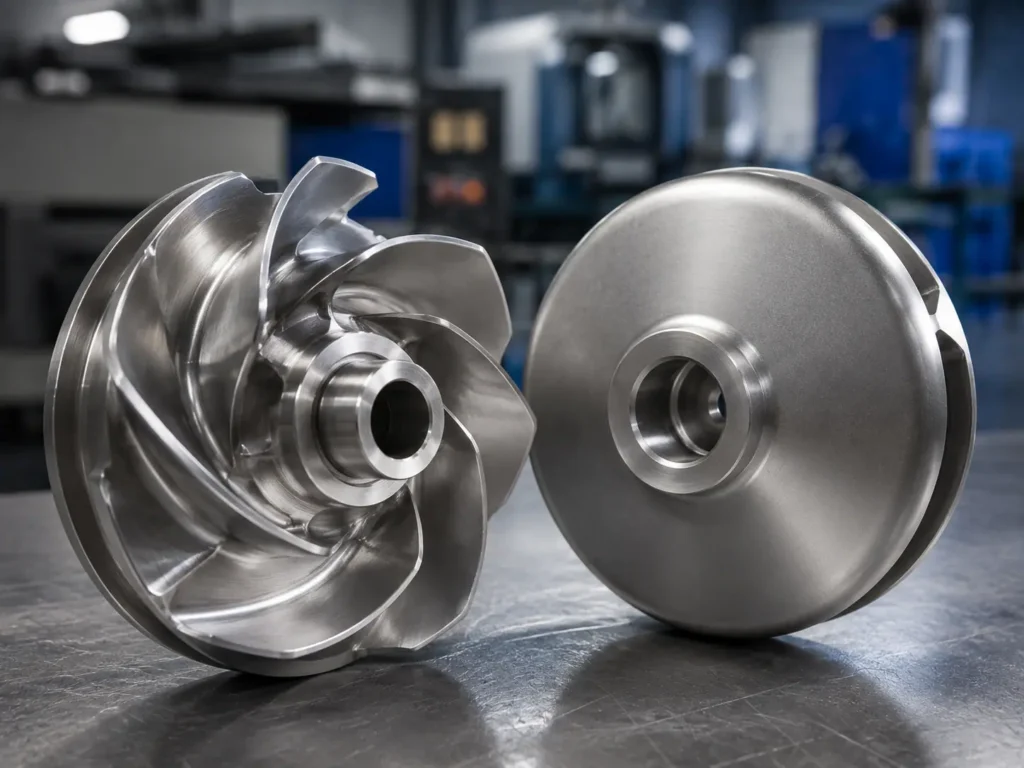
Lost wax impeller casting is an investment casting route used to produce detailed metal impeller blanks before CNC finish machining, inspection, surface treatment, and balancing. It is often considered when an impeller has curved vanes, tighter shape detail, stainless steel or bronze material requirements, and a production quantity that justifies tooling and foundry setup. It is not automatically better than sand casting or direct CNC machining. The right choice depends on the drawing, alloy, size, wall thickness, vane geometry, surface requirement, machining allowance, inspection plan, and quantity.
For OEM buyers, the important question is not only whether an impeller can be made by lost wax casting. The useful question is whether the process gives the right balance of geometry control, casting quality, machining access, repeatability, documentation, and cost for the approved impeller design.
What Lost Wax Casting Means for Impellers
Lost wax casting is a form of investment casting. A wax pattern is made to represent the casting shape, then assembled, coated with ceramic shell, dewaxed, fired, poured with molten alloy, knocked out, cleaned, and finished. For impellers, that route can help form vane shapes, curved passages, hubs, shrouds, and outside geometry that would be expensive or difficult to machine completely from solid stock.
The casting is still a blank. It is not the final part in most industrial impeller projects.
After casting, the impeller normally needs gate removal, heat treatment when specified, shot blasting or cleaning, CNC machining on functional features, dimensional inspection, surface treatment, and dynamic balancing when required. Bore, keyway, hub height, mounting face, wear-ring surfaces, OD, thread, taper, bolt pattern, and shaft connection features should not be left to casting accuracy unless the drawing explicitly allows it.
Matson reviews lost wax impeller casting as part of its broader impeller manufacturing route, which can include casting, CNC machining, surface treatment, dimensional inspection, dynamic balancing, documentation, and export packing when project requirements are defined.
Lost Wax Casting Decision Table
| Question | Lost wax casting may fit when | Be careful when | Buyer should confirm |
|---|---|---|---|
| Geometry | The impeller has curved vanes, detailed passages, thin-to-medium sections, and repeated features. | The part is very large, very heavy, or has deep enclosed passages that are hard to shell and clean. | 3D model, 2D drawing, vane count, wall thickness, draft, and passage access. |
| Material | Stainless steel, duplex stainless, bronze, carbon steel, or alloy steel is suitable for the chosen foundry route. | The alloy is difficult to cast, prone to cracking, or needs special heat treatment and testing. | Exact grade, material standard, certificate need, heat treatment, and service environment. |
| Dimensional control | The casting can hold the general shape while CNC machining controls functional interfaces. | The buyer expects all features to be finished straight from casting. | Machined surfaces, machining allowance, datums, tolerances, and inspection report need. |
| Surface condition | The required as-cast surface is practical, or later polishing, passivation, coating, or machining is planned. | A flow surface needs a defined roughness that casting alone cannot guarantee. | As-cast acceptance, polished zones, coating, passivation, and masked areas. |
| Quality control | The project can define critical zones, defect acceptance, NDT need, and repair rules before production. | The drawing has no acceptance criteria and the impeller has high-risk vane or hub transitions. | Critical areas, inspection method, NDT requirement, repair approval, and first article need. |
| Quantity | Prototype, pilot batch, or recurring OEM quantity can absorb tooling and setup cost. | Only one simple part is needed and direct machining or fabrication may be simpler. | Quantity, annual demand, sample approval, tooling ownership, and repeat-order plan. |
Where Lost Wax Casting Fits Better Than Sand Casting
The broad pump impeller casting guide compares investment casting, sand casting, and CNC finish machining as a full process route. This article is narrower: it focuses on when the lost wax route makes sense.
Lost wax casting often fits smaller or medium-size impellers with more detailed vane geometry. It can provide finer shape detail and a smoother as-cast surface than many sand casting routes. That can be useful for stainless steel pump impellers, bronze pump impellers, mixer impellers, small fan or blower wheels, and custom industrial impellers where the design has repeated curved features.
Sand casting can still be better for larger, heavier, simpler, or lower-detail impellers. It may also be more practical when the part size, section thickness, pattern cost, alloy behavior, or order quantity does not suit the investment casting route.
The wrong question is “Which process is better?” The better question is “Which process gives this drawing enough shape control while leaving proper machining allowance and inspection access?”
Do Not Treat the Casting as the Finished Impeller
Lost wax casting can make a detailed blank, but it does not remove the need for finish control.
An impeller is a rotating component. A part that looks close to the model can still fail assembly if the bore is wrong, the hub face is not square, the keyway is misplaced, the OD is not controlled, or a wear-ring surface is not machined. A cast vane profile can also need cleanup or inspection before the part is balanced.
For that reason, the RFQ should separate as-cast surfaces from machined surfaces. A buyer should mark:
- Bore, keyway, taper, spline, or threaded connection
- Hub height, mounting face, coupling face, or bolt pattern
- OD, vane tip, shroud edge, or wear-ring land
- Seal surface, close-clearance surface, or casing-related surface
- Flow surface that needs polishing, coating, passivation, or defined roughness
- Areas that must not be ground heavily after casting
Matson’s article on impeller machining allowance covers why stock must be planned by feature, not guessed as one universal value. The same rule applies to lost wax impeller casting. A bore allowance, OD allowance, hub-face allowance, and vane cleanup allowance may not be the same.
Casting Quality Risks Buyers Should Review
Lost wax casting can improve detail, but it is still casting. It still has foundry risks.
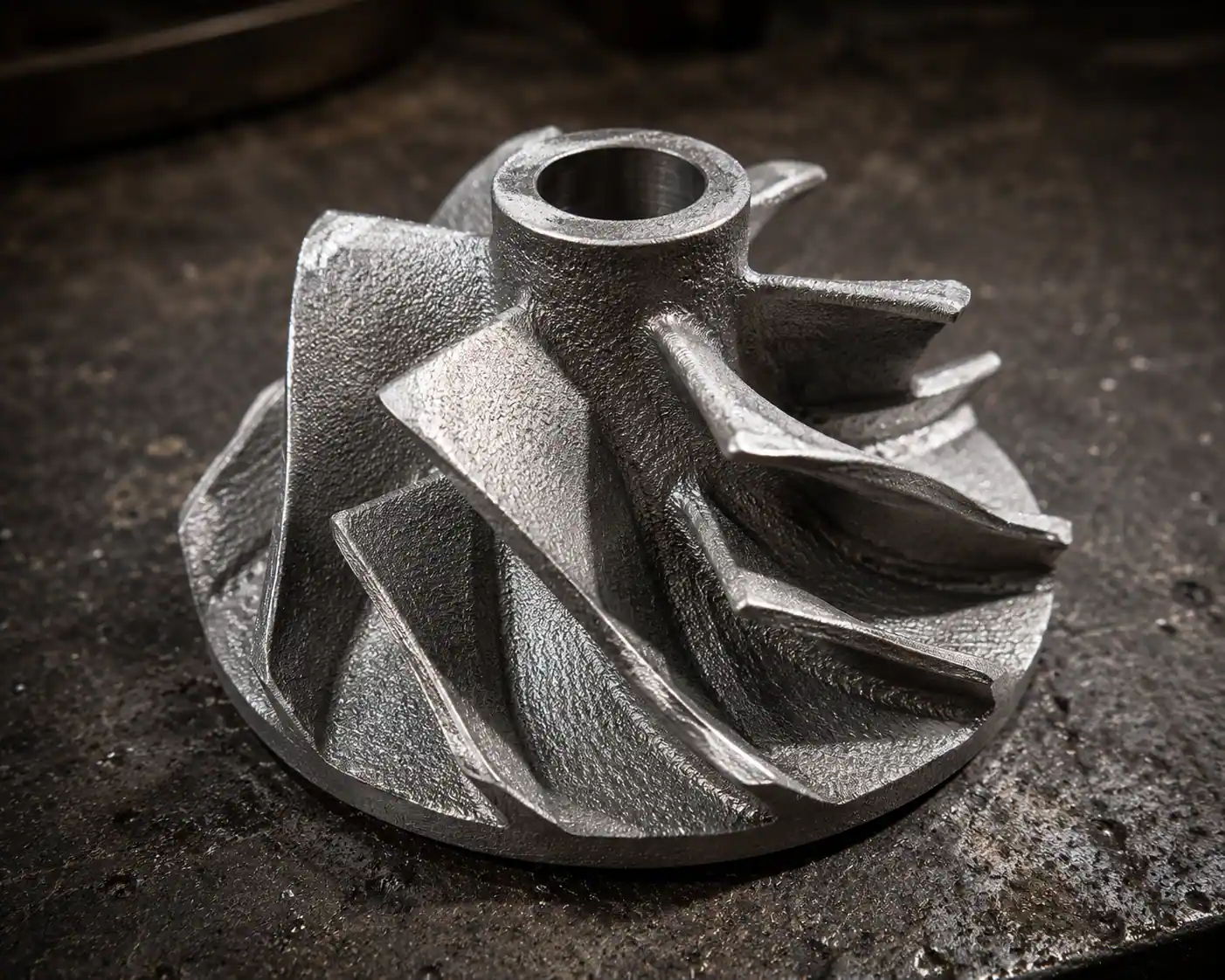
Common review points include shrinkage, porosity, inclusions, cold shuts, misruns, cracks, hot tearing, ceramic-shell residue, distortion, gate-removal marks, and uneven vane section. The risk changes with alloy, section thickness, feeding design, shell process, cooling, heat treatment, and cleanup method.
Do not hide casting risk inside a pretty product photo. For impellers, critical areas deserve special attention:
- Hub-to-vane transitions
- Vane root areas
- Shroud connections
- Thick hub sections
- Thin trailing edges
- Gate and riser removal zones
- Wear-ring or OD areas that will be machined later
- Internal passages that are difficult to clean or inspect
The impeller casting defects guide owns the deeper discussion of defect types, repair control, machining exposure, and NDT planning. In a lost wax casting RFQ, buyers should at least define which areas are critical and whether visual inspection, dimensional inspection, PT, MT, RT, UT, or other checks are required.
Materials and Heat Treatment Need Early Review
Lost wax impeller casting is often discussed for stainless steel and bronze impellers because the process can support detailed geometry and corrosion-resistant material choices. It may also be reviewed for carbon steel or alloy steel impellers when the drawing and service condition fit.
Material selection should start with the service environment, not with the casting process. Water, seawater, wastewater, chemicals, slurry, temperature, cleaning method, chloride, pH, solids, abrasion, and expected life all affect the suitable grade. If the drawing calls for 304, 316, 316L, duplex stainless, bronze, carbon steel, alloy steel, or a buyer-specific grade, the RFQ should name the exact grade and certificate requirement.
Heat treatment should also be decided before the quote is locked. Some alloys need a final material condition. Some castings need stress relief or solution treatment. Some treatment routes can change distortion and machining sequence. Buyers should not assume every foundry uses the same cycle or that all heat treatment is in-house.
If the buyer requires material certificates, heat numbers, PMI, hardness, mechanical testing, or laboratory chemistry, state that early. It affects sourcing, processing, records, and inspection planning.
Surface Finish and Treatment After Casting
Lost wax casting may give a smoother surface than many sand casting routes, but “smoother” is not a specification. It does not replace a defined surface finish requirement.
If the impeller needs polished flow surfaces, passivation, electropolishing, coating, painting, or corrosion-prevention treatment, these should be included in the RFQ. The buyer should mark which surfaces receive treatment and which surfaces must remain machined, uncoated, masked, or separately inspected.
The impeller surface treatment article covers cleaning, passivation, polishing, coating preparation, masking, inspection stage, and balancing sequence. Use that topic when the main question is finishing after casting. Use the lost wax casting topic when the main question is whether this casting route fits the geometry and production plan.
First Article and Repeat Production
Lost wax casting is sensitive to tooling, pattern control, shell process, pouring control, gate removal, heat treatment, machining setup, and inspection records. For OEM repeat orders, buyers should treat the first acceptable batch as a controlled baseline.
A first article should confirm:
- The casting route can form the approved vane and hub geometry
- Machining allowance is enough on all functional surfaces
- Critical defects are absent or dispositioned
- CNC machining can achieve fit surfaces and datums
- Surface treatment does not harm critical dimensions
- Final balance can be achieved in the required condition
- Inspection documents match the drawing revision
For repeat orders, the buyer should control drawing revision, tooling changes, material grade, heat treatment, machining program, inspection plan, surface treatment, balance requirement, and packing method. A low-cost quotation is not useful if the second batch quietly changes the casting route or machining datum.
What Buyers Should Send With the RFQ
For a useful lost wax impeller casting quote, send more than diameter and material. A strong RFQ package includes:
- 2D drawing and 3D model, if available
- Drawing revision and governing specification
- Material grade, material standard, and certificate requirement
- Equipment type: pump, fan, blower, mixer, agitator, compressor, or custom machine
- Application condition: fluid, gas, solids, temperature, corrosion, abrasion, speed, and duty notes
- Impeller type: open, closed, semi-open, mixed-flow, radial, axial, fan wheel, or custom shape
- Critical dimensions: bore, keyway, hub, OD, width, vane profile, shroud, wear-ring, and mounting interface
- Machined surfaces and machining allowance expectations
- Surface finish, polishing, passivation, coating, or cleaning requirement
- Casting inspection, NDT, repair, and acceptance criteria
- Dynamic balancing grade, speed, assembly condition, and report need
- Prototype, first article, pilot batch, or repeat-order quantity
- Packing, corrosion protection, and export document requirements
If the buyer has only a worn sample, include photos and mark wear, corrosion, broken vanes, rubbed OD, damaged bore, coating failure, or previous repair areas. A worn sample can help identify geometry, but it may no longer show the original dimensions.
Common Questions We Actually Get
What is lost wax impeller casting?
Lost wax impeller casting is an investment casting route where a wax pattern and ceramic shell are used to produce a metal impeller blank. The casting normally still needs CNC finish machining, inspection, surface treatment, and balancing before shipment.
Is lost wax casting better than sand casting for impellers?
Not always. Lost wax casting can fit detailed or smaller impellers, while sand casting can fit larger or heavier parts. The decision depends on geometry, size, material, tolerance, surface requirement, quantity, and machining plan.
Can a lost wax cast impeller be used without CNC machining?
Only if the drawing allows as-cast functional surfaces, which is uncommon for industrial rotating parts. Bores, hub faces, keyways, mounting faces, OD, wear-ring surfaces, and shaft interfaces usually need CNC finish machining.
What defects should buyers check in lost wax impeller castings?
Buyers should review shrinkage, porosity, inclusions, misruns, cracks, distortion, shell residue, gate-removal marks, and critical hub or vane transition areas. The exact inspection method should be defined by the drawing and application risk.
Can Matson manufacture lost wax impeller castings from drawings or samples?
Yes. Matson can review custom impeller drawings, 3D files, samples, material grades, casting route, CNC machining surfaces, inspection requirements, balancing needs, and export packing before quotation.
CTA
Need a lost wax impeller casting quote for an OEM pump, fan, blower, mixer, or custom industrial part? Send Matson the drawing, 3D model, material grade, application condition, machined surfaces, inspection requirement, balance requirement, quantity, and photos through the contact page. We can review whether lost wax casting, sand casting, CNC machining, or a combined route fits the project before quoting.