Impeller Surface Treatment: OEM Buyer Guide
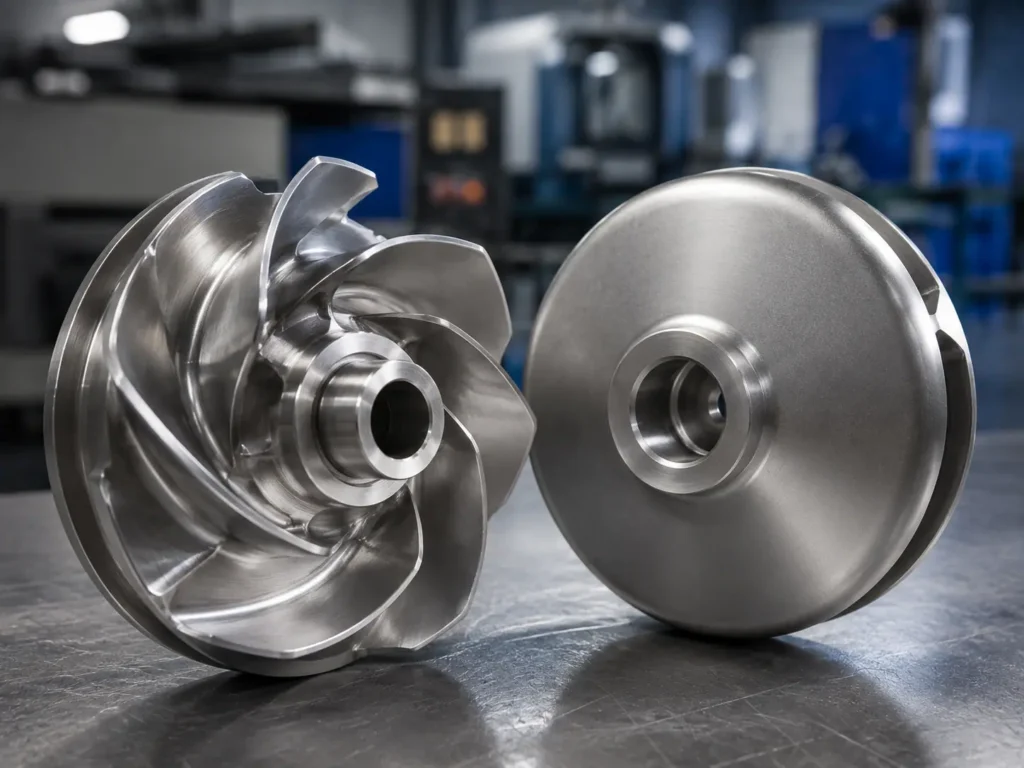
Impeller surface treatment is the controlled finishing work applied after casting, fabrication, welding, CNC machining, or polishing to prepare an impeller for its operating environment, inspection, storage, and shipment. For OEM buyers, the key point is simple: surface treatment should be specified by function, not by appearance alone. A shiny impeller is not automatically corrosion-resistant, clean enough for process service, ready for coating, or safe for tight pump clearances.
For custom impellers, surface treatment can include cleaning, deburring, descaling, pickling, passivation, polishing, electropolishing, painting, protective coating, or corrosion-prevention packing. The right route depends on the material, fluid or air condition, solids, temperature, chloride, pH, coating system, surface finish requirement, balance condition, and which surfaces must remain dimensionally controlled.
What Surface Treatment Must Control
Surface treatment is not a decoration step at the end of production. It can affect corrosion behavior, coating adhesion, hygiene or cleanability, dimensional fit, dynamic balance, inspection visibility, and export protection.
For an impeller, the risk is higher than for a simple plate or bracket because the part has vanes, shrouds, hubs, bores, keyways, fillets, internal passages, weld transitions, and close-clearance surfaces. A process that looks harmless on a flat coupon may create problems on a rotating impeller if it rounds an edge, traps chemicals, changes a bore, hides a defect, or adds uneven mass.
Matson reviews surface treatment as part of drawing-based impeller manufacturing, together with casting, CNC machining, inspection, balancing, documentation, and export packing. Buyers should define the intended surface condition before quoting, especially when the impeller is used in chemical processing, wastewater, marine, mining, food-related process equipment, HVAC airflow, or OEM repeat production.
Surface Treatment Decision Table
| Treatment direction | Useful when | Key buyer checks | Main limitation |
|---|---|---|---|
| Cleaning and degreasing | Oil, machining fluid, handling contamination, or packing residue must be removed before inspection or later treatment. | Cleanliness expectation, inspection method, later coating or passivation requirement. | Cleaning alone does not remove scale, corrosion, embedded iron, or heavy weld discoloration. |
| Deburring and edge cleanup | Sharp burrs, machined edges, vane tips, keyways, and handling edges need control. | Functional edges, no-go areas, blade geometry, balance sensitivity, safety requirement. | Over-blending can change vane geometry, clearance, or edge condition. |
| Pickling or descaling | Stainless castings, weld heat tint, oxide scale, or heat-treatment scale need removal. | Material grade, scale severity, areas to protect, rinsing, inspection after treatment. | Aggressive treatment can attack surfaces if the method is not matched to the material and geometry. |
| Passivation | Stainless steel requires removal of free iron or surface contamination after machining, fabrication, or cleaning. | Stainless grade, governing standard or test, cleanliness before passivation, report need. | Passivation is not a substitute for descaling, polishing, or choosing a suitable alloy. |
| Mechanical polishing | Flow surfaces, cleanability, appearance, or local roughness improvement is required. | Target areas, acceptable direction marks, Ra requirement if any, edge protection. | Polishing can distort edges, thin vane tips, and create inconsistent results in deep passages. |
| Electropolishing | Selected stainless impellers need smoother, cleaner, more corrosion-resistant surface behavior after proper preparation. | Material grade, access to all surfaces, masking, dimensional allowance, acceptance criteria. | It is not suitable for every geometry, alloy, or tolerance zone; it can change dimensions slightly. |
| Painting or protective coating | Carbon steel, alloy steel, wastewater, airflow, corrosion, abrasion, or storage protection requires a coating system. | Coated areas, masked surfaces, thickness, surface preparation, final balance sequence. | Coating can change fit and mass distribution if thickness and masking are not controlled. |
Separate Surface Treatment From Surface Finish
Surface finish requirements describe the condition of specific surfaces, such as machined roughness, as-cast acceptance, polished zones, or coated areas. Surface treatment describes the process route used to create or protect that condition.
That difference matters during RFQ review. A drawing note that says “polished” is not enough if the buyer also expects passivation. A note that says “passivated” does not define whether a vane surface must be polished to a target roughness. A note that says “painted” does not define the surface preparation grade, coating thickness, masking, or final balance stage.
Use the impeller surface finish requirements guide when the main question is Ra, machined finish, as-cast condition, polished areas, or feature-specific finish acceptance. Use this article when the main question is which treatment route should be controlled after manufacturing.
Stainless Steel Impellers: Cleaning, Pickling, and Passivation
Stainless steel impellers are often specified for water, marine, chemical, food-related process equipment, and corrosion-resistant OEM applications. The surface treatment question is not just “stainless or not.” Stainless steel can still carry free iron, heat tint, shop contamination, oxide scale, or embedded particles after cutting, welding, casting, machining, or handling.
ASTM A380/A380M-25 discusses cleaning, descaling, pickling, and passivation practices for stainless steel parts and systems, while ASTM A967/A967M-25 covers chemical passivation treatments and tests for stainless steel parts. These references are useful because they show why buyers should define what they mean by passivation, not just use the word casually.
For impellers, passivation should be planned after cleaning and after any required oxide or heat-tint removal. If scale remains on the surface, passivation alone will not magically create a controlled surface. If the impeller has tight bores, keyways, threads, wear-ring surfaces, or balance-correction areas, those features should be reviewed before chemical treatment.
Matson can review stainless steel impeller RFQs with material grade, drawing revision, surface treatment note, finish requirement, inspection need, and packing requirement. Final treatment selection should be confirmed against the approved material, process route, and buyer specification.
Coating and Painting Need Their Own Controls
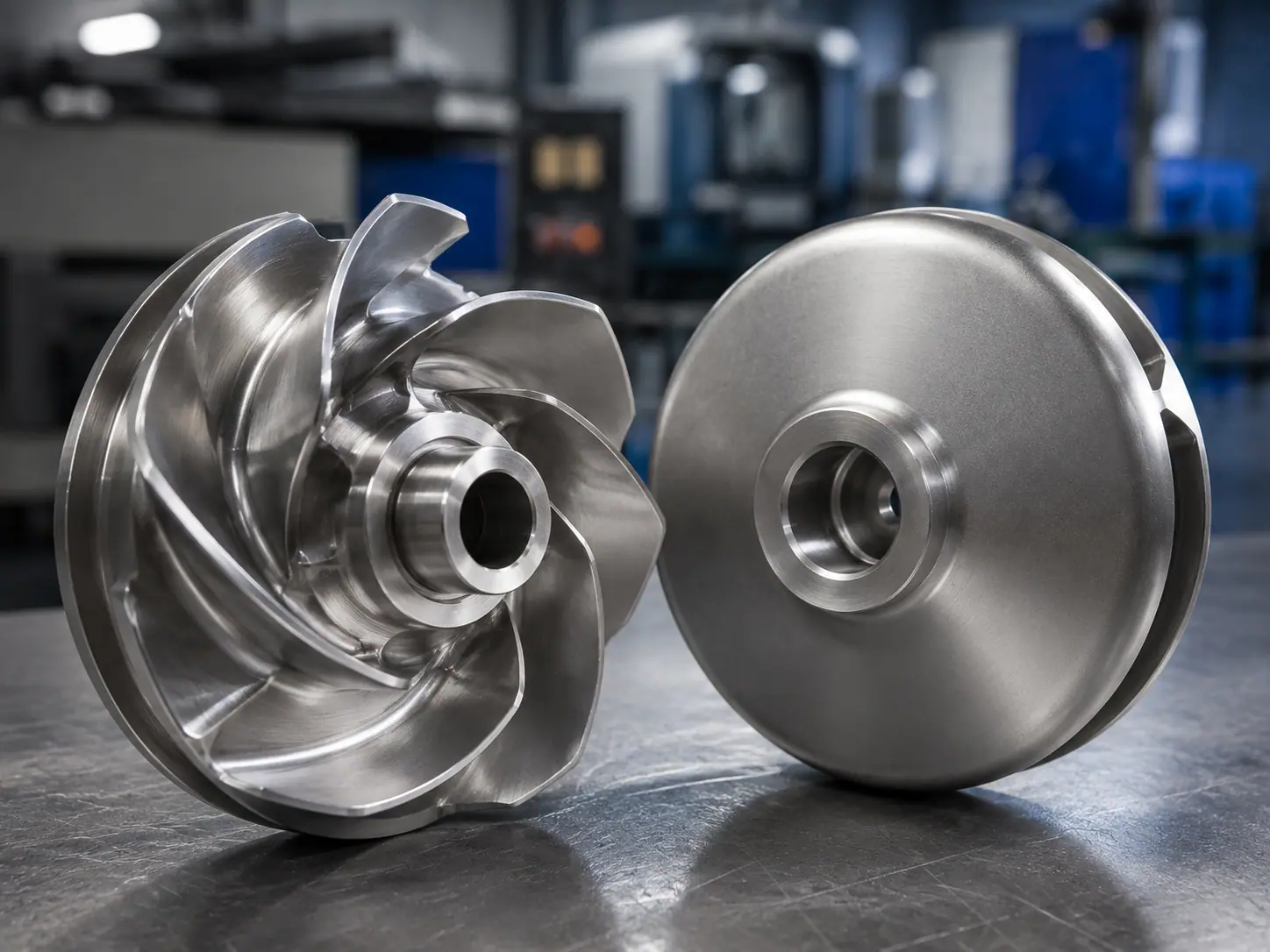
For coated or painted impellers, surface treatment usually starts before the coating is applied. The buyer should confirm cleaning, surface preparation, masking, coating thickness, inspection, curing or drying condition, and whether final balancing is required after coating.
ISO 8501-1 is commonly referenced for visual assessment of steel substrate preparation grades before painting and related products. For impeller buyers, the practical lesson is not to copy a standard number without context. The substrate, geometry, coating system, service condition, and inspection method all need to fit the part.
The pump impeller coatings article owns coating selection, coating purpose, corrosion or abrasion review, thickness, masking, and coating-specific inspection. This surface-treatment article covers the broader finishing route around cleaning, preparation, polishing, passivation, coating readiness, balance sequence, and buyer instructions.
A common RFQ mistake is asking for “painted impeller” without naming the material, preparation method, coating system, dry film thickness, masked areas, or operating condition. That leaves too much room for misunderstanding. A better RFQ says which surfaces are painted, which surfaces remain machined, which surfaces are masked, what coating system is required, and whether balance acceptance is before or after coating.
Protect Functional Surfaces Before Treatment
Not every surface on an impeller should receive the same treatment. Functional surfaces often need special protection or separate inspection.
Buyers should mark these areas clearly on the drawing:
- Bore, taper, thread, keyway, spline, or shaft-fit surface
- Hub face, mounting face, bolt pattern, and coupling interface
- Wear-ring surface, OD, shroud face, or casing clearance area
- Seal surface or close-running face
- Balance-correction area
- Vane tip, leading edge, trailing edge, and critical flow surface
- Weld transition or repair area requiring later inspection
This is where surface treatment connects directly with custom industrial impeller manufacturing. A buyer may need one part that has polished flow surfaces, uncoated bore and keyway, passivated stainless areas, protected machined faces, and export corrosion prevention. If all of that is hidden inside one vague finishing note, the quotation and inspection plan become weak.
Treatment Sequence Affects Inspection and Balancing
Surface treatment should not be planned after inspection and balancing as an afterthought. Some treatments should happen before final inspection. Some should happen before final balancing. Some require inspection both before and after treatment.
For example, heavy deburring or polishing can change sharp edges, vane tips, and local mass. Coating can add thickness and weight. Pickling or electropolishing can slightly change surface condition and may affect tight tolerance zones. If a final balance report is required, the buyer should confirm whether balancing is performed before or after coating, polishing, passivation, or final cleaning.
Surface treatment also affects visual inspection. A coating may hide small surface indications. Polishing may make some features easier to inspect and others harder to interpret. For projects with NDT requirements, treatment stage should be aligned with the impeller NDT requirements, repair rules, and acceptance criteria.
Application Scenarios
In water and wastewater pump applications, surface treatment may focus on corrosion resistance, solids buildup, coating protection, and practical cleaning. The buyer should confirm whether the concern is corrosion, abrasion, fouling, or simply storage protection.
In chemical processing, the treatment route must match the actual chemical environment. pH, chloride, temperature, concentration, cleaning chemicals, stagnant zones, and required material certificate matter more than a generic request for “corrosion-resistant finish.”
In marine and seawater service, stainless, duplex stainless, bronze, coatings, and passivation requirements should be reviewed together with galvanic corrosion, chloride exposure, and packing for sea freight.
In fan and blower impellers, painting or coating may be used for corrosion or process-air exposure, but mass distribution and balance condition become important. Uneven coating on a fan wheel can create vibration risk.
In mixer and agitator impellers, surface treatment can affect cleanability, weld condition, passivation, polishing marks, and chemical compatibility. Process performance should still remain with the mixer OEM or process engineer.
What Buyers Should Confirm Before RFQ
For an impeller surface treatment RFQ, send practical information instead of one-word finish notes:
- 2D drawing, 3D file, or sample photos
- Material grade and material certificate requirement
- Service environment: liquid, gas, solids, pH, chloride, temperature, cleaning chemicals, or storage condition
- Required treatment: cleaning, pickling, passivation, polishing, electropolishing, painting, coating, or export protection
- Governing standard, buyer specification, or acceptance method if required
- Surface finish requirement for specific areas, not only the whole part
- Coated, uncoated, polished, masked, and machined areas marked on the drawing
- Thickness requirement for coating or plating if applicable
- Whether dimensional inspection is before or after treatment
- Whether final dynamic balancing is before or after treatment
- Required documents: photos, treatment certificate, inspection report, coating report, or balance report
- Packaging requirement for treated surfaces during export shipment
If the old sample has corrosion, coating failure, heat tint, rubbing, or buildup, include photos of the damaged areas. Do not ask the supplier to copy the old surface blindly. A failed finish may be evidence that the previous material, treatment, coating, clearance, or operating condition was wrong.
Common Questions We Actually Get
What is impeller surface treatment?
Impeller surface treatment is the controlled cleaning, finishing, passivation, polishing, coating, painting, or protection work applied to an impeller after casting, fabrication, machining, welding, or inspection. It should be defined by service need, material, functional surfaces, inspection, and balance sequence.
Is surface treatment the same as surface finish?
No. Surface finish describes the required surface condition, such as machined roughness, polished area, or as-cast acceptance. Surface treatment describes the process used to clean, protect, modify, or prepare the surface.
Does every stainless steel impeller need passivation?
Not always. The need depends on the stainless grade, manufacturing route, contamination risk, service environment, buyer specification, and acceptance tests. If passivation is required, the buyer should define the expected standard or test method.
Should coating happen before or after balancing?
It depends on coating thickness, coating weight, impeller speed, balance grade, and buyer requirement. If the coating can change mass distribution, final balancing after coating may be needed.
Can Matson review surface treatment requirements for custom impellers?
Yes. Matson can review custom impeller drawings, samples, material grades, treatment notes, functional surfaces, coating or passivation needs, inspection points, balancing sequence, and export packing requirements before quotation.
CTA
Need an impeller surface treatment requirement reviewed before production? Send Matson the drawing, material grade, application, treatment note, marked functional surfaces, coating or passivation requirement, inspection documents, balancing requirement, quantity, and export packing needs through the contact page. We can review the manufacturing route and finishing controls before quoting.
References
- ASTM A380/A380M-25, Standard Practice for Cleaning, Descaling, Pickling, and Passivation of Stainless Steel Parts, Equipment, and Systems.
- ASTM A967/A967M-25, Standard Specification for Chemical Passivation Treatments for Stainless Steel Parts.
- ISO 8501-1:2007, Preparation of steel substrates before application of paints and related products – Visual assessment of surface cleanliness.