Impeller Manufacturing Capabilities
Matson manufactures custom industrial impellers from drawings or samples through casting, CNC machining, surface treatment, dynamic balancing, inspection and export packing. Use this page to check whether your RFQ needs investment casting, sand casting, finish machining, polishing, passivation, coating, balancing data or inspection documents before production begins.
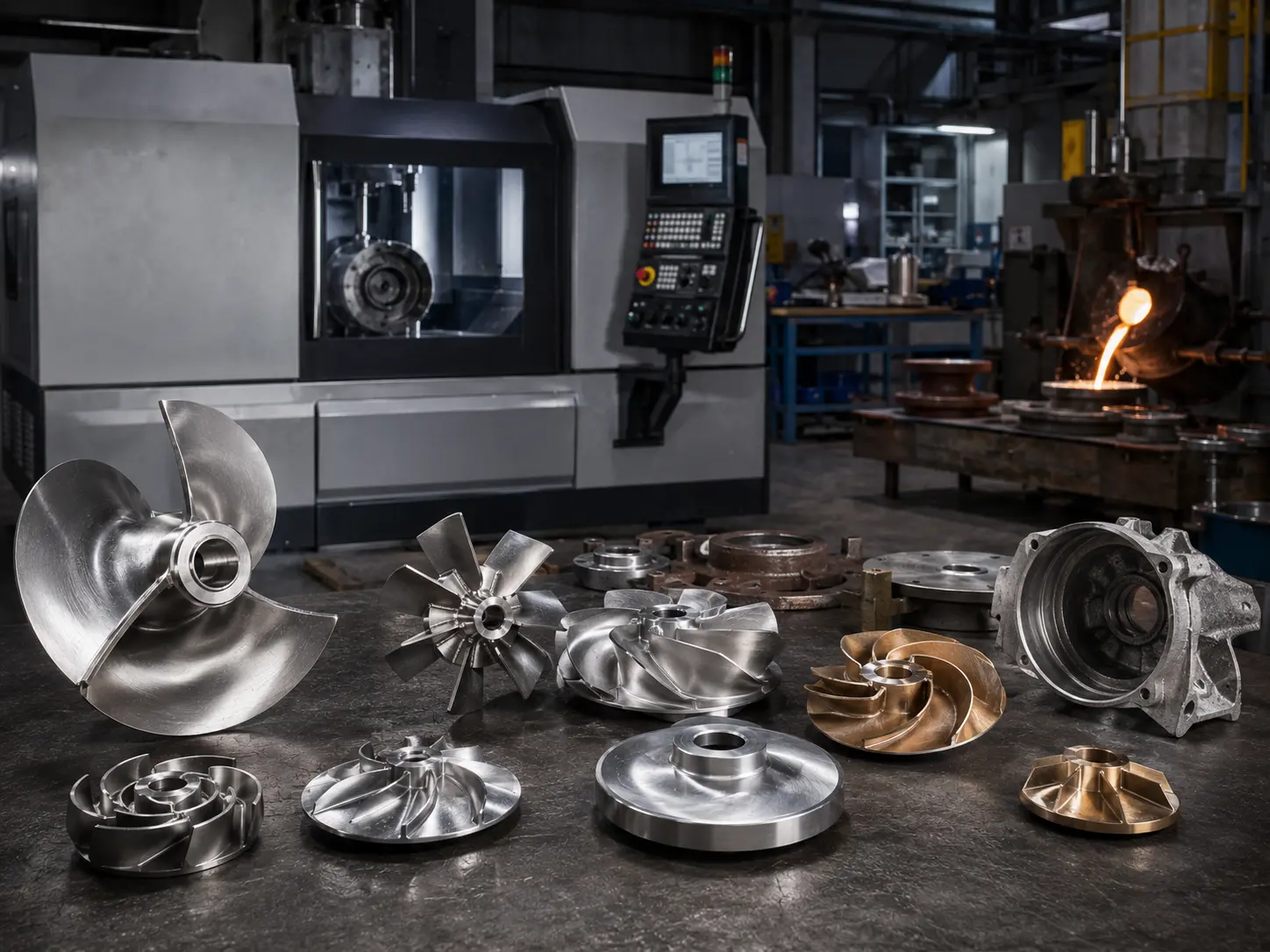
Impeller Manufacturing Process from RFQ to Shipment
A good impeller manufacturing route starts with your drawing, sample, material grade and acceptance requirements. Matson reviews the project before choosing casting, CNC machining, surface treatment, balancing and inspection steps, so the quotation is based on manufacturability rather than a generic catalog promise.
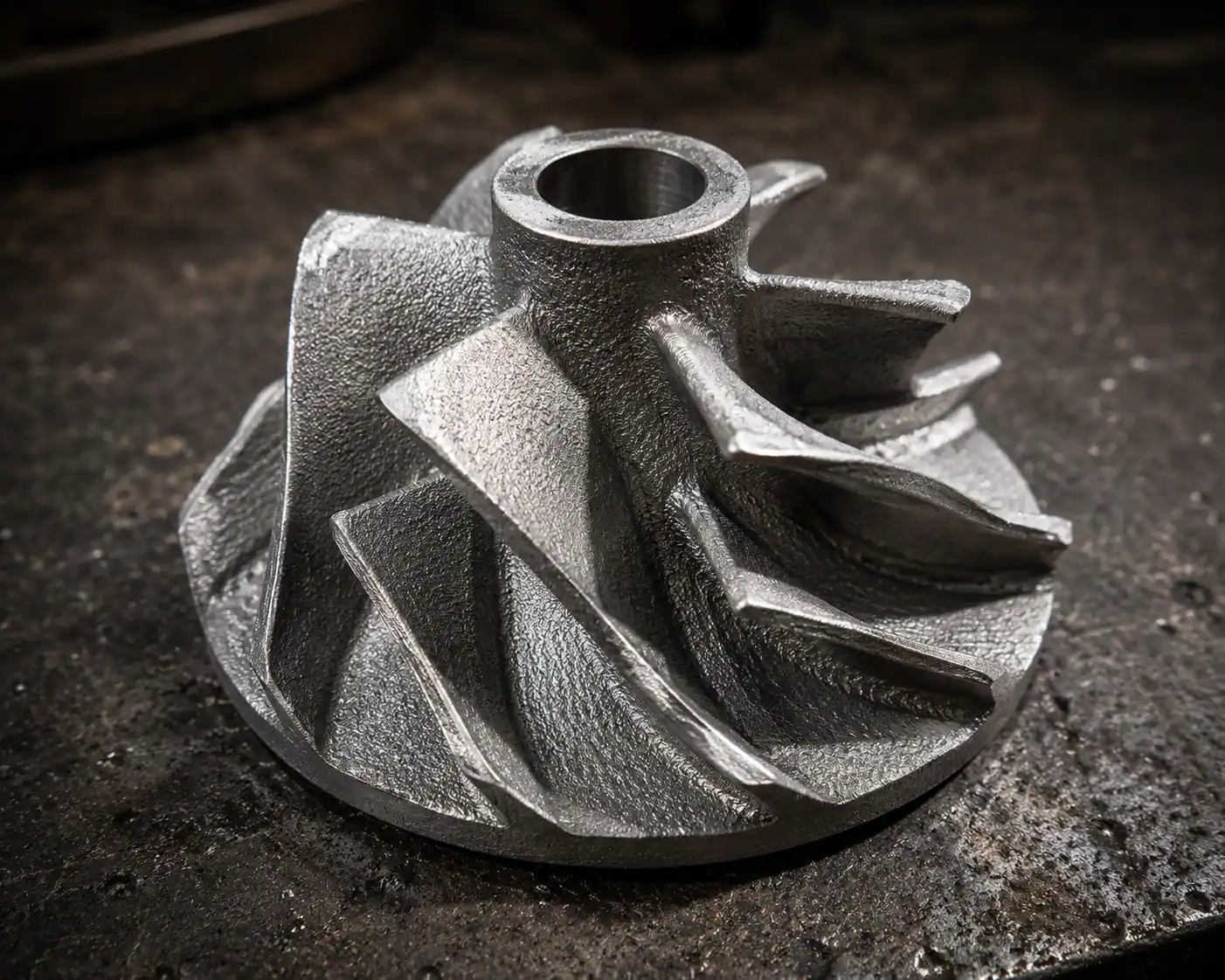
Impeller Casting: Investment & Sand Casting
Impeller casting is useful when the geometry, material and batch quantity make a cast blank more practical than machining the whole impeller from solid stock. Matson reviews investment casting and sand casting options against vane shape, section thickness, machining allowance, material grade and inspection needs. For route-specific notes, compare lost wax impeller casting → and sand casting impeller →
- Investment casting route for suitable complex vane and near-net-shape projects
- Sand casting route for suitable larger, heavier or simpler cast impeller blanks
- Casting + finish machining as a combined route for cast impeller production
- Material verification and casting documentation on request
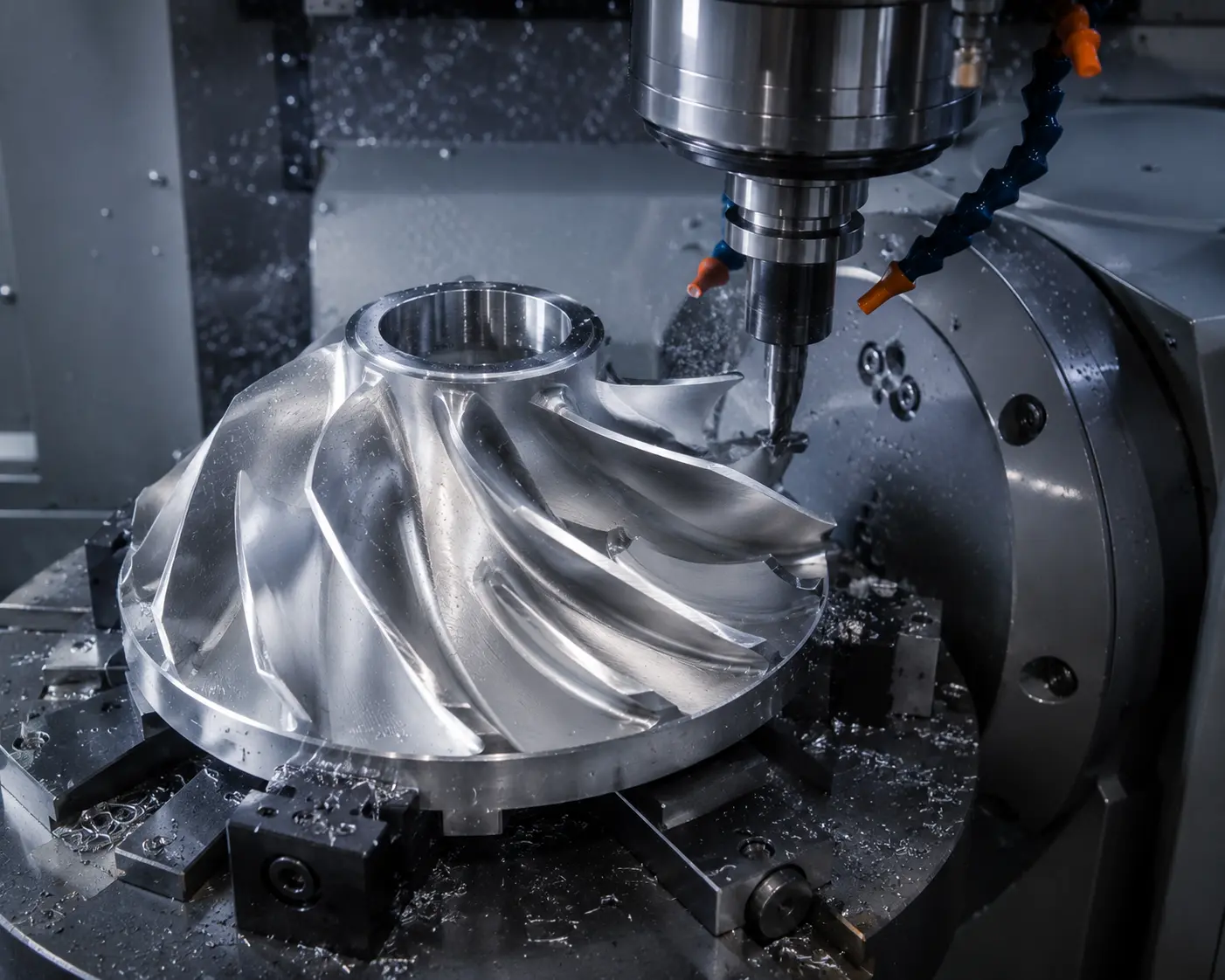
3-Axis & 5-Axis CNC Machining
Cast or billet impellers are machined on CNC centers to bring critical interfaces into the drawing requirement. If you are comparing suppliers, pay close attention to the bore, hub, mounting face, wear surfaces and vane areas that affect assembly fit and balancing. See also CNC machined impeller considerations →
- 3-axis machining for hubs, bores and mounting features
- 5-axis machining for vane surfaces and complex geometries
- Casting + finish machining route for efficient custom production
- Tolerance, finish and inspection per drawing
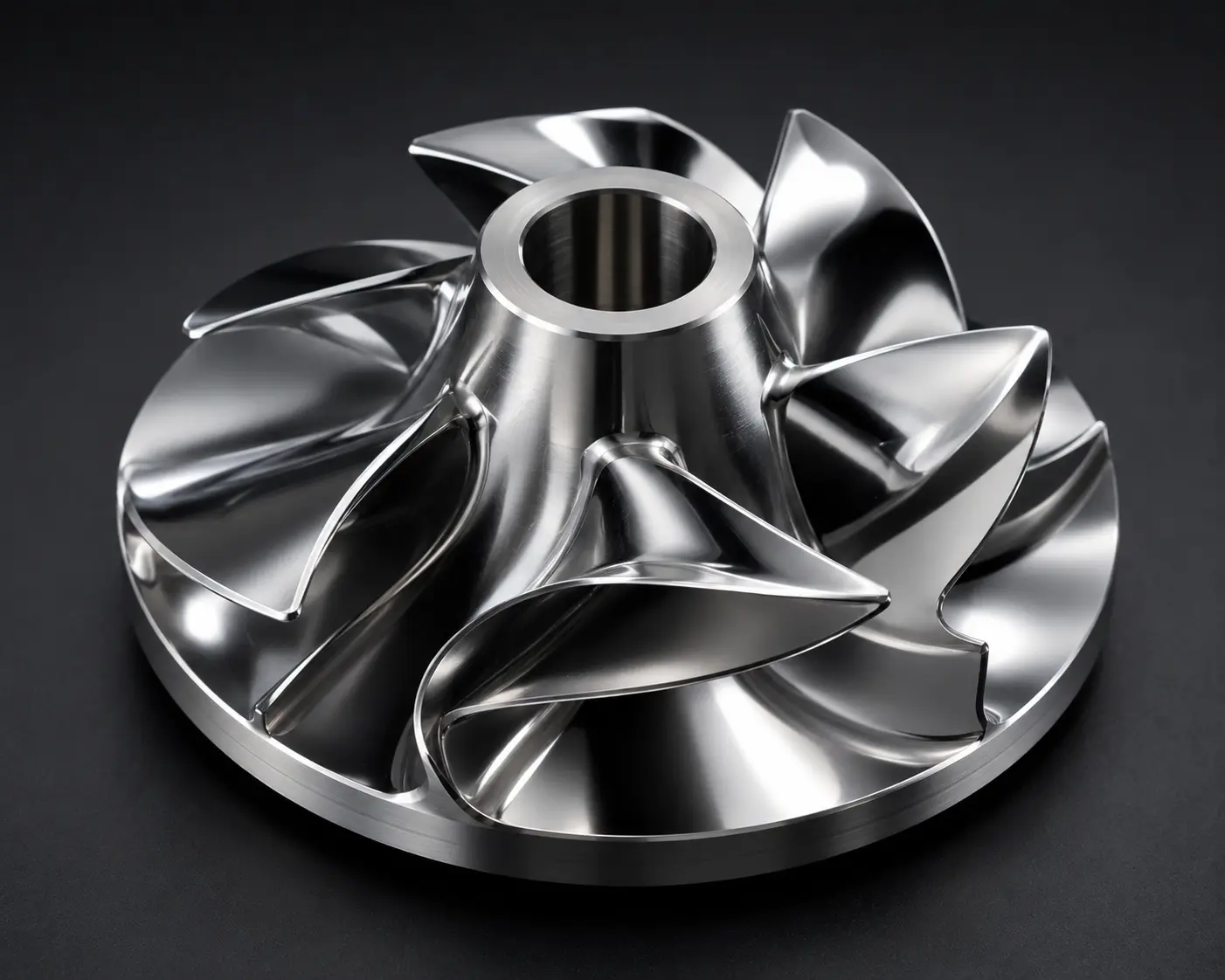
Polishing, Passivation & Coatings
Surface treatment should follow the material and service environment. Stainless impellers may need mechanical polishing, electropolishing or passivation; carbon steel and alloy projects may require protective coating. The wrong surface call can affect corrosion resistance, fit surfaces and post-treatment balancing.
- Mechanical polishing and electropolishing for stainless impellers
- Passivation per stainless steel surface specifications
- Anti-corrosion and wear-resistant coatings on request
- As-cast and machined finishes for industrial-grade applications
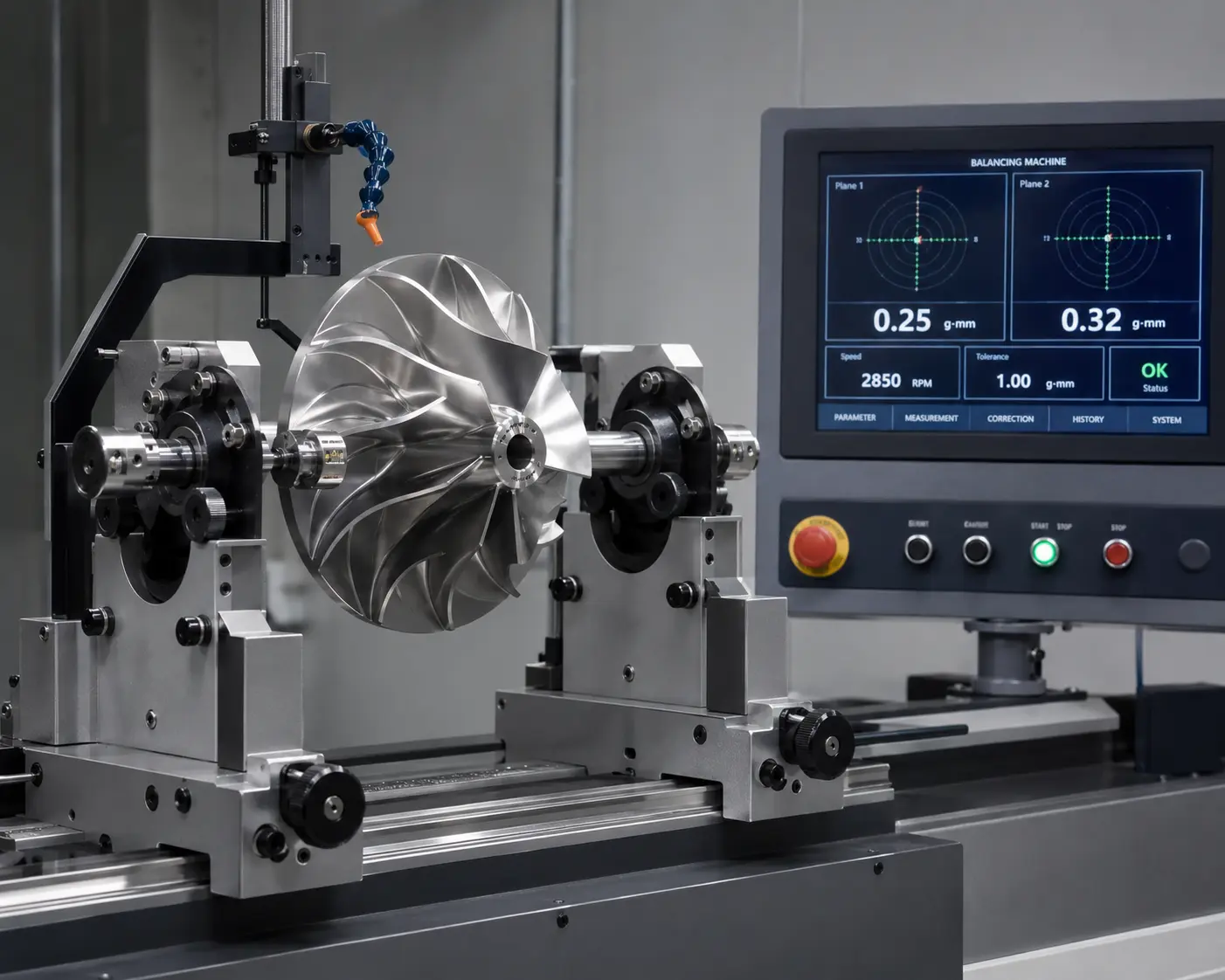
Dynamic Balancing & Inspection
For rotating impellers, balancing and inspection should be discussed before production rather than added after the part is finished. If your application needs a balancing report, inspection report, material certificate or NDT record, include that requirement in the RFQ. For document planning, review custom impeller manufacturing documents →
- Dynamic balancing to drawing or application requirement
- Dimensional inspection of bore, hub, OD and mounting surfaces
- Material certificates and grade verification
- Optional NDT for high-criticality projects
Materials We Cast & Machine
Matson works with stainless steel, duplex stainless, bronze, brass, aluminum, carbon steel and alloy steel impellers. Final material should be confirmed against the drawing, fluid, temperature, solids, corrosion environment, surface-treatment requirement and inspection standard.
Manufacturing Capability Sheet
This is a quotation reference, not a fixed catalog. Exact size range, tolerance, surface finish and inspection scope are confirmed after Matson reviews your drawing, sample, material and application conditions.
| Casting Methods | Impeller casting by investment casting, sand casting, and casting + finish machining for suitable cast impeller projects |
|---|---|
| Machining | 3-axis CNC, 5-axis CNC and manual finishing for selected drawing-defined features |
| Surface Treatment | Mechanical polishing, electropolishing, passivation, anti-corrosion / wear coatings |
| Balancing | Dynamic balancing when required by drawing, rotational speed, application or purchase specification |
| Materials | Stainless 304 / 316 / 316L, duplex stainless, bronze, brass, aluminum, carbon and alloy steel |
| Inspection | Dimensional report, material certificate, balancing data and optional NDT when specified |
| Accepted Files | PDF, DWG, DXF, STEP, STP, IGS, sample photos, physical samples |
| Production Mode | OEM, drawing-based custom, sample reproduction, batch and bulk production |
Choosing the Right Manufacturing Route
Many RFQs arrive with a drawing and a material grade, but no process route. That is normal. The practical question is not “casting or machining?” in isolation; it is which route protects the critical geometry, cost, repeatability and inspection requirements for your actual impeller.
| Project condition | Route to review | What you should confirm |
|---|---|---|
| Complex vane geometry or enclosed passages | Investment casting plus finish machining when the material and geometry fit | Machining allowance, inspection access, surface finish, casting defect acceptance and critical fit surfaces |
| Larger or heavier cast impeller blank | Sand casting plus CNC machining when section thickness and quantity support it | Pattern accuracy, core shift risk, OD, bore, hub, balance requirement and material certificate |
| High-accuracy hub, bore or mounting interface | CNC finish machining after casting or machining from billet for selected projects | Datum surfaces, tolerance stack, runout, concentricity, keyway and inspection report needs |
| Rotating assembly with vibration sensitivity | Dynamic balancing after machining and surface treatment | Balancing grade, RPM, operating condition, correction limits and report format |
Quality Control for OEM Impeller Orders
For OEM and export buyers, quality control is not only a final inspection step. It is the agreement between the drawing, material, manufacturing route, critical dimensions, balancing requirement and shipment documents. The earlier you define the acceptance basis, the fewer surprises appear after production.
Material Certificates
Material grade and certificate requirements are confirmed according to the project and purchase order.
Dimensional Reports
Critical dimensions are checked against the drawing, especially bore, hub, OD, mounting faces and fit interfaces.
Balancing Data
Dynamic balancing results can be provided when the drawing, application or approval process requires them.
Manufacturing Support Across Impeller Product Lines
The manufacturing route changes with geometry and service conditions, but the RFQ logic is similar across product lines: confirm the drawing, material, critical dimensions, surface treatment, balancing requirement and inspection documents before production starts.
Manufacturing FAQ
Common questions from buyers comparing impeller manufacturing routes, inspection scope and RFQ requirements.
Does Matson handle casting and CNC machining?
Yes. Matson supports impeller manufacturing from casting route review through CNC machining, surface treatment, balancing, inspection and export packing. The exact route is confirmed from the drawing and project requirements.
Which casting method is right for my impeller?
Investment casting and sand casting serve different geometry, material and batch needs. Send the drawing, material grade, quantity and critical dimensions so Matson can review which route is more practical.
Do you offer 5-axis CNC machining?
Yes, 5-axis CNC machining can be used for selected vane surfaces and complex geometries. Simpler hubs, bores and mounting features may be handled by 3-axis machining when the drawing allows it.
What surface treatments are available?
Mechanical polishing, electropolishing, passivation and protective coatings are available when suitable for the material and service environment. Confirm corrosion, wear and surface-finish requirements during RFQ.
Is dynamic balancing standard for every impeller?
No. Dynamic balancing should follow the drawing, rotational speed, application and acceptance requirement. If your pump, fan, blower or mixer assembly needs a balance report, specify it before quotation.
What documents can be prepared for shipment?
Typical documents may include material certificates, dimensional reports, balancing data, inspection records and export packing information when requested. The document list should be confirmed before production.
Can you quote from a worn impeller sample?
A worn sample can help start the review, but you should mark worn areas and provide original dimensions when possible. Bore, hub, OD, vane profile and rotation direction need careful confirmation.
What should I send for an impeller manufacturing RFQ?
Send a 2D drawing or 3D file, material grade, quantity, size, tolerance, surface finish, balancing requirement, application environment, photos if available and any inspection documents you need.
Final Manufacturing Notes Before RFQ
The strongest impeller RFQ is not the one with the longest email. It is the one that tells the manufacturer what must fit, what must be verified and what documents the buyer needs before shipment. Matson is a good fit when your project needs custom impeller manufacturing from a drawing, sample or repeat-order requirement.
From Drawing to Finished Impeller
Send your drawing, sample or RFQ package. Matson can review the manufacturing route, material, machining features, surface treatment, inspection needs and balancing requirement before quoting your custom impeller project.
For a faster quote, include:
- 2D drawing or 3D file
- Material grade and quantity
- Diameter, bore, hub and tolerance
- Surface finish, inspection and balancing requirement
- Fluid, solids, temperature and application environment