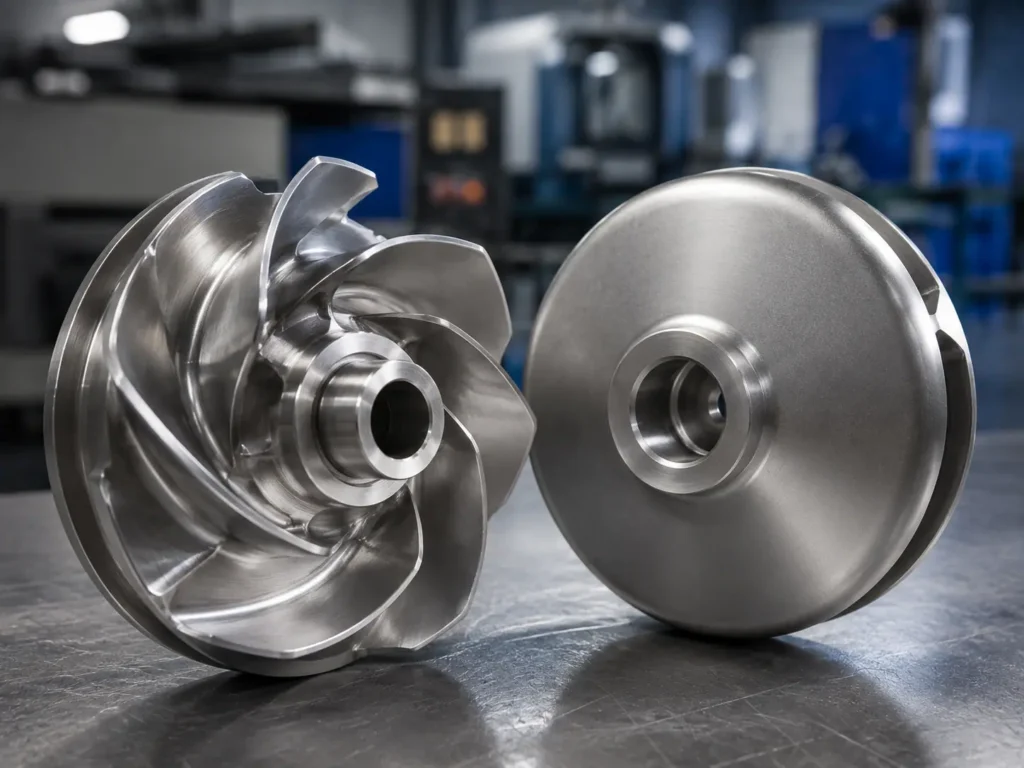
Pump impeller design affects flow, head, efficiency, solids handling, vibration, wear, and whether the part can actually be manufactured to drawing. For custom manufacturing, buyers should check the design factors before asking for a quote, not after the casting or machining route has already been chosen.
Short answer: pump impeller design should be reviewed around the duty point, liquid condition, impeller type, diameter, vane geometry, clearances, material, casting route, machining interfaces, and balancing requirement. Matson manufactures custom pump impellers from drawings, samples, and specifications, but the final hydraulic design should come from the pump OEM, engineering team, or confirmed application data.
If you are preparing a custom pump impeller RFQ, the safest question is not “Can you design this impeller?” It is “Here is the drawing, pump condition, material, and application. What manufacturing risks should we check before production?”
Design Factors Buyers Should Check First
Use this table as a manufacturing review checklist. It does not replace hydraulic design work from the pump OEM or engineering owner.
| Design factor | Why it matters | What buyers should confirm |
|---|---|---|
| Duty point | The impeller has to match the required flow, head, and operating condition. | Flow rate, head, pump speed, liquid, and whether the pump is running near the intended condition. |
| Impeller type | Closed, open, semi-open, vortex, mixed-flow, and slurry designs behave differently. | Clean liquid, solids, fibers, slurry, clogging risk, and casing relationship. |
| Diameter and vane geometry | These features affect performance, balance, casting complexity, and machining access. | Outside diameter, vane count, vane profile, inlet eye, outlet width, rotation direction. |
| Clearance and fit | Small dimensional errors can cause rubbing, leakage, poor efficiency, or assembly failure. | Bore, hub height, mounting face, keyway, wear ring, casing clearance, shaft fit. |
| Material and service condition | Corrosion, abrasion, temperature, and solids can make a good shape fail early. | Fluid chemistry, solids, temperature, chloride, pH, abrasion, previous material. |
| Manufacturing route | Some designs are easier to cast, machine, inspect, and balance than others. | Investment casting, sand casting, CNC machining allowance, surface finish, inspection plan. |
| Balancing requirement | Unbalance can create vibration, bearing load, seal issues, and early failure. | Operating speed, diameter, mass, drawing requirement, balancing grade, report format. |
Start With the Pump Duty, Not the Drawing Alone
A drawing is essential, but it is not the whole story. The same impeller shape can behave differently when the liquid, speed, casing, clearance, or service condition changes.
For a new or modified pump impeller, buyers should confirm the actual duty point: flow, head, pump speed, liquid, and operating range. ISO 9906 is a useful reference when hydraulic performance acceptance testing is part of the buyer’s pump project, but it does not turn a manufacturing supplier into the hydraulic designer of the pump.
That distinction matters. Matson can review whether a drawing or sample is practical for casting, CNC machining, inspection, material choice, and balancing. The pump performance target should still be controlled by the pump OEM, engineering team, or verified pump curve.
Impeller Type and Application
The impeller type should match the liquid and pump application.
Clean water or clean process liquid often points toward closed impeller designs. Wastewater, sludge, or solids may push the discussion toward open, semi-open, or vortex designs. Abrasive slurry brings material, section thickness, and wear review into the conversation.
For a broader comparison, see pump impeller types. For sewage and wastewater-specific choices, the article on sewage pump impeller types gives a narrower wastewater view.
Do not choose an impeller type from the name alone. “Closed,” “open,” or “vortex” is only the start. The casing, clearances, rotation direction, material, and operating condition decide whether that choice makes sense.
Geometry Details That Affect Manufacturing
Buyers often focus on outside diameter because it is easy to measure. That is not enough.
For custom manufacturing, the drawing should also show the bore, hub height, mounting face, keyway, vane profile, vane thickness, eye diameter, outlet width, shroud details, rotation direction, and any wear ring or clearance surface.
A worn sample can mislead the quote. Worn vane edges, damaged eyes, changed wall thickness, and corroded mounting faces can hide the original design. If no drawing exists, take photos, measure the critical dimensions, and mark which surfaces are functional.
Material Choice Is Part of Design Review
Pump impeller design and material selection should be reviewed together. A stainless steel impeller may work in clean water or some wastewater conditions, but it may not survive abrasive slurry. Bronze may fit some water or marine applications. Duplex stainless may be considered when chloride or corrosion is more severe.
For deeper material selection, see pump impeller material selection. The important point for buyers is simple: do not select material from a name only. Confirm liquid chemistry, solids, temperature, corrosion risk, abrasion, and required service life.
Material also affects the production route. Some alloys cast well but need careful machining. Some hard materials resist wear but make finish machining more difficult. If the drawing needs tight interfaces, the material and machining plan should be checked before quoting.
Casting, Machining, and Balancing
Design factors become manufacturing questions once the RFQ reaches the factory.
A closed pump impeller may have enclosed passages that are harder to inspect and clean after casting. An open impeller is easier to see, but vane shape and balance still matter. A semi-open impeller needs careful one-side clearance. A slurry impeller may need thicker sections and wear-resistant material.
For the production side, Matson’s impeller manufacturing capability can include casting, CNC machining, surface treatment, dynamic balancing, dimensional inspection, and documentation when requested.
If the part rotates at meaningful speed, balancing should be discussed before production. ISO 21940-11 is a useful reference when a defined rigid-rotor balancing grade is required, but the actual requirement should come from the drawing, pump speed, diameter, mass, and buyer specification.
What Buyers Should Send Before Custom Manufacturing
A useful RFQ for pump impeller design review should include:
- 2D drawing or 3D file
- Physical sample or clear photos if no drawing exists
- Pump type and application
- Flow, head, speed, and duty condition if available
- Liquid condition: clean water, wastewater, slurry, chemical, seawater, or process liquid
- Solids, fibers, abrasion, corrosion, pH, chloride, or temperature information
- Material grade or previous material
- Outside diameter, bore, hub height, mounting surfaces, and key clearances
- Rotation direction and blade configuration
- Surface finish, coating, passivation, or polishing requirement
- Balancing grade or report requirement
- Quantity and expected batch schedule
- Photos of worn, cracked, corroded, or failed areas if the current impeller failed early
If the project is a redesign, state that clearly. If the project is repeat manufacturing from an approved drawing, state that too. Those are different conversations.
Common Questions We Actually Get
Can Matson design a pump impeller from scratch?
Matson is primarily a custom impeller manufacturer. We can review drawings, samples, materials, process route, machining points, inspection, and balancing needs, but final hydraulic design should come from the pump OEM or engineering owner.
What pump impeller design factors matter most before manufacturing?
Buyers should check duty point, impeller type, diameter, vane geometry, bore, hub height, clearances, material, casting route, machining interfaces, and balancing requirement.
Can a worn sample be used for custom pump impeller manufacturing?
Yes, but with caution. A worn sample may not show the original vane profile, wall thickness, clearance, or mounting surfaces. Photos and measurements should be reviewed before copying it.
Does changing impeller design always improve pump performance?
No. A design change can hurt performance if it does not match the casing, pump speed, duty point, and liquid condition. Manufacturing changes should be checked against pump engineering data.
What information should I send for a pump impeller design review quote?
Send the drawing or sample, pump application, duty condition, material, fluid, solids, speed, diameter, key dimensions, quantity, and any balancing or inspection requirement.
Send Us Your Drawing
Need a manufacturing review for a pump impeller design? Send Matson your drawing, sample photos, material grade, pump application, liquid condition, speed, quantity, and balancing requirement through the contact page. We can review casting, machining, material, inspection, and balancing factors before quoting.