Short answer: pump casing and impeller fit matters because the impeller does not run in free space. Its outside diameter, wear-ring surfaces, inlet eye, hub height, axial position, rotation direction, and clearance must match the casing or volute. Matson manufactures custom pump impellers and reviews casing-related dimensions for RFQ and manufacturing risk.
Use this page when you need a custom pump impeller manufactured to match an existing pump casing, volute, wear-ring area, shaft position, or approved assembly drawing.
Why Pump Casing and Impeller Fit Matters
A pump impeller can be cast, machined, and balanced carefully, yet still fail in the assembly if the casing relationship is wrong. The casing controls the space around the impeller, the volute or diffuser relationship, leakage paths, rubbing risk, axial position, and how the liquid leaves the impeller.
This is why a quote based only on one photo or an old part weight is risky. If a worn sample has lost material at the vane tips, outside diameter, wear-ring surface, inlet edge, or shroud, copying the sample can reproduce the damage instead of the original fit.
For direct product sourcing, Matson’s broader custom pump impeller page remains the main product destination. This page is a narrower RFQ-support page for casing relationship, clearance, volute fit, worn samples, and assembly dimensions.
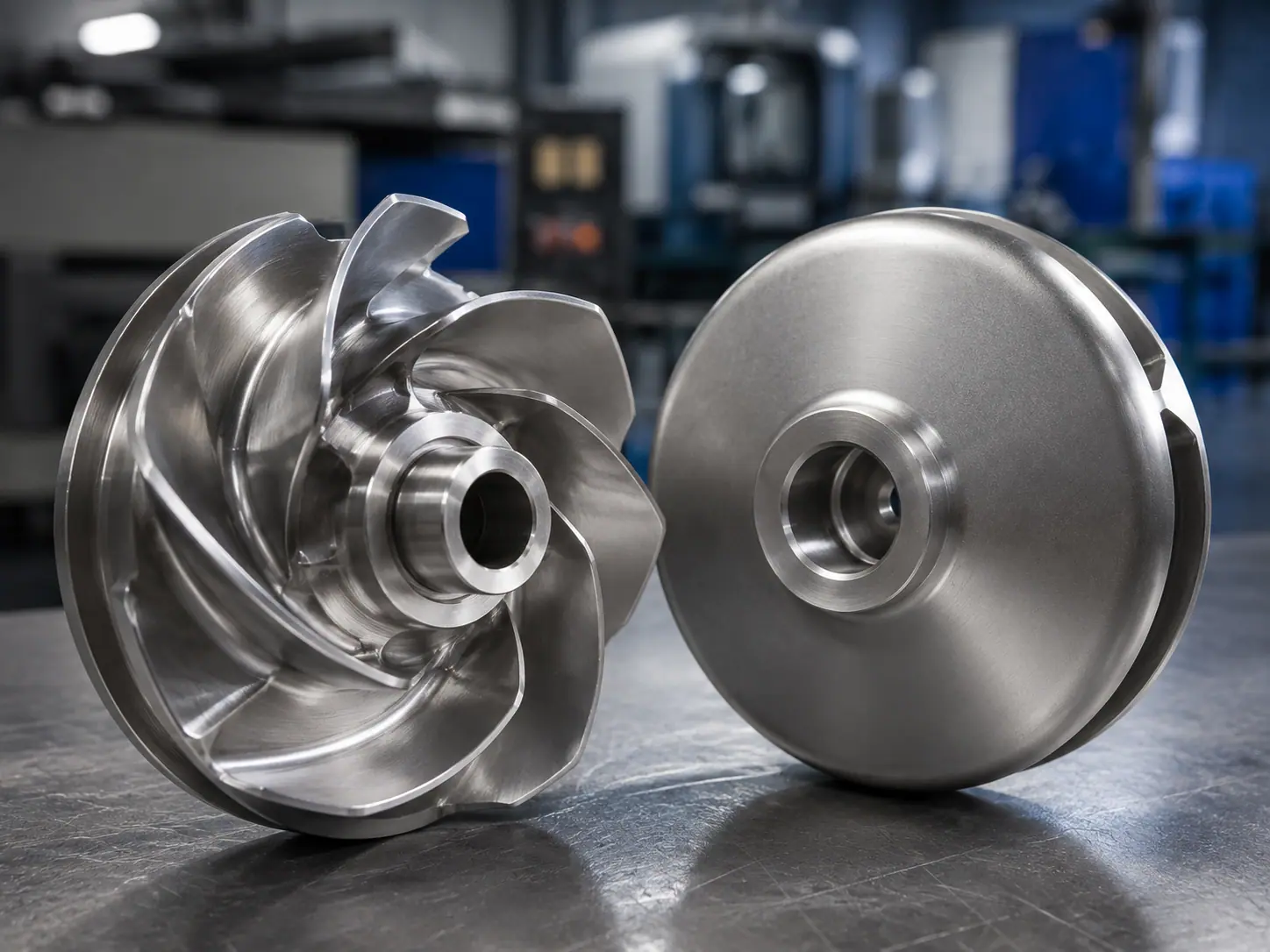
Pump Casing and Impeller RFQ Decision Table
Before you compare suppliers, make sure the quote is based on the same fit information. The table below turns a vague “pump casing impeller” inquiry into a clearer custom impeller RFQ without pretending that the casing itself is the product being sold.
| Fit area | Why it matters | What buyers should send |
|---|---|---|
| Outside diameter and volute clearance | Controls assembly space, rubbing risk, trim diameter, pump performance, and balance after machining. | Finished OD, trim history, casing or volute drawing, worn sample photos, critical clearance notes. |
| Wear-ring surfaces | Affects internal leakage, rubbing, heat marks, and service wear in closed or shrouded impellers. | Impeller-side ring diameter, casing-side mating diameter, clearance requirement, material pairing. |
| Inlet eye and casing inlet | Influences suction-side fit, inlet edge wear, and whether a damaged sample still represents original geometry. | Eye diameter, inlet radius, casing inlet information, suction-side photos, damaged edge notes. |
| Hub height and axial position | Affects front/back clearance, shroud rubbing, seal-area relationship, and shaft-side assembly position. | Hub height, mounting face, shaft shoulder, sleeve or nut details, section drawing if available. |
| Bore, keyway, taper, or thread | Controls concentricity, torque transfer, runout, shaft fit, and assembled impeller position. | Bore tolerance, keyway, taper, thread, shaft size, datum surface, bore wear condition. |
| Rotation direction and vane hand | Determines whether the impeller moves liquid correctly inside the casing. | Viewing side, casing orientation, motor direction, rotation arrow, photos from both sides. |
Common Fit Risks in Custom Pump Impeller Projects
Too Much Clearance
Excessive clearance can increase leakage, reduce pump performance, and make a new impeller look ineffective even if the casting and machining are acceptable.
Too Little Clearance
Tight clearance can create rubbing, heat marks, noise, vibration, or damage to the casing, wear ring, shroud, or vane-tip surfaces.
Copying Worn Geometry
A damaged sample may not show the original OD, vane edge, inlet eye, or wear-ring diameter. Mark reliable and unreliable surfaces before quotation.
Wrong Rotation Direction
Clockwise or counterclockwise notes are incomplete unless the viewing side is clear. Vane hand should be checked against the casing orientation.
Unclear Balancing Scope
Casting variation, trimming, machining, or sample-copy changes can affect balance. Confirm speed, balance grade, and report needs before production.
Wrong Material Assumption
The casing environment may involve chloride, acid, sand, sludge, heat, or solids. Material should follow liquid condition and drawing requirements.
How the Casing Relationship Changes by Impeller Type
Not every impeller checks the casing in the same way. A closed impeller usually puts more attention on wear-ring and shroud areas. An open impeller often needs closer attention to vane-tip clearance and axial position. Vortex and slurry impellers bring additional solids-passage and wear concerns.
| Impeller type | Casing relationship to review | Useful next page |
|---|---|---|
| Closed impeller | Wear-ring fit, shroud clearance, inlet eye, hub height, and leakage path. | closed impeller centrifugal pump |
| Open impeller | Vane-tip clearance, wear plate or casing surface, axial position, and solids passage. | open impeller pump |
| Semi-open impeller | Open-side clearance, backplate, vane height, and casing or wear-plate relationship. | semi-open impeller pump |
| Vortex impeller | Impeller recess, volute relationship, solids passage, backplate position, and casing match. | vortex impeller pump |
| Slurry impeller | Wear allowance, liner or casing relationship, abrasive clearance, and material compatibility. | slurry and mining impeller applications |
Where Matson Helps in the RFQ Stage
Matson can review the impeller as a manufactured part: casting feasibility, machining allowance, bore and hub details, wear-ring surfaces, trim diameter, material, coating or surface treatment, dimensional inspection, and dynamic balancing requirement. For the broader process route, see Matson’s impeller manufacturing page. For broader centrifugal pump projects, see the centrifugal pump impeller page.
Final hydraulic approval, pump curve changes, duty point selection, NPSH review, casing redesign, and complete pump redesign should stay with the pump OEM or engineering owner. That boundary is important because the impeller, casing, speed, liquid, system curve, and wear condition all interact.
From a manufacturing point of view, the best RFQ is not the longest RFQ. It is the one that tells the supplier which dimensions control fit, which sample surfaces are worn, which casing relationship is critical, and which documents must be delivered with the parts.
What to Send for a Pump Casing and Impeller Fit Quote
If your project starts from an old impeller and casing, do not let the supplier guess the original geometry from damage. Send the casing relationship if you have it, and clearly mark what is known, measured, assumed, or missing.
Part and drawing data
- 2D drawing, 3D model, or clear sample photos
- Pump casing drawing, section drawing, or volute relationship if available
- Finished OD, trim diameter, inlet eye, outlet width, and vane count
- Bore, keyway, taper, thread, hub height, and mounting face
- Wear-ring dimensions, casing-side mating dimensions, and clearance requirement
Operating and quality data
- Fluid, solids, corrosion, abrasion, temperature, and pH context
- Current issue: rubbing, leakage, cavitation, erosion, cracking, vibration, or poor performance
- Material grade, heat treatment, coating, passivation, or certificate requirement
- Pump speed, balance grade, runout requirement, and report need
- Quantity, batch schedule, inspection report, and export packing requirement
If the main concern is clearance, Matson’s pump impeller clearance article explains wear-ring clearance, casing clearance, front/back clearance, vane-tip clearance, and sample-copy risk in more detail. For wear-ring-specific questions, see wear ring in centrifugal pump.
Final Thoughts Before Sending Your RFQ
Pump casing and impeller fit is not a separate product category for Matson; it is a practical way to define the custom impeller correctly. Send your impeller drawing, sample photos, casing or volute dimensions, material grade, clearance requirement, operating condition, quantity, and balancing requirement for a manufacturing review.
Send Casing and Impeller Fit DetailsPump Casing and Impeller FAQ
Does Matson manufacture pump casings?
This page should not be read as a pump casing supply page. Matson’s confirmed scope is custom impeller manufacturing. Casing drawings, volute dimensions, and casing-side wear-ring information are useful because they help confirm impeller fit, clearance, and mating surfaces.
Why does a pump casing drawing help when ordering an impeller?
A casing or section drawing helps confirm outside diameter clearance, volute relationship, wear-ring fit, axial position, and whether a worn sample still represents the original geometry. It reduces guesswork before casting, CNC machining, inspection, and balancing.
Can Matson make an impeller from a worn sample?
Yes, Matson can review sample-based projects, but worn vane edges, OD, bore, hub faces, inlet edges, and wear-ring surfaces should be checked against reliable dimensions. A damaged sample is useful evidence, not always a safe master model.
Is pump impeller clearance the same for every pump?
No. Clearance depends on pump design, material pairing, temperature, solids, wear-ring design, speed, casing condition, and OEM specification. A universal number is not reliable for manufacturing. Use the drawing or confirmed assembly data whenever possible.
What if I only have photos of the impeller and casing?
Photos are helpful for first review, especially when they show both sides, wear areas, rubbing marks, and casing relationship. A reliable quotation normally also needs measured dimensions, material grade, quantity, speed, balance requirement, and critical fit information.
What casing-related dimensions are most important for RFQ?
Start with finished OD, wear-ring diameters, casing-side mating dimensions, inlet eye, hub height, axial position, bore, keyway, rotation direction, and any stated clearance requirement. If a casing drawing is unavailable, measured assembly references can still reduce risk.
Can Matson redesign the pump hydraulic performance?
No claim should be assumed from this page. Matson supports custom impeller manufacturing to supplied drawings, samples, and confirmed specifications. Pump curve changes, duty point selection, NPSH review, and complete pump redesign should remain with the OEM or engineering owner.
Which page should I use for a standard custom pump impeller inquiry?
Use the custom pump impeller page for general product sourcing. Use this page when the casing, volute, clearance, wear-ring surface, or sample-copy relationship is the main reason the impeller quotation needs extra review.