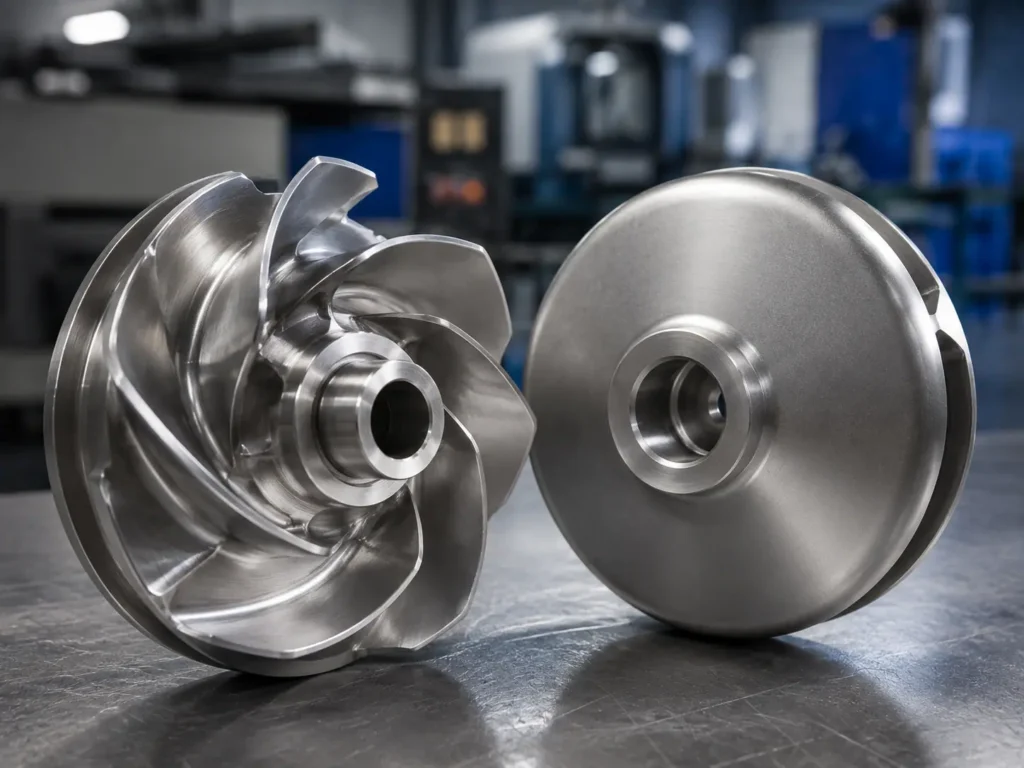
An axial flow impeller moves fluid mainly along the shaft direction. In pump and mixing equipment, that makes it different from a radial-flow impeller, which pushes fluid outward from the center, and different from a mixed-flow impeller, which combines both directions. For custom manufacturing, the important point is simple: axial flow is a geometry and flow-pattern description, not enough information for a quote by itself.
Short answer: before custom manufacturing an axial flow impeller, buyers should confirm whether the part is for a pump, mixer, agitator, fan, or other equipment; then provide the drawing, blade pitch, hub profile, bore, shaft connection, material, operating speed, rotation direction, balance or runout requirement, and inspection needs. Matson can manufacture axial-flow impeller hardware from drawings, 3D files, samples, and specifications, while final pump performance or mixing-process design should remain with the OEM or engineering owner.
Matson manufactures custom pump impellers, mixer impellers, fan and blower impellers, and other industrial impellers from drawings or samples. This article focuses on axial flow impeller structure, comparison, and RFQ preparation.
What Is an Axial Flow Impeller?
An axial flow impeller is designed so the main fluid movement follows the shaft direction. In pump language, this is often associated with propeller-style or axial-flow pump impellers. In mixing language, axial flow impellers are used to move liquid up or down through a tank, often for circulation, blending, or suspension duties.
The same phrase can appear in different equipment families. That is why a buyer should never send only “axial flow impeller” as the RFQ description. A pump impeller, tank agitator impeller, fan impeller, and hydrofoil mixer impeller may all involve axial flow language, but the manufacturing details are different.
For Matson, the quote starts from the part geometry and application: drawing, sample, material, shaft interface, speed, balance requirement, and inspection points.
Axial Flow vs Radial Flow vs Mixed Flow
Many searches compare axial and radial flow impellers. The comparison is useful, but it should not replace the drawing.
| Impeller type | Main fluid direction | Common equipment context | Manufacturing note |
|---|---|---|---|
| Axial flow impeller | Mostly along the shaft direction. | Axial-flow pumps, propeller-style pumps, tank mixers, hydrofoil impellers, selected fans. | Blade pitch, hub, shaft connection, rotation direction, material, runout, and balance must be confirmed. |
| Radial flow impeller | Mostly outward from the center. | Centrifugal pumps, radial turbines, some process mixing duties. | OD, inlet eye, outlet width, shroud, wear-ring, hub, and casing relationship often matter. |
| Mixed flow impeller | Both axial and radial components. | Mixed-flow pump applications where flow and head sit between radial and axial behavior. | Blade angle, hub contour, casing relationship, inlet and outlet dimensions need careful review. |
For the middle category, see Matson’s mixed flow impeller article. It explains why mixed-flow geometry should also stay tied to approved drawings and OEM performance responsibility.
Pump Axial Flow vs Mixer Axial Flow
The search data around axial flow impeller includes pump and mixer language. That matters for content planning and for real RFQs.
An axial flow pump impeller is part of a pump assembly. The buyer should confirm casing relationship, inlet and outlet geometry, shaft fit, material, pump speed, rotation direction, and balance. The part is usually judged around pump fit and operating reliability.
An axial flow mixer or agitator impeller is part of a mixing assembly. The buyer should confirm tank application, blade diameter, blade pitch, hub and shaft connection, material, surface finish, operating speed, and runout or balance requirements. The part is judged around manufacturing fit and process equipment requirements.
Matson can manufacture the hardware in either context when the drawing and requirements are clear. Process design, pump curves, tank flow pattern, and scale-up should stay with the equipment OEM or engineering owner.
For mixer-specific hardware, Matson’s mixer impeller manufacturer page is the better landing page.
Axial Flow Impeller Design: What Buyers Should Confirm
The phrase “axial flow impeller design” can sound like a request for engineering design. For Matson’s scope, it should be handled as manufacturing review unless the buyer provides approved design data.
| Review item | Why it matters | What buyers should send |
|---|---|---|
| Equipment type | A pump, mixer, fan, or custom machine can use different axial-flow geometry. | Pump model or equipment type, application, and assembly context. |
| Blade pitch and shape | Axial movement depends heavily on blade angle and profile. | 2D drawing, 3D model, blade count, pitch, blade width, and photos from several angles. |
| Hub and shaft connection | The impeller must mount securely and run concentrically. | Bore, keyway, hub length, taper, thread, clamp, flange, bolt pattern, or coupling details. |
| Diameter and clearance | Diameter affects fit, casing or tank clearance, and service reliability. | OD, blade tip clearance, casing/tank relationship, and worn-sample notes. |
| Material and surface finish | Water, chemicals, solids, corrosion, and cleaning change material needs. | Material grade, liquid condition, solids, pH, chloride, temperature, coating, polish, or passivation needs. |
| Speed, balance, and runout | Axial-flow blades can create vibration if mass or geometry is uneven. | Operating speed, balance grade, runout tolerance, and report requirement. |
If the buyer only has a worn sample, mark repaired, bent, corroded, or eroded blade areas clearly. A damaged blade tip or hub bore should not become the reference for the new part without checking the original dimensions.
Manufacturing Route and Inspection
Axial flow impellers may be fabricated, cast, machined, welded, or produced through a mixed route. The right route depends on size, material, blade geometry, quantity, surface finish, and documentation requirements.
Pump axial-flow impellers may need controlled casting and CNC machining at the bore, hub, shaft interface, blade tip, or mounting surfaces. Mixer axial-flow impellers may need blade fabrication, weld control, hub machining, polishing, passivation, or surface finish inspection. Fan-related axial impellers may need stricter balancing and runout review.
Common manufacturing checks include:
- Blade count, blade pitch, and blade direction
- Hub profile and shaft connection
- Bore, keyway, taper, thread, clamp, flange, or bolt pattern
- OD and blade tip condition
- Rotation direction and viewing side
- Material grade and certificate requirement
- Surface finish, coating, polishing, or passivation
- Runout, balance, and report requirements
Matson’s impeller manufacturing capabilities include casting, CNC machining, surface treatment, dimensional inspection, dynamic balancing, and export packing when project requirements are defined.
Material and Application Notes
Axial flow impellers can work in water, wastewater, chemical processing, tank mixing, cooling, ventilation, or other industrial systems. Material selection should follow the actual application.
For water or wastewater, corrosion and solids should be checked together. For chemical processing, pH, chloride, concentration, temperature, cleaning method, and surface finish may matter. For mixing tanks, viscosity, solids, deposits, cleaning, and shaft connection can matter as much as the blade shape. For fan or airflow equipment, material weight, balance, and operating speed become more important.
For process mixing applications, Matson’s tank agitator impeller article gives a more detailed mixer-specific RFQ checklist.
What Buyers Should Send for RFQ
For an axial flow impeller project, send:
- Equipment type: pump, mixer, agitator, fan, blower, or custom machine
- Approved 2D drawing and 3D file if available
- Physical sample and photos from front, back, side, bore, hub, blade tip, and damaged areas
- Blade count, blade pitch, blade direction, rotation direction, and viewing side
- OD, blade width, hub profile, bore, keyway, taper, thread, flange, or shaft connection
- Casing clearance, tank clearance, blade tip clearance, or mating-part dimensions
- Material grade, liquid or gas condition, solids, corrosion, temperature, and service history
- Surface finish, coating, polishing, passivation, or certificate requirements
- Operating speed, balancing grade, runout requirement, and report needs
- Quantity, batch schedule, packing, and documentation requirements
If the project is a repeat part, send the approved revision. If it is a process or pump redesign, say that clearly so the manufacturing quote is not confused with performance responsibility.
Common Questions We Actually Get
What is an axial flow impeller?
An axial flow impeller moves fluid mainly along the shaft direction. It is used in some pumps, mixers, agitators, fans, and custom industrial equipment.
What is the difference between axial and radial flow impellers?
An axial flow impeller moves fluid mostly along the shaft direction. A radial flow impeller moves fluid mostly outward from the center. Mixed-flow impellers combine both directions.
Is an axial flow impeller only for pumps?
No. Axial flow language appears in pumps, tank mixers, agitators, fans, and other equipment. Buyers should identify the equipment type before requesting a quote.
Can Matson design an axial flow impeller?
Matson can manufacture axial flow impellers from drawings, 3D files, samples, and specifications. Final pump performance, mixing process, fan performance, and scale-up design should be confirmed by the equipment OEM or engineering owner.
What should buyers confirm before custom manufacturing?
Confirm the drawing, equipment type, blade pitch, hub and shaft connection, material, rotation direction, operating speed, balance or runout requirement, and inspection points.
Send Us Your Drawing
Need an axial flow impeller manufactured from a drawing, 3D file, or sample? Send Matson the equipment type, drawing, blade and hub photos, material grade, operating condition, speed, balancing or runout requirement, quantity, and inspection needs through the contact page. We can review manufacturing route, material, machining, surface treatment, inspection, and documentation requirements before quoting.