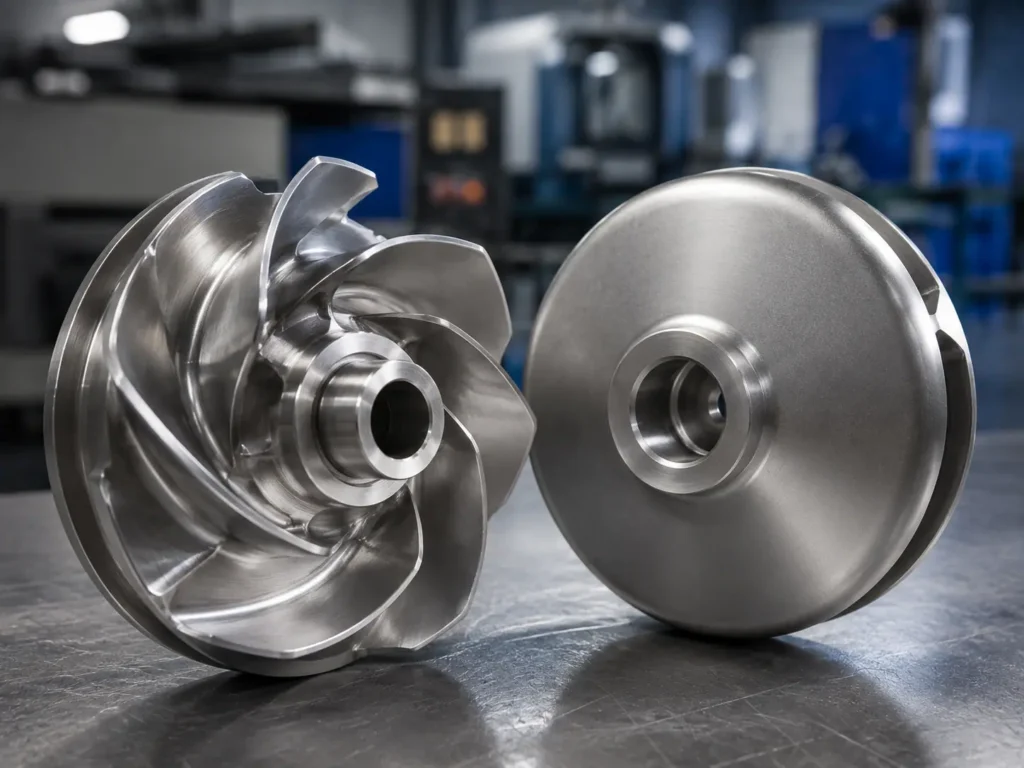
OEM impeller supply from China can work well for repeat orders when the buyer controls the approved drawing, sample status, material requirement, inspection documents, balancing requirement, packing method, and change-control process before the second batch starts. The risk is not only whether the first sample looks acceptable. The bigger question is whether the supplier can repeat the same impeller consistently across future batches.
Short answer: before placing repeat OEM impeller orders, buyers should check drawing revision control, approved sample records, material certificate requirements, dimensional inspection points, dynamic balancing needs, surface treatment, packing standards, batch quantity, lead time, and how the supplier handles changes or quality issues. A repeat order should not be treated as a new one-off RFQ every time.
Matson supports OEM impeller supply for industrial pump, fan, blower, mixer, agitator, compressor, and custom equipment projects when the buyer provides drawing, sample, material grade, quantity, application, and documentation requirements. The goal is stable custom manufacturing, not catalog retail replacement parts.
[Image placeholder: Add a real factory image showing multiple finished custom impellers from the same OEM batch with inspection records, packing labels, and approved drawing on the workbench. Alt text: “OEM impeller supply from China with repeat batch inspection records and export packing”]
First Sample vs Repeat Order
A first sample proves that the supplier can make one acceptable part. A repeat order tests whether the supplier can control the same requirements again.
For OEM buyers, that difference matters. A sample may be checked closely by both sides. A repeat batch may move faster, involve more quantity, and expose weak documentation, poor revision control, inconsistent material, or unclear packing requirements.
| Stage | Main buyer question | What should be controlled |
|---|---|---|
| First quote | Can this supplier understand the part and quote it responsibly? | Drawing, sample photos, material, process route, quantity, application, and document needs. |
| First sample | Can the supplier make an impeller close enough for approval? | Critical dimensions, material confirmation, machining surfaces, balance need, photos, and sample feedback. |
| First batch | Can the approved sample be repeated in practical quantity? | Drawing revision, inspection points, batch material, balancing, surface treatment, packing, and lead time. |
| Repeat order | Can the same quality be maintained without re-solving the project? | Change control, quality records, batch traceability, packing standard, communication, and issue response. |
The best repeat-order supplier is not always the cheapest first-quote supplier. For custom industrial impellers, the supplier must understand rotating fit, material risk, machining datum, balance, inspection, and documentation.
Lock the Drawing Revision and Approved Sample
Repeat orders need one agreed reference. That reference can be an approved drawing, an approved 3D model, an approved sample, or a combination of these. If every reorder starts from a different email, photo, or old sample, quality will drift.
Buyers should confirm:
- drawing number and revision
- 2D drawing, 3D file, and PDF version used for production
- approved sample date or sample approval note
- which dimensions are critical and which are reference-only
- which surfaces must not be changed without approval
- whether old samples show wear, corrosion, repair welding, or field modification
For sample-based projects, the drawing should still be created or updated when possible. A worn sample may show the part that came out of service, not the original approved design. Matson’s guide to custom impeller from drawing or sample explains why damaged areas should not be copied blindly.
Check Material and Process Consistency
Material consistency is one of the first repeat-order risks. Stainless steel, duplex stainless, bronze, brass, carbon steel, alloy steel, aluminum, heat-resistant steel, and high-chrome wear alloys all need clear grade control.
Do not rely on broad labels such as stainless, bronze, or alloy. Repeat OEM supply should define the material grade, allowed equivalent grade if any, certificate requirement, heat treatment if needed, surface treatment, and whether the operating environment has changed.
Process route matters too. If the first batch used casting plus CNC machining, the repeat batch should not quietly change to a different route without approval. If the part requires passivation, coating, polishing, painting, or balancing, those steps should be part of the repeat-order record.
Matson’s impeller manufacturing work can include casting, CNC machining, surface treatment, dynamic balancing, dimensional inspection, material documentation, and export packing when the project requirements are defined.
Inspection, Balancing, and Documents
Repeat orders are easier when the inspection package is known before production starts.
The buyer should define which dimensions must be checked every batch. For pump impellers, this may include OD, bore, hub height, keyway, mounting face, wear surfaces, eye diameter, vane width, and clearance-related surfaces. For fan and blower impellers, it may include diameter, width, hub, bore, blade count, blade spacing, runout, weld condition, and balance. For mixer impellers, it may include shaft connection, blade angle, runout, surface finish, and weld quality.
Dynamic balancing should also be treated as a repeat-order requirement, not a casual note. If the part needs balancing data, balance grade, or a report, say so before production. For a deeper checklist, see custom impeller dynamic balancing.
Documents may include material certificate, dimensional inspection report, balancing report, pre-shipment photos, packing list, invoice, and export packing details. Matson’s guide to custom impeller manufacturing documents gives a fuller document checklist for OEM buyers.
Quantity, Lead Time, and Packing
Repeat order planning should cover more than unit price.
The buyer should ask how the supplier handles prototype quantity, first batch, recurring batch size, annual forecast, safety stock, packing method, and export schedule. A supplier that can make three sample pieces may still need planning to handle 100 pieces, repeated delivery windows, or mixed SKUs.
Packing is not a minor detail for impellers. Thin vane edges, machined bores, coated surfaces, balanced correction areas, and heavy rotating parts can be damaged by poor packing. If the first shipment arrived safely, record the crate style, internal protection, labeling, gross weight, part marking, and document envelope location. Repeat it.
For distributor or OEM programs, also confirm whether each carton, crate, or pallet needs label control, part number, batch number, customer PO number, or destination-specific documents.
Supplier Warning Signs Before Repeat Orders
Some supplier problems only become obvious after the first sample.
Watch for warning signs:
- the supplier cannot confirm which drawing revision was used
- the quotation changes without explaining material, process, or inspection changes
- the supplier treats a worn sample as the only production standard
- inspection reports do not match the dimensions that matter
- material certificate requirements are discussed only after shipment
- balancing requirement is vague or missing from the production plan
- packing changes without buyer approval
- lead time promises change batch by batch
- quality issues are handled with blame instead of records, photos, and corrective action
None of these automatically means the supplier is unusable. But they should be resolved before a larger repeat order is placed.
Repeat Order Checklist for OEM Buyers
Use a repeat-order checklist before sending the next PO.
| Repeat-order item | What to confirm | Why it matters |
|---|---|---|
| Drawing and sample control | Revision number, approved sample, critical dimensions, and change notes. | Prevents silent geometry drift between batches. |
| Material | Grade, equivalent allowance, certificate requirement, heat treatment, and service environment. | Keeps corrosion, wear, strength, and documentation aligned. |
| Manufacturing route | Casting, CNC machining, fabrication, surface treatment, coating, passivation, and finishing. | Prevents unapproved process changes that affect fit or service life. |
| Inspection | Critical dimensions, report format, photos, and acceptance points. | Focuses QC on functional surfaces instead of easy but less useful measurements. |
| Balancing | RPM, balance grade, report requirement, correction method, and assembly condition. | Controls vibration risk and OEM documentation needs. |
| Commercial plan | Batch size, annual demand, lead time, packing, payment term, and export schedule. | Makes repeat supply easier to manage than one-off ordering. |
If the project is still at the first quotation stage, prepare the basic RFQ first. Matson’s drawing-based impeller manufacturing guide covers what buyers should send before a reliable quote.
Common Questions Buyers Ask
What should buyers check before repeat OEM impeller orders from China?
Check drawing revision, approved sample status, material grade, inspection points, balancing requirement, document package, packing method, batch quantity, lead time, and supplier change-control process.
Is an approved first sample enough for repeat impeller supply?
No. An approved sample is useful, but repeat orders still need drawing control, material consistency, inspection records, balancing requirements, packing standards, and clear handling of changes.
What documents are useful for repeat impeller batches?
Useful documents can include material certificate, dimensional inspection report, balancing report, pre-shipment photos, packing list, invoice, batch labels, and approved drawing or sample record.
How can buyers reduce quality drift between batches?
Use one approved drawing revision, mark critical dimensions, define material and process requirements, keep inspection records, confirm balancing requirements, and document any change before production.
What should I send to Matson for repeat OEM impeller supply?
Send the approved drawing or sample record, material grade, previous batch information, quantity forecast, inspection requirements, balancing needs, packing standard, and delivery plan through the custom impeller quote page.