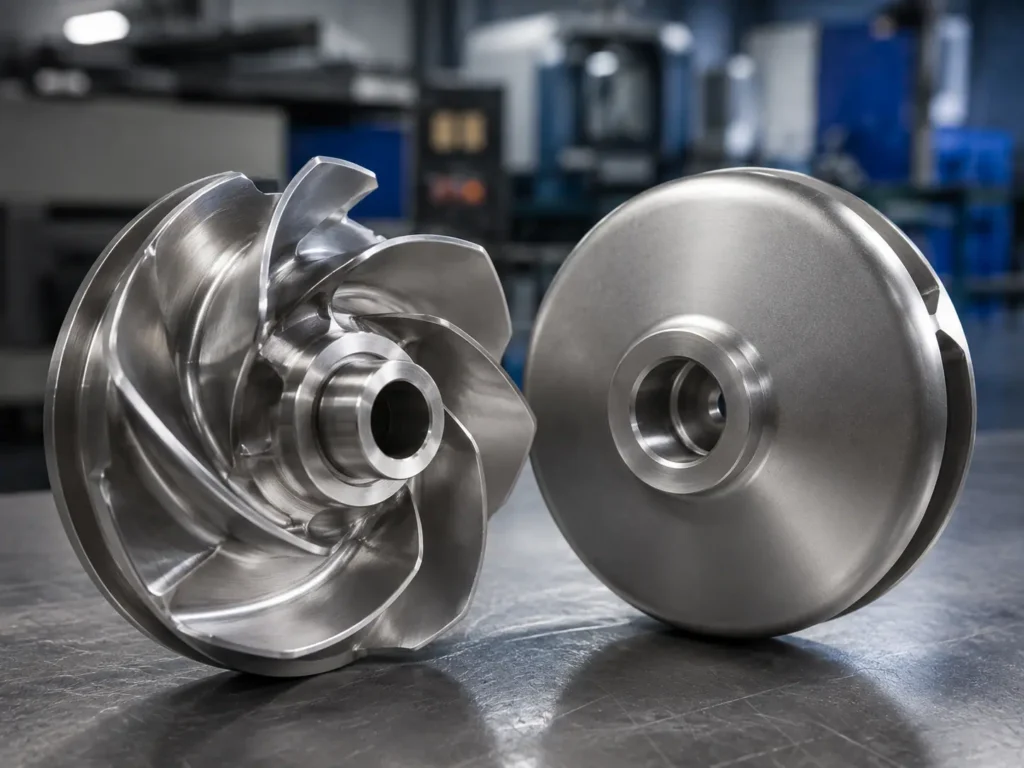
A larger impeller eye is not automatically better for NPSH or reliable pump operation. Increasing effective inlet area can reduce average inlet velocity at a given flow, but the complete inlet geometry and low-flow behavior still matter. Before approving an enlarged eye, compare the pump’s required NPSH with the system’s available NPSH across the operating range, then review suction recirculation, inlet blade geometry and validated performance evidence rather than diameter alone.
Separate the system’s supply from the pump’s requirement
NPSH and impeller eye design belong in the same engineering review, but they describe different parts of the problem. NPSH available, or NPSHA, describes the suction condition provided by the installation. NPSH required, or NPSHR, describes a pump requirement under a stated criterion and operating condition.
KSB’s NPSH reference identifies speed, inlet geometry, operating point and approach-flow profile among the factors influencing the pressure drop through the inlet. It also distinguishes the available and required values. An impeller change should not be presented as a replacement for checking the suction system.
For an OEM comparison, ask who owns each input. The system engineer should establish the available suction condition. The pump engineering owner should provide the applicable requirement and operating limits. The component manufacturer needs the approved geometry that results from that review.
| Item | What it represents | What to confirm |
|---|---|---|
| NPSHA | Suction condition available from the installation | Flow, temperature, liquid level, pressure, losses and reference datum |
| NPSHR | Pump requirement at a stated operating condition and criterion | Curve, speed, geometry revision, liquid and test criterion |
| NPSH3 | A specified head-drop criterion associated with cavitation testing | Do not interpret it as the first appearance of bubbles |
| Required margin | Additional allowance determined for the application | Responsible engineering approval; no generic allowance assumed here |
The Hydraulic Institute’s pump-principles reference defines NPSH3 by a three-percent head reduction and notes that cavitation effects can occur even with margin above published NPSHR. Simply showing NPSHA greater than an NPSH3 value is not proof of cavitation-free operation or acceptable service life.
Why increasing inlet area can help
For a defined flow through a defined effective area, average velocity follows Q/A. Increasing that effective area lowers the calculated average velocity if flow is unchanged. That is useful starting physics, not a complete prediction of local pressure or pump suction performance.
Eye outside diameter alone does not give the effective area. The hub, blade blockage, inlet contour and location of the chosen section affect the geometry being described. Local acceleration and flow direction also matter. A large visible opening can lead into a restrictive or poorly matched passage.
When reviewing a proposed eye enlargement, ask for the actual changed surfaces. Has the hub changed? Are the leading edges moved? Have blade inlet angles, shroud contours or passage areas changed as well? A comparison should identify those differences instead of attributing every result to one diameter.
The existing impeller eye geometry guide covers the component’s dimensions and manufacturing references. This article focuses on the suction-performance evidence needed before changing that geometry.
Why a larger eye needs a low-flow review
The condition that helps at one duty can create a different concern elsewhere. Suction recirculation refers to an inlet flow pattern that requires assessment, not a feature that can be judged from the eye diameter in isolation.
KSB’s operating-behaviour explanation discusses recirculation away from design flow. The practical consequence for a design review is to include the low-flow end of the intended range, not just the normal duty or best efficiency point.
Do not promise that an enlarged eye solves an installation’s suction problem. Ask for the applicable NPSHR curve, the approved operating region and any assessment of inlet recirculation for the proposed configuration. Define the actual minimum operating flow rather than assuming every installation operates continuously at its selected duty.
Our recommendation is to treat a larger eye as a design proposal with evidence requirements. A favorable NPSH number at one point is not enough to release the geometry for a pump that also spends significant time at other duties.
Build a comparison around the intended operating envelope
Keep the baseline and proposed configuration on the same review sheet. Identify speed, impeller revision, liquid properties, casing arrangement and the basis of each curve. Separate measured results from numerical predictions and state which evidence has been validated.
For the installation side, identify the liquid level and pressure conditions that produce the limiting suction condition. Include the relevant temperature and flow cases, rather than combining inputs from unrelated operating scenarios. The worst case should come from a coherent operating condition, not a collection of convenient individual values.
For the pump side, compare more than suction performance. Confirm that the revised component still meets head, efficiency, shaft-power and mechanical requirements. The responsible engineer should decide whether further analysis or testing is required before manufacturing release.
| Project situation | Evidence needed | Conclusion to avoid |
|---|---|---|
| Clean-liquid duty with limited suction margin | Available suction cases and the matching pump requirement curves | A larger eye automatically fixes the system |
| Wide operating range or frequent low-flow duty | Approved operating region and inlet-flow assessment | One favorable normal-duty NPSH value proves the whole range |
| Hot or variable-temperature process liquid | Consistent temperature, vapor-pressure and installation inputs | A reference-water result transfers without review |
| Double-suction arrangement | Both eyes, inlet approach conditions and the stated flow basis | Nominal symmetry proves equal approach flow |
| Repeat manufacture from a damaged sample | Released inlet model and identified wear or repair uncertainty | A worn opening defines the correct new diameter |
For wastewater or solids-containing service, also retain the required passage geometry and service evidence. An inlet change made for suction performance is not permission to compromise other approved requirements. The appropriate acceptance basis remains application-specific.
Keep cavitation diagnosis separate from component release
Pitting near the eye is useful evidence to document, but a photograph alone cannot establish the complete cause. Operating history, liquid condition and the installation need review. Do not enlarge an opening simply because the previous component shows damage there.
The pump impeller cavitation guide addresses damage and contributing conditions. A manufacturing order still needs a released decision: reproduce the approved geometry, or manufacture an engineering-approved revision. Those are different instructions.
What should reach the manufacturing RFQ?
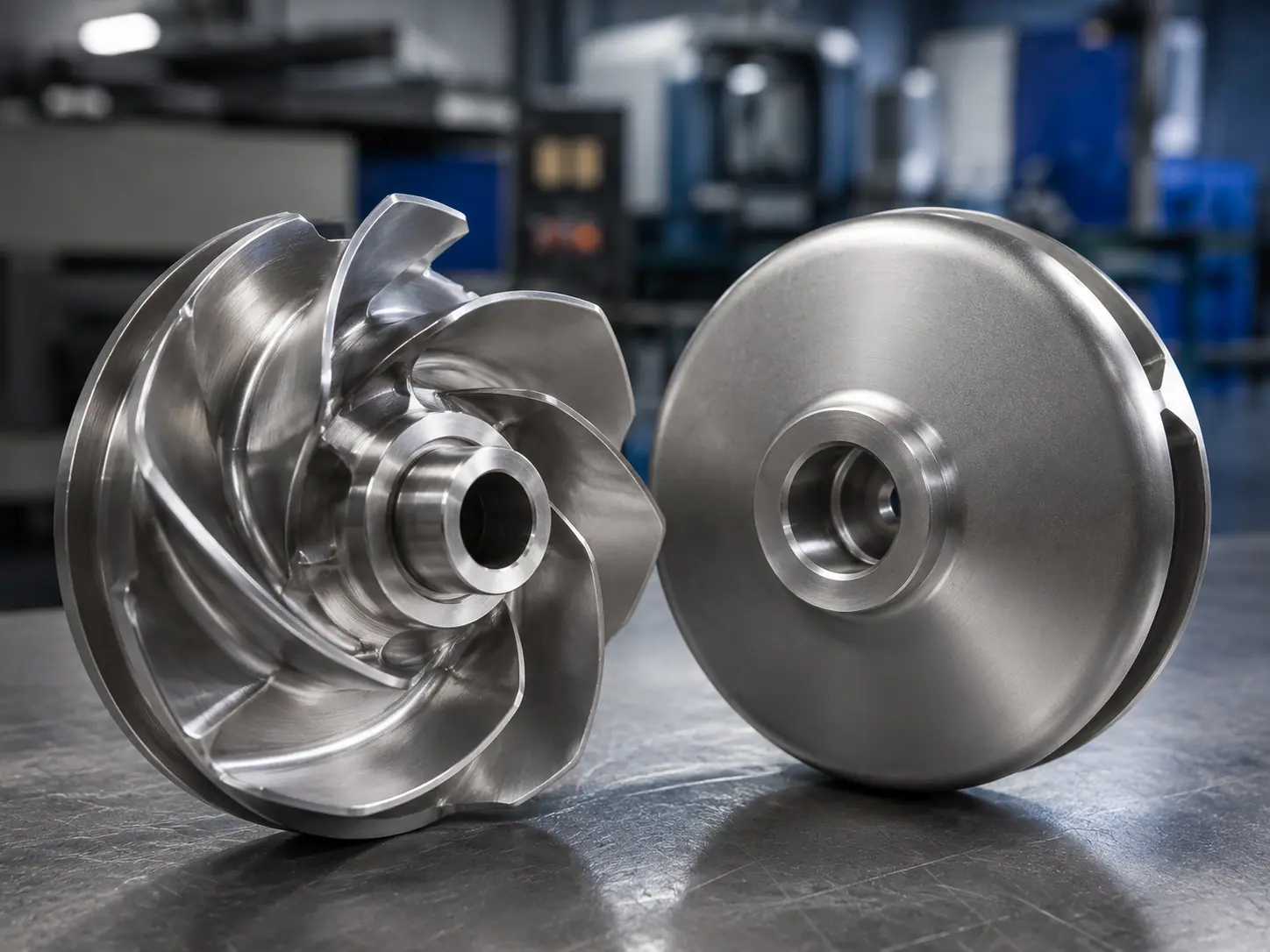
Send the approved model and drawing revision, eye and hub geometry, leading-edge definition, rotation/viewing convention, component interfaces, material specification, quantity and inspection requirements. Identify the governing file if a two-dimensional section and the model disagree.
Include the relevant curve reference and state whether the inlet is unchanged or revised. Mark repaired, worn or uncertain surfaces on a sample. An inspection method should be agreed for the controlled inlet features before production, especially where normal access does not reveal the whole passage.
Matson reviews custom pump impellers against confirmed component requirements. The manufacturing review should establish process and inspection scope, not imply hydraulic redesign or a complete-pump NPSH guarantee. Material, dimensional and balance records serve their specified acceptance purposes; they do not replace hydraulic validation.
Questions to settle before ordering
Does a larger impeller eye always reduce required NPSH?
No. Increasing effective inlet area can lower average velocity at unchanged flow, but local pressure and suction performance depend on the complete inlet design and operating condition. Request the matching requirement curve and geometry reference. Do not approve an enlarged eye using diameter alone or assume a favorable result at one duty applies across every operating condition in the installation.
Is NPSH available the same as NPSH required?
No. Available NPSH describes the installation’s suction condition, while required NPSH describes a pump requirement under a stated criterion. The comparison needs consistent flow, liquid, speed and reference information. Assign responsibility for the system inputs and pump curves separately. Changing an impeller does not remove the need to verify the installation’s available suction condition and the application-specific margin.
Does meeting NPSH3 mean the pump is free of cavitation?
No. NPSH3 is associated with a defined head reduction during testing, not the first formation of vapor bubbles. The equipment engineer must determine the required margin and operating limits for the service. Ask which criterion a published requirement represents before treating it as an acceptance boundary. A positive arithmetic difference alone is not a guarantee against noise, erosion or reduced reliability.
Why should an eye enlargement be checked at low flow?
A pump’s inlet behavior changes with operating condition, and suction recirculation requires attention away from the design duty. A proposed geometry should therefore be assessed over the intended range, including the actual minimum flow. Request the approved operating region and relevant inlet-flow evidence. A single normal-duty comparison cannot establish that the revised component is suitable for extended operation at lower flows.
Can a supplier copy the inlet from a cavitation-damaged sample?
Only against an agreed and reliable manufacturing basis. Damage, previous grinding or repair can alter the opening and leading edges. Identify those areas and obtain the released drawing or an approved reconstruction where needed. A measurable sample feature is not automatically the correct nominal design. The engineering owner should resolve the hydraulic geometry before the supplier uses it for production.
Can inspection and balancing reports verify NPSH performance?
No. Those reports document the specific component characteristics and acceptance operations they cover. They do not establish the pump’s suction requirement, installation margin or low-flow behavior. Keep component manufacture and hydraulic validation separate in the purchase specification. If pump testing is required, define responsibility, configuration, procedure and acceptance criteria explicitly instead of inferring performance approval from a conforming loose impeller.
Final Thoughts
A larger eye is a hydraulic design choice, not a universal remedy for limited suction margin. Compare available and required NPSH on a consistent basis, review the operating envelope and preserve the approved inlet geometry through manufacture. Matson can review custom impeller production against released specifications. Hydraulic selection, margin approval and complete-pump validation should remain explicitly assigned to the responsible equipment engineering owner.
Send your approved model, inlet section, material grade, quantity and inspection requirements through Matson’s RFQ contact page for a manufacturing review.