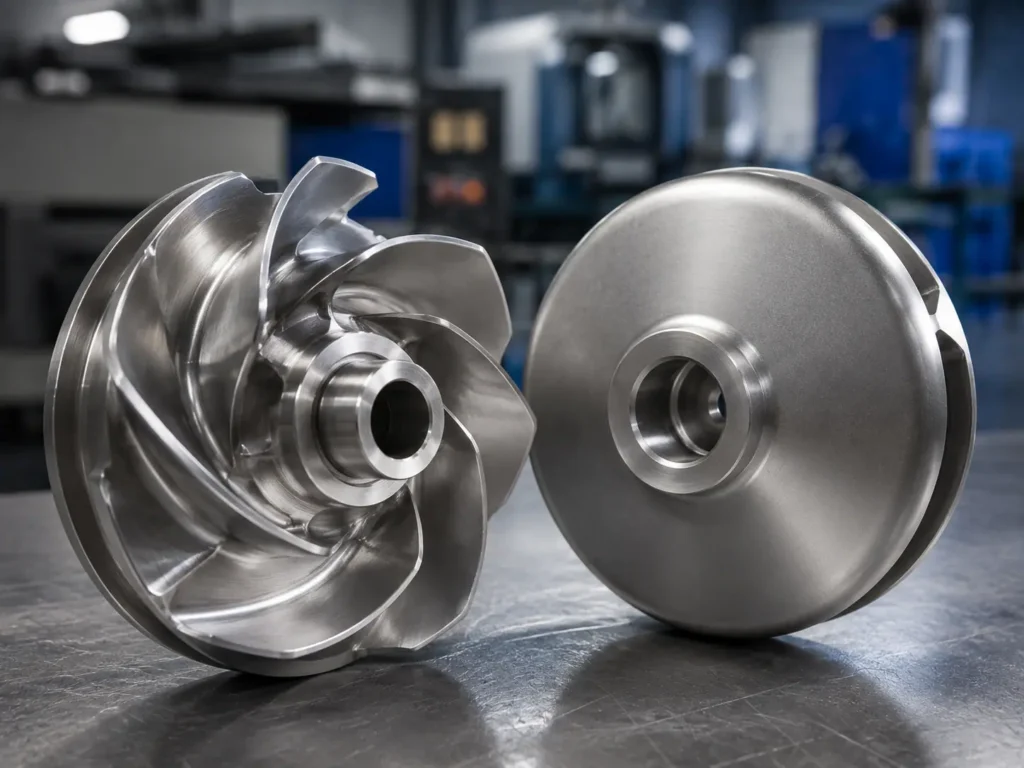
Buyers looking for a custom mixer and agitator impeller manufacturer in China should compare more than price and delivery time. A reliable supplier must understand the specified impeller type, tank relationship, shaft connection, material, fabrication route, surface finish, runout, inspection documents, and repeat-order controls before quoting.
Short answer: choose a custom mixer and agitator impeller manufacturer in China by checking whether the supplier can manufacture from an approved drawing or reviewed sample, control blade and hub geometry, manage welding distortion and critical machining, verify the specified material, and document the finished part. Mixing duty and process performance should remain with the mixer OEM or process engineer; the manufacturer should make the approved hardware consistently.
Matson’s mixer and agitator impellers page covers the custom product range. This article is the procurement and RFQ checklist for sample, pilot, and repeat orders.
[Image placeholder: Add a real factory image showing a stainless steel mixer impeller beside its approved drawing, shaft dimensions, inspection tools, and material certificate. Alt text: “Custom mixer and agitator impeller manufacturer China RFQ inspection”]
Define the Impeller Before Requesting a Quote
“Agitator impeller” is not a complete specification. Hydrofoils, pitched-blade turbines, Rushton turbines, anchors, paddles, helical ribbons, and dispersion blades have different manufacturing risks. The supplier needs the approved geometry and shaft connection. Tank diameter, wall and bottom clearance, pumping direction, and operating environment also matter, even when the supplier is not responsible for process design.
| Impeller type | Main manufacturing checks | RFQ details |
|---|---|---|
| Hydrofoil or pitched-blade turbine | Blade profile, pitch, pumping direction, hub position, repeated geometry. | Drawing, diameter, blade angle, rotation, shaft connection, material, RPM. |
| Rushton or radial turbine | Disc flatness, blade position, weld sequence, runout, hub concentricity. | Blade count, disc thickness, weld requirement, bore, inspection points. |
| Anchor or paddle | Tank clearance, arm position, welding distortion, shaft alignment. | Tank ID, clearances, overall height, removable sections, finish. |
| Helical ribbon | Ribbon pitch, concentricity, supports, long welds, transport protection. | Tank geometry, ribbon direction, shaft supports, material, packing limits. |
| Dispersion impeller | Disc flatness, tooth geometry, bore fit, runout, balance review. | Diameter, thickness, tooth profile, speed, shaft fit, finish. |
Sending only a photo and outside diameter invites suppliers to quote different assumptions.
What to Include in the RFQ
Send enough information to review fit, material, fabrication, machining, inspection, and packing:
- Controlled 2D drawing and, where available, a 3D model
- Clear photos and a physical sample if the drawing is incomplete
- Type, diameter, height, blade count, profile, pitch, thickness, and pumping direction
- Bore, keyway, hub, coupling, bolt pattern, mounting face, and shaft fit
- Tank ID, wall clearance, bottom clearance, and internal obstructions where relevant
- Material grade, liquid, temperature, solids, viscosity, corrosion, and cleaning conditions
- Surface finish, passivation, coating, polishing, and weld-finish requirements
- Operating speed, runout or balancing requirement, critical dimensions, and tolerances
- Sample quantity, batch quantity, annual demand, packing, labeling, and documents
When only a sample exists, record wear, bending, repair welds, corrosion, buildup, and shaft-fit damage before freezing dimensions. See Matson’s guide to a custom impeller from drawing or sample.
Separate Process Design from Manufacturing
The process engineer or mixer OEM should approve impeller type, diameter, speed, blade angle, installation height, and quantity. These decisions affect circulation, shear, gas dispersion, solids suspension, blend time, and power demand.
The manufacturer should flag unclear information and manufacture the approved design—not silently redesign it. It can check whether the rotation arrow matches the pumping direction and whether the hub is machinable and inspectable. That is different from promising blend time or solids-suspension performance without process data.
Compare the Manufacturing Route
Mixer impellers may be fabricated, cast, machined, or made through a combined route. The choice depends on geometry, material, quantity, tolerance, finish, and inspection.
| Route | Typical fit | Buyer review |
|---|---|---|
| Fabrication and welding | Turbines, anchors, paddles, ribbons, large stainless assemblies. | Fixtures, weld sequence, distortion, blade position, runout, weld finish. |
| Casting plus CNC | Complex hubs or integrated shapes where geometry and quantity justify casting. | Casting method, allowance, material verification, defects, machined interfaces. |
| CNC from solid or plate | Selected precision parts, hubs, discs, and smaller quantities. | Tool access, geometry, finish, tolerance, and cost. |
| Combined route | Fabricated or cast body with machined bore, hub, or mounting face. | Datums, sequence, distortion before machining, inspection, repeatability. |
Matson’s impeller manufacturing work can include casting, CNC machining, fabrication review, surface treatment, inspection, dynamic balancing, material documentation, and export packing when specified.
Material, Finish, and Inspection
“Stainless steel” is not a complete callout. Mixer impellers may use stainless steel, duplex stainless, carbon steel, or another buyer-specified alloy. Confirm the grade against the drawing, liquid, temperature, solids, corrosion, cleaning method, and service life.
Likewise, a chemical tank, wastewater basin, food-contact vessel, and abrasive slurry mixer do not share one universal finish. State roughness, polishing, passivation, coating, weld blending, pickling, or product-contact requirements. Ask which material certificate and surface-treatment record will be supplied.
Inspect the connection as carefully as the blades. Bore, keyway, hub height, coupling, mounting face, bolt circle, and set-screw position affect assembly. Fabricated impellers also need checks for blade angle and spacing, disc flatness, arm position, ribbon pitch, weld condition, and runout.
Balancing is project-dependent. A slow anchor does not have the same requirement as a high-speed dispersion disc. Speed, diameter, mass distribution, welding, shaft arrangement, and equipment specification decide what is required. The equipment owner should define acceptance criteria; the manufacturer should confirm the balancing condition and report format.
How to Audit a China Supplier
Use the RFQ response as evidence. A capable manufacturer should explain:
- Which drawing revision controls production
- Which specifications are missing or contradictory
- Whether the sample is worn, bent, repaired, or unsuitable as the only master
- Which route is quoted and which operations are outsourced
- How welding fixtures, sequence, and distortion are controlled
- Which connection, blade, clearance, and runout dimensions are inspected
- How material identity and surface treatment are documented
- Whether balancing is included or awaiting an equipment requirement
- What first-article records are supplied before batch approval
- How revisions, fixtures, packing, and changes are controlled for repeat orders
The lowest quote may omit machining, polishing, passivation, balancing, inspection documents, export packing, or a first-article step. Compare the same scope.
Plan the First Article and Repeat Orders Together
For a new impeller, approve a first article before a large batch. Agree on revision, material, critical dimensions, finish, inspection records, packing, and approval method. After approval, freeze the reference. Repeatability comes from controlled drawings, fixtures, records, inspection points, and change control.
Matson’s OEM impeller supply from China guide covers repeat-batch controls in more detail.
Common Questions from Buyers
How do I choose a custom mixer and agitator impeller manufacturer in China?
Choose one that reviews the approved drawing or sample, understands the specified geometry, controls material, welding, machining, runout and inspection, and maintains the approved revision for repeat orders.
What should I send for a custom agitator impeller quote?
Send the drawing or reviewed sample, type, blade geometry, shaft connection, tank clearances, material, operating conditions, finish, speed, critical tolerances, documents, quantity, and packing requirements.
Can a manufacturer choose the right impeller type for my tank?
The mixer OEM or process engineer should approve type, diameter, speed, position, and performance requirements. The manufacturer can review manufacturability and identify missing drawing details.
Can Matson manufacture from a physical sample?
Selected industrial impellers can be reviewed from a sample. Wear, bending, repair welds, corrosion, buildup, and damaged interfaces must be identified before dimensions are frozen.
Does every agitator impeller require dynamic balancing?
No. Speed, diameter, mass, fabrication, shaft arrangement, and equipment specification determine whether balancing is needed and what acceptance criteria apply.
Need a custom mixer or agitator impeller manufactured from a drawing or sample? Send Matson the files, sample photos, type, shaft connection, material, environment, finish, inspection requirements, quantity, and repeat-order plan through the custom impeller quote page.