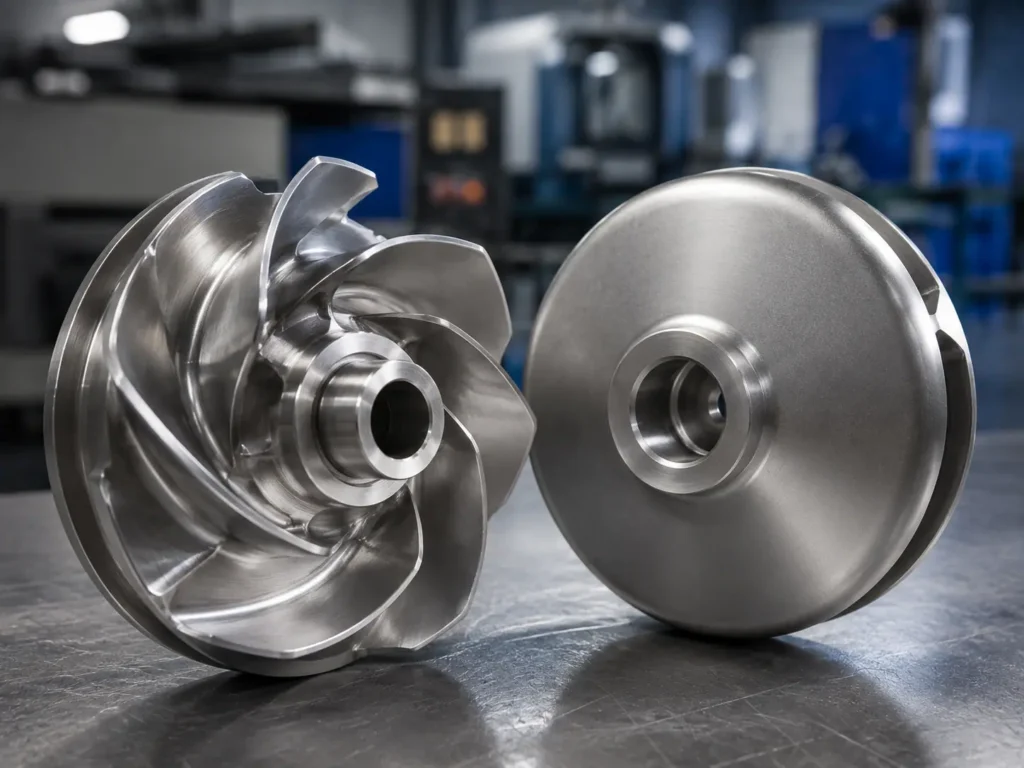
Custom impeller packaging for export should protect the part’s blade edges, machined interfaces, surface treatment, identification, and approved balance condition from the factory to the buyer’s receiving area. A strong wooden case alone is not enough. The packaging plan should match the impeller’s geometry, material, weight, corrosion risk, transport route, storage period, and inspection requirements.
For OEM buyers, export packaging is part of the manufacturing specification. If a finished impeller arrives with a dented vane, rusty bore, damaged coating, shifted identification tag, or an unsupported hub that has moved inside the case, the production work may have passed inspection but the delivered part is still unusable.
Matson manufactures drawing-based and sample-based impellers for industrial projects. Buyers should define the packaging and receiving requirements in the RFQ rather than waiting until the shipment is ready.
[Image placeholder: Add a real packing-area image showing a finished metal impeller with protected blade edges, wrapped machined surfaces, a fixed hub support, desiccant, identification label, and export wooden case. Alt text: “Custom impeller packaging for export with blade and machined surface protection”]
Start with the Risks of the Actual Impeller
Two impellers with the same outside diameter may need different packaging. A heavy cast pump impeller, a thin fabricated fan wheel, a polished stainless mixer impeller, and a coated slurry impeller do not fail in the same way during transport.
Before choosing the case, review:
- Impeller type, outside diameter, axial width, and total mass
- Whether blades, vanes, shrouds, discs, or hub faces can carry load
- Bore, keyway, pilot, mounting face, wear-ring surface, and other machined interfaces
- Thin edges, welded blades, balance weights, or correction areas
- Carbon steel, stainless steel, bronze, aluminum, alloy, coating, passivation, or polished finish
- Corrosion exposure during sea freight, inland transport, customs delay, and storage
- Whether the impeller ships alone or with shafts, keys, fasteners, reports, or mating parts
- Lifting points and safe unpacking method
- Required export marking, document pouch, and case identification
The first packaging decision is not “wooden box or carton.” It is which surfaces must not touch the case, which areas can support the load, and what movement is acceptable.
Match Protection to the Main Transport Risk
| Transport risk | Possible consequence | Packaging control to confirm |
|---|---|---|
| Movement inside the case | Dented blades, rubbed coating, damaged hub, or changed balance condition. | Positive blocking and bracing at approved load-bearing areas; no reliance on loose filler alone. |
| Impact during handling | Bent vane edge, cracked weld, damaged shroud, or marked machined face. | Clearance from case walls, edge guards, shock-resistant support, and correct gross-weight marking. |
| Moisture and condensation | Rust, staining, coating damage, or corrosion inside the bore and keyway. | Clean and dry part, suitable corrosion protection, moisture barrier where needed, and correctly sized desiccant. |
| Load through a weak feature | Distorted blade, disc, cover, or inlet edge. | Support through the hub, base, fixture, or another approved structural area. |
| Abrasion | Scratched polished surface, damaged coating, or unreadable marking. | Non-abrasive wrapping, separation between parts, and protected labels. |
| Incorrect lifting or unpacking | Dropped impeller, personnel risk, or damage from prying against a functional surface. | Marked lifting points, center-of-gravity warning when needed, and unpacking instructions. |
Packaging controls should be agreed before the case is built. A last-minute solution often places a screw, strap, timber block, or metal band against the nearest convenient surface rather than a safe one.
Protect Blades Without Using Them as Supports
Blade and vane edges are easy to damage and difficult to restore without affecting geometry or mass distribution. Thin fabricated fan blades can bend. Cast pump vane edges can chip. Polished or coated mixer blades can be scratched. Compressor and blower-type impellers may have profiles that should not contact timber, steel bands, or neighboring parts.
Use guards or clearance around vulnerable edges, but do not create a tight cover that transfers transport load into the blade. The impeller should be restrained through a stronger approved area such as the hub, mounting fixture, base, or designated lifting structure.
When several impellers share a case, each part needs positive separation. Their blades, hubs, and machined faces should not contact each other even if the crate is tilted or vibrated.
Keep Machined Interfaces Clean and Usable
The bore, keyway, hub face, pilot, mounting face, shaft fit, wear-ring surface, and sealing diameter can determine whether the impeller assembles correctly. These surfaces need more than general wrapping.
Confirm that:
- Preservative is compatible with the material, coating, and buyer’s cleaning process
- Bore and keyway protection cannot fall out during handling
- Tape, adhesive, foam, or wrapping does not leave damaging residue
- Threaded holes are protected without trapping debris
- Machined faces cannot rub against timber, nails, staples, straps, or fasteners
- Protective plugs and covers are counted during unpacking so none remain inside the part
- Corrosion protection duration matches the likely transport and storage period
If the buyer has cleanliness, food-contact, chemical-service, or coating restrictions, state them before quotation. Do not assume one rust preventive or wrapping material suits every project.
Matson’s impeller manufacturing capabilities include casting, CNC machining, surface treatment, inspection, dynamic balancing, and export packing when the requirements are confirmed for the project.
Moisture Protection Depends on Material and Route
Sea freight can expose a shipment to temperature changes and condensation even when rain never enters the case. Carbon steel, alloy steel, unprotected machined areas, dissimilar-metal contact, and salt-contaminated handling deserve careful review.
Stainless steel is not permission to ignore moisture. Iron contamination, chloride exposure, trapped wet wrapping, and unsuitable packing materials can still create staining or corrosion risk. Bronze and aluminum also need compatible contact materials and protection suited to their finish.
A moisture-control plan may include cleaning and drying, approved preservative, barrier wrapping, desiccant, humidity indication, sealed covers, and protected ventilation choices. The correct combination depends on the material, finish, route, and expected storage. Desiccant placed in an open crate without an effective moisture barrier should not be treated as complete protection.
Do Not Undo Balancing Work During Packing
An impeller that has passed dynamic balancing should be handled as a finished rotating component. Packaging must not bend a blade, loosen a balance weight, damage a correction area, introduce heavy contamination, or allow the part to strike the case.
Before packing, record the impeller identification and final condition. When specified, include photographs showing the part, correction areas, labels, protective steps, and completed restraint inside the case. The balance report should match the same part or batch identification.
For projects with a defined balance requirement, Matson’s custom impeller dynamic balancing checklist explains what buyers should confirm about the setup, grade, correction method, and report.
Identification and Documents Must Survive the Shipment
Good packaging helps the receiving team identify the correct part without opening every case or guessing which certificate belongs to which impeller.
The purchase order can require:
- Buyer part number and supplier part number
- Drawing number and revision
- Purchase order and line number
- Quantity, net weight, gross weight, and case number
- Heat, batch, serial, or traceability number where required
- Country-of-origin and shipping marks as agreed
- Center of gravity, lifting point, orientation, keep-dry, fragile, or stacking marks when applicable
- Packing list and protected external document pouch
- Electronic copies of approved quality documents before dispatch
Part marking should not damage a functional surface. Labels and tags should remain readable after wrapping and transport. If several reports belong to one shipment, use a simple document index connecting each file to its part, batch, and case number.
The broader custom impeller manufacturing documents guide covers drawing revisions, material certificates, dimensional reports, balancing records, and shipping documents.
Add Packaging to First-Article Approval
For repeat OEM orders, the approved first article should establish more than the part geometry. The buyer can also approve the preservation method, contact materials, supports, restraint points, labels, case construction, document placement, and unpacking instructions.
Photographs are useful when they show defined stages:
- Clean finished impeller before protection
- Machined surfaces and vulnerable edges protected
- Part fixed to the base or internal support
- Moisture controls and identification in place
- Case closed with external marks visible
If packaging changes later—especially the support point, restraint method, preservative, case orientation, or shared-case arrangement—the buyer may need to review it again. This is particularly important when the original case becomes the repeat-order standard.
See the custom impeller first article inspection checklist for drawing control, dimensional verification, material traceability, balancing, approval, and reapproval triggers.
Receiving Inspection Should Check Packaging Evidence
The buyer should photograph the unopened case if it shows impact, water exposure, broken seals, incorrect orientation, or other damage. Record the case number and shipping marks before unpacking.
After opening, check restraint, moisture condition, wrapping, part identification, visible damage, corrosion, coating, machined interfaces, loose components, and document completeness. Do not discard the packaging before a transport-damage claim or technical review is complete.
For a critical impeller, the receiving plan may also require dimensional, runout, or balance rechecking after transport. The buyer or equipment owner should define this based on project risk rather than assuming every shipment needs the same inspection.
Common Questions Buyers Ask
What is the best packaging for a custom impeller?
There is no universal package. The right solution depends on geometry, mass, blade vulnerability, material, finish, corrosion risk, transport route, storage period, and lifting method. The impeller should be positively restrained through approved structural areas.
Should impeller blades touch the wooden case or support blocks?
Normally, vulnerable blades and vane edges should not carry transport load or touch hard case components. Support and restraint should use stronger approved areas such as the hub, base, or a dedicated fixture.
How should a balanced impeller be packed?
Protect it from movement, impact, contamination, bent blades, loosened correction weights, and contact at balance-correction areas. Match the part identification to the balance report and record the packed condition when required.
Do stainless steel impellers need moisture protection?
Yes, the packaging plan should still consider condensation, chloride exposure, contamination, wet wrapping, machined areas, and the expected storage period. The protection method must be compatible with the stainless grade and finish.
Can Matson provide export packing for custom impellers?
Yes. Matson can prepare export packing for selected custom impeller projects based on the part geometry, weight, finish, transport route, marking, document, and buyer requirements. Confirm the packing standard and evidence needed in the RFQ.
Need a custom impeller manufactured and packed for export? Send Matson the drawing, material, quantity, finished weight, vulnerable surfaces, corrosion-protection period, shipping method, labeling, lifting, document, and receiving requirements through the custom impeller quote page.