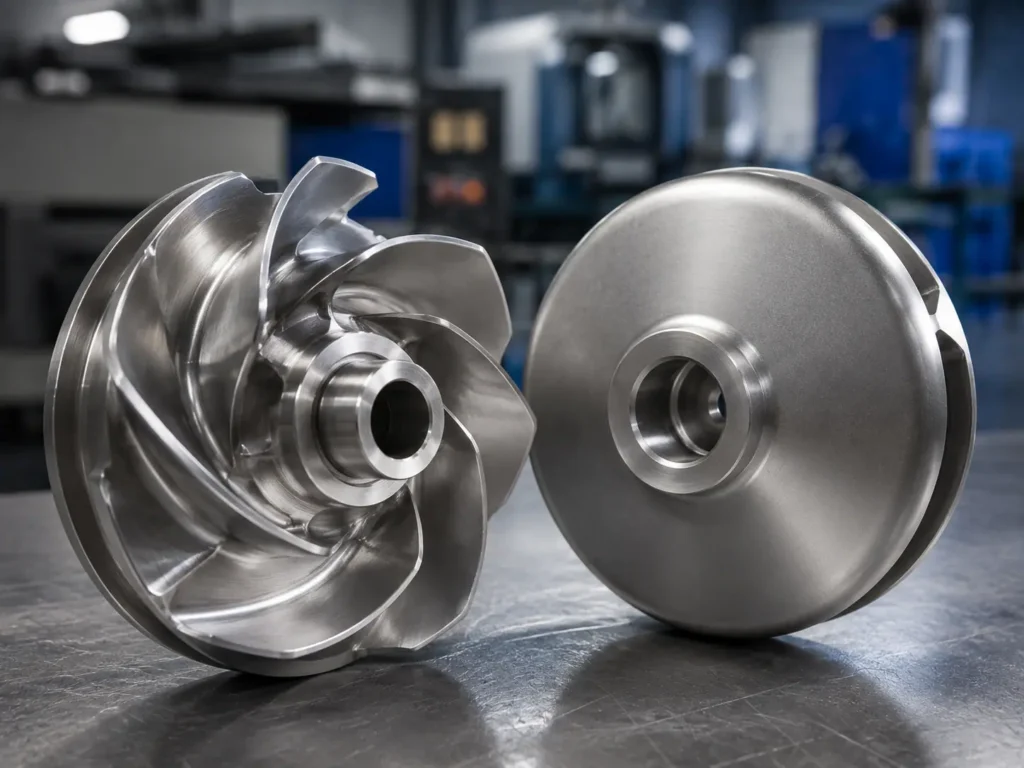
Blower wheel balancing is the process of correcting uneven mass distribution in a fan or blower wheel so it can run with controlled vibration at the specified operating speed. For industrial blower impellers, the issue is not only comfort or noise. Poor balance can increase bearing load, loosen welds or fasteners, damage the shaft, crack the wheel, and shorten the life of the full fan assembly.
Short answer: a custom blower wheel should be reviewed for dynamic balancing whenever the wheel is large, high-speed, welded, cast, machined after casting, copied from a sample, or used in continuous industrial service. Matson manufactures custom fan and blower impellers from drawings, 3D files, samples, and specifications, with dimensional inspection and dynamic balancing reviewed as part of the manufacturing route.
The focus here is custom industrial metal fan wheels and blower impellers — not furnace repairs, automotive blower motors, or off-the-shelf replacement parts. If you are sourcing or reproducing a wheel, the related pages are Matson’s fan and blower impellers, blower impeller, and impeller manufacturing pages.
Why Blower Wheel Balancing Matters
A blower wheel can look correct and still run badly. The outside diameter may be right. The blade count may match the drawing. The bore may fit the shaft. But if the wheel has uneven mass, the rotating force rises quickly as speed increases.
That is why balancing is not a cosmetic step. It is a reliability check.
In industrial HVAC, process air, drying systems, dust collection, chemical exhaust, wastewater ventilation, and OEM equipment, an out-of-balance blower wheel can show up as vibration, noise, bearing heat, cracked welds, rubbing marks, shaft fatigue, motor load problems, or repeated field complaints. Sometimes the wheel is blamed first. Sometimes the housing, shaft, bearing, pulley, coupling, or installation is part of the problem. Manufacturing should not pretend to diagnose every site issue from a photo, but balance still has to be handled before shipment when the specification requires it.
For a custom part, the practical question is simple: what balance requirement does the wheel need for its diameter, weight, speed, material, and application?
What Causes a Blower Wheel to Be Out of Balance?
Unbalance can come from the original design, the manufacturing process, later damage, or the way a worn sample is copied. Some causes are obvious. Others are easy to miss until the wheel is on a balancing machine.
| Cause | What it looks like | Manufacturing check |
|---|---|---|
| Uneven blade weight | Blade thickness, weld size, or formed shape varies around the wheel. | Check blade count, blade thickness, weld consistency, and mass distribution before balancing. |
| Weld distortion | Backplate, shroud, or blades pull out of position after welding. | Control welding sequence, fixture the wheel, inspect runout, then balance. |
| Casting variation | Local heavy spots, machining allowance differences, or uneven wall thickness. | Review casting quality, machining allowance, bore, hub, and finished OD before balancing. |
| CNC machining change | Material removal changes the mass distribution after rough casting or fabrication. | Perform final balance after critical machining and trimming, not before final geometry is set. |
| Damaged sample copied directly | Old wheel has bent blades, repair welds, worn hub, or missing material. | Identify damaged areas and confirm original dimensions before using the sample as production reference. |
| Material buildup in service | Dust, coating, resin, corrosion, or process deposits collect unevenly. | Separate operating contamination from manufacturing balance; the new wheel still needs a clean balance baseline. |
The most common RFQ problem is an incomplete sample. A buyer sends an old blower wheel and asks for the same part. But the old part may already be out of balance because one blade is bent, a previous repair changed weight, or the bore is worn. A sample is useful, but it should not be copied blindly.
Static Balance vs Dynamic Balance
Static balance checks whether a wheel has a heavy side when it is supported freely. It can catch simple one-plane imbalance on narrow rotors. Many blower wheels, however, have width, hub depth, backplates, shrouds, and blade geometry that make the imbalance more complex.
Dynamic balancing checks the wheel while it rotates and can identify correction needs across balancing planes. For many industrial blower wheels, dynamic balancing is the more relevant discussion, especially when the wheel is wide, high-speed, heavy, or used in continuous service.
| Balancing approach | Best fit | Limitation | Buyer note |
|---|---|---|---|
| Static balance | Simple, narrow, low-speed wheels where the specification allows it. | May miss couple imbalance on wider wheels. | Do not assume it is enough for industrial blower impellers. |
| Dynamic balancing | Industrial blower wheels, centrifugal fan wheels, larger diameters, higher speeds, and continuous-duty equipment. | Needs speed, balance grade, fixture method, and report requirement. | Specify whether the wheel is balanced alone or with related mounting hardware. |
| Assembly balancing | When the impeller, hub, shaft, pulley, or coupling must be treated as one rotating assembly. | May not be practical if the buyer sends only the wheel drawing. | Confirm with the OEM or maintenance engineer before production. |
ISO 21940-11 is often used as a reference for rigid rotor balancing terminology and balance quality grades. The exact grade should not be guessed from the keyword “blower wheel.” It should come from the equipment specification, operating RPM, wheel mass, wheel diameter, and application risk.
Balance Weights, Clips, Grinding, and Material Removal
Many people search for blower wheel balance weights or balancing clips. In manufacturing work, the correction method should follow the drawing, material, wheel design, speed, and customer specification.
For some fabricated wheels, balance correction may involve adding small weights, welding correction pieces, drilling, grinding, or removing material from approved areas. For some thin or corrosion-sensitive wheels, correction by aggressive grinding can create a new problem. For stainless steel or coated wheels, the correction area may need later surface treatment. For high-speed wheels, any added weight must be secure and suitable for service.
This is where a shop should be careful. A wheel is not balanced just because someone attached a clip. The correction must be stable, documented when required, and compatible with the operating environment.
Matson’s role is to manufacture and review the wheel according to the drawing, material, inspection, and balancing requirements provided for the project. If the buyer has a specific correction method, report format, or balance grade, it should be stated before production.
Manufacturing Checks Before Balancing
Balancing should be near the end of the process, but it should not be the only quality check. If a wheel is geometrically wrong, balancing may hide the symptom while the part still does not fit or perform correctly.
Before final balancing, check:
- outside diameter and wheel width
- bore size, hub height, keyway, mounting face, and bolt pattern
- blade count, blade pitch, blade angle, and rotation direction
- inlet cone, shroud, backplate, and casing-related clearance surfaces
- weld quality, weld position, and distortion
- runout and concentricity where specified
- casting defects, machining allowance, and finished surfaces
- material grade and surface treatment
- operating RPM and balance grade
For centrifugal blower impeller projects, balance also connects to blade type. A backward-curved wheel, forward-curved wheel, radial blade wheel, and industrial blower wheel can all need balancing, but the geometry and correction areas may differ.
When the Old Blower Wheel Is Already Damaged
Sample-based manufacturing is common in industrial replacement and OEM support projects. It can work well when the sample still represents the original part. The risk is that many old blower wheels are sent only after they have failed.
Look for these warning signs before using a sample as the production master:
- one blade is bent, cracked, missing, or repaired
- welds were added during a previous repair
- the hub bore is worn, enlarged, or sleeved
- the keyway is damaged
- the backplate is warped
- the inlet area has rubbing marks
- corrosion or process deposits hide the original thickness
- balance weights are missing or look modified
If these signs are present, the RFQ should include clear photos, measured dimensions, and any available old drawing or equipment specification. The factory can review the manufacturing route, but the buyer or equipment owner should confirm the original geometry and balance requirement.
What Buyers Should Send for a Blower Wheel Balancing RFQ
A useful RFQ should make the balance question concrete. “Please balance this blower wheel” is not enough.
Send:
- 2D drawing, 3D file, or physical sample
- wheel outside diameter, width, inlet diameter, bore, hub height, and keyway
- blade type: backward-curved, forward-curved, radial, airfoil, or custom
- material grade and thickness
- operating RPM and motor or blower model information if available
- whether the wheel is balanced alone or as an assembly
- requested balance grade or standard if specified
- whether a balancing report is required
- photos of existing balance weights, correction marks, cracks, wear, or rubbing
- application environment: HVAC, process air, dust collection, drying, chemical exhaust, or wastewater ventilation
- temperature, dust, corrosion, moisture, or coating requirements
- quantity, batch plan, and export packing requirement
For broader OEM work, backward curved impeller geometry should be clarified separately when the wheel type itself is uncertain. For project submission, the custom impeller RFQ page is the right place to send drawings, photos, material, speed, and balance requirements.
Common Questions We Actually Get
What is blower wheel balancing?
Blower wheel balancing corrects uneven mass distribution in a fan or blower wheel so it can rotate with controlled vibration at the specified operating speed.
Does every blower wheel need dynamic balancing?
Not every small or low-speed wheel needs the same balancing requirement, but industrial blower wheels should always have the balance requirement reviewed. Larger diameter, higher speed, welded construction, continuous service, and OEM equipment usually make dynamic balancing more important.
Can an out-of-balance blower wheel damage equipment?
Yes. Unbalance can increase vibration, bearing load, noise, shaft stress, weld fatigue, rubbing, and early fan failure. Site problems can also involve bearings, shafts, housings, couplings, or installation, so balance should be checked as part of the full rotating system.
Can Matson manufacture and balance a blower wheel from a sample?
Matson can review drawings, samples, photos, dimensions, material, speed, and balancing requirements for custom blower wheel manufacturing. If the sample is worn, bent, repaired, or corroded, the buyer should confirm original dimensions before production.
What information is needed for a custom blower wheel balancing quote?
Send the drawing or sample, wheel dimensions, blade type, material, operating RPM, balance grade if specified, report requirement, application environment, quantity, and photos of worn or damaged areas.
Manufacturing Summary
Blower wheel balancing should be treated as a manufacturing and reliability requirement, not as an afterthought. A correct-looking wheel can still vibrate if mass distribution, weld distortion, machining removal, material variation, or sample damage is not reviewed.
Matson manufactures custom fan wheels and blower impellers from drawings, samples, and project specifications. Share the drawing, material grade, operating speed, balancing requirement, inspection needs, quantity, and application environment so the manufacturing route can be reviewed before quotation.