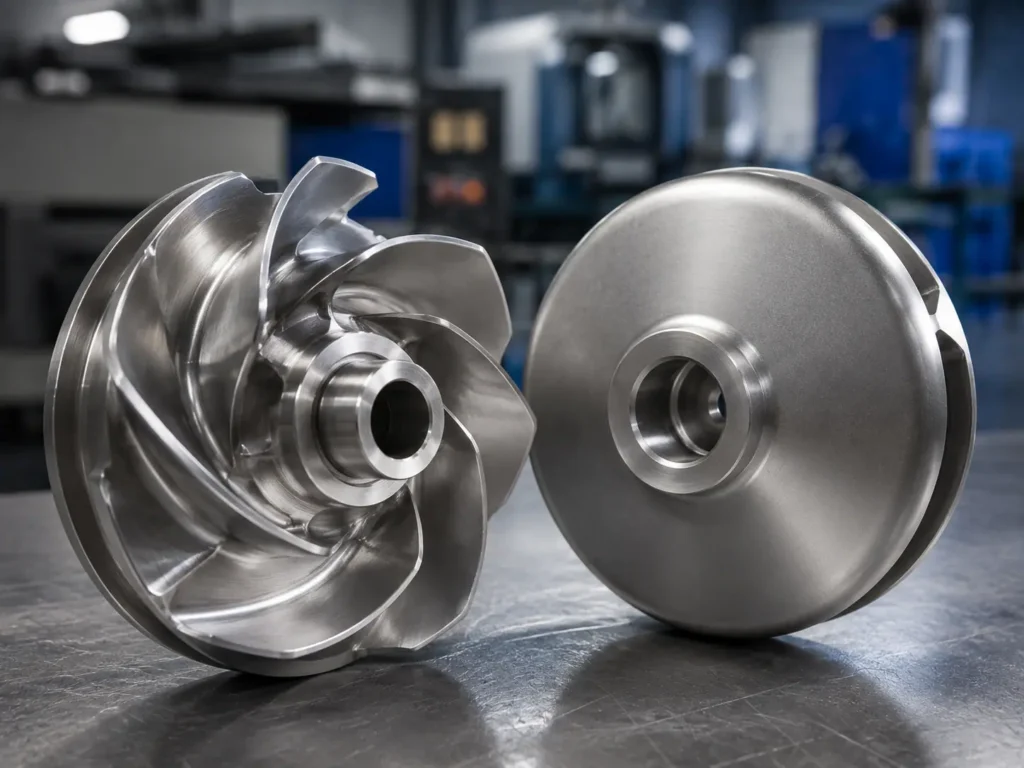
Marine pump impeller selection is mainly about seawater exposure, corrosion, material compatibility, dimensional fit, and reliable manufacturing. For ship cooling pumps, ballast pumps, bilge pumps, seawater service pumps, and other marine systems, the impeller must handle chloride-rich water while maintaining fit, balance, and service life.
Short answer: a marine pump impeller should be reviewed around seawater chemistry, chloride exposure, galvanic compatibility, pump duty, impeller type, bronze or duplex stainless material choice, casting route, CNC machining, inspection, and balancing requirement. This article is about industrial metal pump impellers for ships and seawater systems, not rubber outboard motor impellers or retail boat repair kits.
Matson manufactures custom pump impellers from drawings, samples, and specifications. For a marine pump impeller, Matson can review material, casting, CNC machining, surface treatment, dimensional inspection, and dynamic balancing factors before quoting.
Marine Pump Impellers Are Different From Small Rubber Impellers
One point should be clear first. Matson’s marine pump impeller work is custom metal impeller manufacturing for industrial and shipboard pump projects. It is not for small rubber outboard motor water pump impellers, jet ski impellers, flexible impellers, or retail replacement kits.
That distinction matters for SEO and for buyers. A ship cooling pump impeller, ballast pump impeller, or seawater service pump impeller is usually a cast and machined metal rotating part. It needs drawing control, material review, fit surfaces, inspection, and sometimes balancing documentation.
If your project involves a metal impeller for a marine pump, the important questions are material, seawater corrosion, shaft and casing compatibility, dimensions, and manufacturing route.
What Buyers Should Confirm First
Use this table as a practical review checklist before requesting a quote for a custom marine or seawater pump impeller.
| Review item | Why it matters in marine service | What buyers should confirm |
|---|---|---|
| Water condition | Seawater, brackish water, cooling water, and bilge water create different corrosion and fouling risks. | Seawater exposure, chloride level if known, temperature, solids, fouling, and operating cycle. |
| Application | Cooling, ballast, bilge, fire, and service pumps have different duty and reliability expectations. | Pump application, flow, head, speed, duty condition, and whether the pump is critical equipment. |
| Material | Bronze, stainless, duplex, and super duplex materials behave differently in seawater. | Existing material, required grade, certificate need, shaft and casing compatibility. |
| Galvanic compatibility | Mixed metals in seawater can increase corrosion risk if the material pairing is poor. | Impeller material, shaft material, casing material, fasteners, and any cathodic protection context. |
| Impeller geometry | Closed, open, and semi-open forms have different clearance, efficiency, and inspection needs. | Existing type, vane count, rotation direction, inlet eye, outlet width, and wear ring surfaces. |
| Fit surfaces | A seawater-resistant material still fails as a part if bore, hub, keyway, or wear-ring dimensions are wrong. | Bore, hub height, mounting face, keyway, shaft fit, casing clearance, and critical tolerances. |
| Manufacturing and balancing | Cast-and-machined marine impellers may need controlled inspection and stable rotation. | Casting route, machining allowance, surface finish, dimensional report, balancing grade, and packing requirement. |
Bronze, Stainless, Duplex, and Super Duplex
Bronze is a familiar material direction for many seawater and marine pump impellers. It can be practical in ship cooling water, seawater handling, and selected service pump applications. The exact bronze alloy still matters. Buyers should confirm the alloy grade, shaft material, casing material, water condition, and whether dezincification or galvanic corrosion is a concern.
316 and 316L stainless steel can be used in some marine-related pump projects, especially where the actual water condition is moderate or the pump application supports that choice. But stainless steel is not automatically safer than bronze in seawater. Chloride, temperature, crevices, deposits, stagnant water, and mixed metals can change the answer.
Duplex and super duplex stainless materials may be considered when corrosion resistance and strength are more demanding. They should be specified carefully because casting, heat treatment, machining, and documentation need to match the project requirement.
For broader material comparison, see Matson’s article on pump impeller material selection.
Seawater Corrosion and Galvanic Risk
Marine impellers do not fail only because of ordinary wear. Seawater brings chloride corrosion, pitting, crevice corrosion, fouling, erosion-corrosion, and galvanic corrosion risk.
Galvanic corrosion is especially important when the impeller, shaft, casing, fasteners, and nearby components are different metals. A material that looks good alone may behave differently when assembled into a seawater pump. That is why the RFQ should include the impeller material, shaft material, casing material, and any buyer specification.
ASTM material specifications may be referenced when the buyer has a defined bronze, stainless, duplex, or super duplex casting grade. ASTM G48 is often used in corrosion testing discussions for stainless and duplex materials, but it should not be treated as a universal requirement for every marine impeller. Use standards only when they match the project specification.
Impeller Type and Marine Pump Duty
The right marine impeller type depends on the pump and service.
Closed impellers are common where clean seawater or cooling water service needs efficiency and controlled clearances. Open or semi-open impellers may appear where inspection, cleaning, or solids tolerance matters. Bilge and service pumps may face debris or intermittent operation, while cooling pumps may run for long periods and need stable performance.
The impeller type should be checked with the casing and duty point. A material upgrade alone cannot fix a wrong clearance, wrong rotation direction, worn wear ring, poor bore fit, or mismatched impeller geometry.
For general type selection, see the guide to pump impeller types.
Casting, CNC Machining, and Fit Review
Marine pump impellers are often cast and then finish machined. The manufacturing route should be reviewed together with the material.
Critical surfaces include the bore, hub height, keyway, mounting face, wear ring surface, outside diameter, vane profile, and shaft fit. If a sample is worn or corroded, those surfaces may no longer show the original dimensions. Copying a damaged sample without review can create assembly problems or repeat the same failure.
Matson’s impeller manufacturing work can include casting, CNC machining, surface treatment, dynamic balancing, dimensional inspection, and export packing when the project details are clear.
Balancing and Inspection Documents
Marine pumps may be part of critical onboard systems. For larger or faster impellers, balancing should be defined before production.
ISO 21940-11 is a common reference when a buyer specifies rigid-rotor balancing terminology and grades. The actual balancing grade should come from the drawing, pump speed, impeller mass, and project specification.
Inspection documents can also matter. Buyers may request material certificates, dimensional reports, balancing reports, surface finish confirmation, or pre-shipment photos. These should be included in the RFQ instead of being added after production.
What to Send for a Marine Pump Impeller Quote
A useful RFQ should include:
- 2D drawing, 3D file, or physical sample
- Pump application: cooling, ballast, bilge, fire, seawater service, or process support
- Seawater, brackish water, cooling water, or bilge water condition
- Existing material grade and required material standard, if known
- Shaft material, casing material, and any galvanic compatibility concern
- Flow, head, pump speed, and duty condition if available
- Outside diameter, bore, hub height, keyway, mounting face, and wear-ring dimensions
- Impeller type, vane count, rotation direction, inlet eye, and outlet width
- Surface finish, coating, passivation, or inspection requirement
- Balancing grade, material certificate, and report requirement
- Photos of worn, corroded, cracked, or repaired areas
- Quantity, batch plan, and export packing requirement
If the project is a metal ship pump impeller, say that clearly. If it is a small rubber outboard motor impeller, Matson is not the right supplier.
Common Questions We Actually Get
What is a marine pump impeller?
A marine pump impeller is the rotating metal component inside a shipboard or seawater pump that moves cooling water, ballast water, bilge water, or other marine service liquids.
What material is best for a seawater pump impeller?
There is no single best material. Bronze, 316L stainless, duplex stainless, and super duplex materials may be considered depending on seawater exposure, shaft and casing materials, pump duty, temperature, corrosion risk, and buyer specification.
Is bronze better than stainless steel for marine pump impellers?
Not always. Bronze is widely used in many seawater pump applications, while stainless or duplex materials can fit other conditions. The better choice depends on alloy grade, chloride exposure, galvanic compatibility, casing material, shaft material, and service duty.
What information should I send for a custom marine pump impeller quote?
Send the drawing or sample, pump application, seawater condition, material grade, shaft and casing material, dimensions, speed, quantity, inspection requirement, and balancing requirement.
Does Matson make rubber outboard motor impellers?
No. Matson focuses on custom metal impellers for industrial, OEM, and shipboard pump projects. Small rubber outboard motor impellers, flexible impellers, and retail boat repair kits are outside this scope.
Send Us Your Drawing
Need a custom metal marine pump impeller for a shipboard or seawater pump project? Send Matson your drawing, sample photos, seawater condition, material grade, shaft and casing material, quantity, and inspection requirements through the contact page. We can review material, casting, machining, balancing, inspection, and manufacturing feasibility before quoting.