Short answer: a vortex impeller pump is usually considered when sewage, sludge, fibers, grit, or suspended solids create clogging risk. Matson manufactures custom vortex pump impellers from drawings, 3D files, samples, or dimensional specifications, with RFQ review focused on solids passage, casing relationship, material, wear risk, machining, inspection, and balancing.
Use this page when you need a custom vortex impeller for sewage, sludge, wastewater, lift-station, treatment-plant, or solids-handling pump assemblies.
When a Vortex Impeller Pump Design Makes Sense
A vortex impeller is often selected because the liquid is difficult, not because the design is automatically best for every pump. If the service contains rags, fibers, sludge, soft solids, grit, or inconsistent wastewater, a recessed or vortex-style impeller can help reduce direct clogging through narrow vane passages.
You should still confirm the casing design, impeller recess, solids size, material, speed, and acceptable efficiency trade-off before manufacturing. A vortex impeller can improve solids handling in the right pump design, but it is not a magic fix for every clogging or wear problem.
For the wider pump product family, see Matson’s custom pump impeller page. For wastewater industry context, see water and wastewater impeller applications.
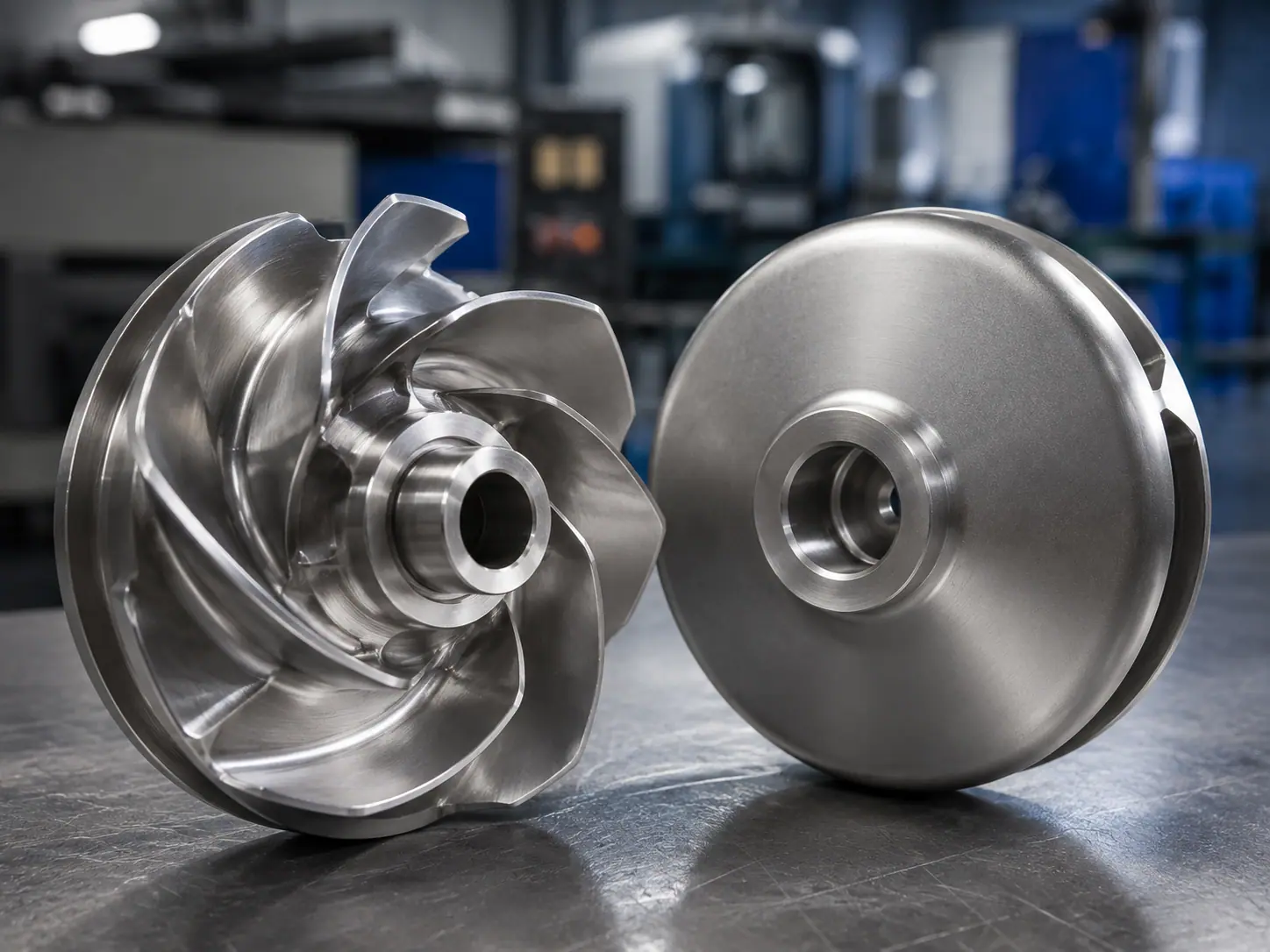
Vortex Impeller Pump RFQ Decision Table
A useful vortex impeller quote needs more than the words “sewage pump impeller.” The manufacturer needs enough detail to understand solids, casing relationship, material risk, and acceptance requirements. Use this table to turn the application problem into production information.
| RFQ point | Why it matters | What buyers should send |
|---|---|---|
| Solids and fibers | Vortex designs are often chosen to reduce clogging, but solids size and fiber behavior change the design discussion. | Solids size, rag/fiber condition, grit level, sludge thickness, clogging history. |
| Casing and recess relationship | A vortex impeller works with the casing or volute arrangement; the impeller alone does not define the whole pump behavior. | Casing drawing, section drawing, impeller position, recess depth if defined, photos from both sides. |
| Wear and corrosion | Wastewater can combine abrasion, chloride, chemical exposure, and pH risk in the same application. | Fluid condition, pH, chloride, chemical exposure, grit, previous material and wear pattern. |
| Bore, hub, and mounting fit | The impeller must still assemble correctly on the shaft even when the main concern is solids handling. | Bore, keyway, taper/thread, hub height, mounting face, shaft fit, datum surfaces. |
| Manufacturing route | Casting, CNC machining, surface treatment, and inspection scope depend on geometry, material, size, and quantity. | Drawing, 3D file, sample, material grade, tolerance notes, quantity, certificate needs. |
| Balancing and inspection | Unbalance, casting variation, trimming, or uneven wear can create vibration and acceptance problems. | Pump speed, balance requirement, dimensional report, material certificate, pre-shipment photos. |
Vortex vs Open vs Semi-Open Impellers
A vortex impeller is one option within the wastewater pump impeller family. If you are still comparing impeller types, the main question is what failure or operating problem you are trying to control: clogging, wear, clearance sensitivity, efficiency, or cleaning access.
| Design | Where it often fits | What to watch before RFQ |
|---|---|---|
| Vortex impeller | Sewage, sludge, fibers, and solids-handling wastewater where clog resistance is important. | Casing/recess relationship, solids size, efficiency trade-off, material and wear. |
| Open impeller | Dirty water or selected wastewater service where exposed vanes and cleaning access matter. | Vane-tip clearance, wear plate, axial position, abrasion, and sample damage. |
| Semi-open impeller | Moderate solids where flow control and some clearance management are both needed. | Open-side clearance, backplate relationship, vane height, and casing/wear-plate fit. |
| Closed impeller | Cleaner water or process liquid where efficiency and leakage control matter more than solids passage. | Wear-ring fit, shroud clearance, clogging risk, and material compatibility. |
For a broader comparison, see Matson’s sewage pump impeller types article. For open-design context, see open impeller pump.
Material, Manufacturing and Quality Review
Wastewater vortex impellers often need corrosion resistance and wear resistance at the same time. Stainless steel 316 or 316L, duplex stainless, bronze, carbon steel, alloy steel, or other specified materials may be discussed, but the final choice should come from the drawing, fluid, solids, corrosion, abrasion, temperature, and certificate requirement.
Matson’s impeller manufacturing capability can include casting, CNC machining, surface treatment, dynamic balancing, dimensional inspection, and material documentation when the project specification requires it. Functional areas such as the bore, hub, mounting face, OD, vane/backplate relationship, and casing-fit surfaces should be defined before production.
Be careful with the idea that “stainless steel solves wastewater.” Stainless may help with corrosion in some conditions, but grit, sand, sludge, impact, and solids can still create wear. Material selection should follow the actual service environment, not a generic wastewater label.
What Matson reviews
- Drawing, sample, or 3D model completeness
- Bore, hub height, mounting face, and shaft fit
- Vane/backplate geometry and casing relationship
- Material grade, corrosion risk, and wear context
- Balancing, dimensional inspection, and document requirements
What buyers should avoid
- Choosing vortex only from a product photo
- Copying a badly worn sample without checking original surfaces
- Ignoring solids size, fibers, grit, and liquid chemistry
- Leaving balancing or inspection reports out of the RFQ
- Asking for complete pump performance redesign from an impeller supplier
What to Send for a Vortex Impeller Quote
The fastest useful quote is specific. If the project is drawing-based, send the released drawing and revision. If it is sample-based, send photos, measured dimensions, and damage notes. If the problem is clogging or wear, tell the manufacturer what is actually happening in service.
Part information
- 2D drawing, 3D file, or physical sample
- Outside diameter, bore, hub height, mounting face, and shaft connection
- Vane/backplate details, recess relationship, rotation direction, and viewing side
- Casing or volute drawing if the fit relationship is critical
- Quantity, batch schedule, inspection report, and packing requirement
Application information
- Sewage, sludge, wastewater, industrial effluent, or treatment-plant service
- Solids size, fiber content, grit, sand, and clogging history
- pH, chloride, chemical exposure, temperature, and corrosion history
- Current problem: clogging, wear, corrosion, vibration, rubbing, or poor fit
- Pump speed, balancing requirement, material certificate, and report needs
Final Thoughts Before Sending Your RFQ
A vortex impeller pump inquiry should explain the wastewater problem, not just name the impeller. Send Matson your drawing, sample photos, casing relationship, material grade, solids details, quantity, and balancing requirement. We can review the custom impeller manufacturing route before quoting.
Send Vortex Impeller RFQ DetailsVortex Impeller Pump FAQ
What is a vortex impeller pump used for?
A vortex impeller pump is commonly used for sewage, sludge, wastewater, and solids-handling service where clog resistance is important. It is often considered when fibers, soft solids, rags, grit, or inconsistent wastewater make tighter impeller passages risky.
Does Matson sell complete vortex pumps?
No. Matson manufactures custom vortex pump impellers and related industrial pump impellers from drawings, samples, and project specifications. Complete pump selection, hydraulic performance, motor sizing, and casing design should remain with the pump OEM or engineering owner.
Can Matson make a vortex impeller from a worn sample?
Yes, but the sample should be measured carefully. Worn vanes, damaged OD, repaired backplate areas, corroded surfaces, or changed clearances may no longer show the original geometry. Mark damaged surfaces and provide assembly dimensions when possible.
What material is best for a wastewater vortex impeller?
There is no single best material. The choice depends on corrosion, abrasion, solids, fluid chemistry, temperature, pump speed, drawing requirement, and service life target. Stainless steel can help in some corrosive conditions, but grit and solids still need wear review.
Is a vortex impeller more efficient than a closed impeller?
Not usually in clean-water service. Vortex impellers are often chosen for solids handling and clog-risk reduction rather than maximum clean-water efficiency. If efficiency is the main target and the liquid is clean, another impeller design may be better.
What information makes a vortex impeller RFQ faster?
Send the drawing or sample, OD, bore, hub height, vane/backplate details, casing relationship, material grade, liquid condition, solids size, clogging or wear history, quantity, pump speed, and balancing or inspection report requirements.
How is this page different from sewage pump impeller types?
This page supports the specific vortex impeller pump product and RFQ intent. The sewage pump impeller types article is broader and compares vortex, open, semi-open, and closed designs for wastewater selection.
Can a vortex impeller solve every clogging problem?
No. Clogging depends on solids, fibers, casing design, passage size, speed, liquid condition, wear, and operating practice. A vortex impeller can be suitable in many solids-handling applications, but the full pump design and service condition still need review.