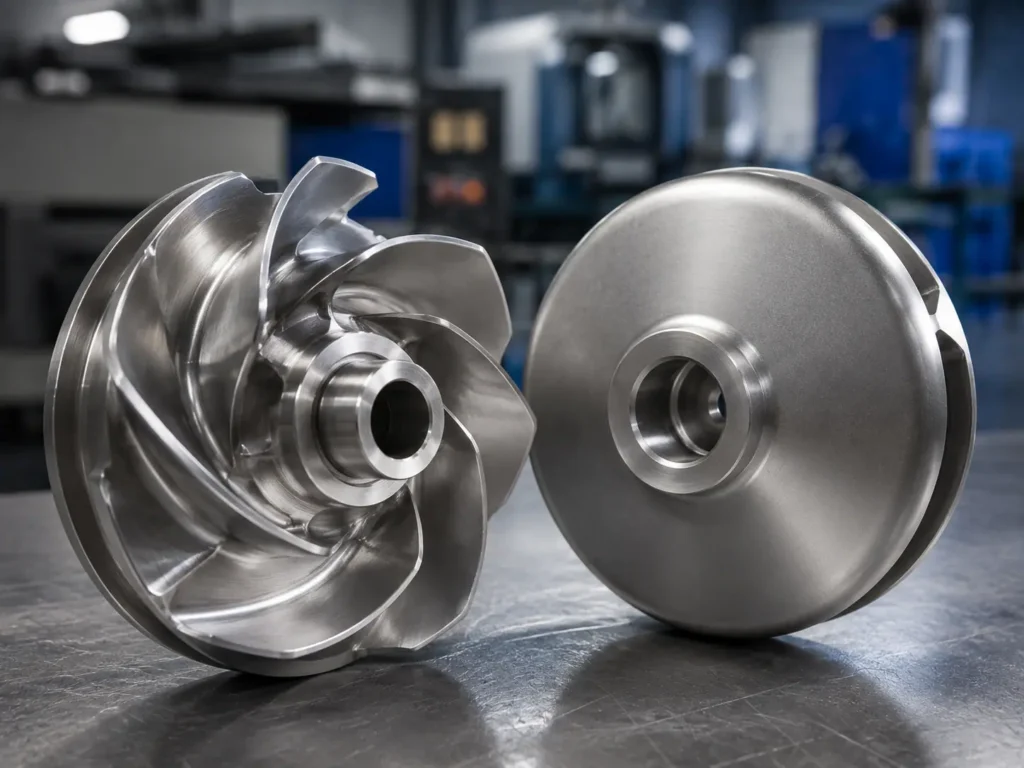
Buyers looking for a custom pump impeller manufacturer in China should confirm more than price and delivery time. A reliable RFQ should define the pump type, drawing or sample condition, material grade, critical dimensions, liquid condition, solids content, operating speed, dynamic balancing need, inspection documents, and repeat-order plan before the supplier quotes the part.
Short answer: choose a custom pump impeller manufacturer in China by checking whether the supplier can review drawings or samples, understand pump-side fit, manufacture by casting and CNC machining when required, control bore and hub dimensions, provide material and inspection documents, discuss balancing, and support repeat OEM batches. Do not treat a pump impeller as a generic metal casting.
Matson’s pump impeller manufacturer page is the main product page for custom pump impellers. This article is a buyer checklist for RFQ preparation and supplier review, especially when the sourcing question is “Can a China supplier make this pump impeller correctly from my drawing or sample?”
[Image placeholder: Add a real factory image showing a custom pump impeller, 2D drawing, sample photos, calipers, material certificate, and inspection report on a workshop table. Alt text: “Custom pump impeller manufacturer China RFQ checklist with drawing sample and inspection documents”]
What Kind of Supplier Are You Actually Contacting?
Not every supplier who can quote a pump impeller is the right partner for a custom industrial project. Some suppliers are better for trading or simple sourcing. Some can handle manufacturing review. Some can support repeat OEM supply.
| Supplier type | Best fit | Buyer should check |
|---|---|---|
| Trading supplier | Simple purchasing, standard parts, or when the buyer mainly needs sourcing support. | How much control they have over drawing review, foundry, machining, inspection, and feedback. |
| Custom pump impeller manufacturer | Industrial pump impellers made from drawing, 3D file, sample, or project specification. | Casting route, CNC machining, bore and hub control, material documents, balancing, and inspection. |
| OEM supply partner | Recurring batches for pump OEMs, distributors, repair programs, and equipment builders. | Revision control, approved sample record, batch consistency, packing, lead time, and issue response. |
If the project is only a retail replacement part for a pool pump, outboard motor, hot tub, or branded consumer pump, Matson is not the right fit. The useful fit is industrial pump impellers where drawing, sample, material, machining, balancing, and documentation matter.
Pump Impeller RFQ Details Buyers Should Prepare
A weak RFQ says, “Please quote this impeller,” with one photo and a diameter. That is not enough.
A useful custom pump impeller RFQ should define the part as a rotating pump component. The supplier needs enough information to review fit, material, process route, balance risk, inspection, and export packing.
Important RFQ details include:
- Pump type: centrifugal, slurry, sewage, chemical, marine, water, wastewater, mixed-flow, vortex, closed, open, or semi-open
- Drawing files: PDF, DWG, DXF, STEP, STP, IGS, or marked sketch
- Sample photos: front, back, side, bore, hub, keyway, vane passages, worn areas, and mounting faces
- Critical dimensions: outside diameter, bore, hub height, keyway, shaft fit, mounting face, wear surfaces, eye diameter, and outlet width
- Material grade: stainless steel, duplex stainless, bronze, carbon steel, alloy steel, high-chrome wear alloy, or buyer-specified equivalent
- Operating condition: liquid, solids, abrasive particles, corrosion, temperature, pH, chloride, slurry density, and pump speed
- Quality needs: material certificate, dimensional report, balancing report, surface treatment, inspection photos, and packing requirements
- Order plan: prototype quantity, first batch, repeat-order forecast, and delivery schedule
For a drawing-based or sample-based project, Matson’s guide to custom impeller from drawing or sample explains why worn samples, damaged bores, broken vane edges, and old welds should not be copied blindly.
Manufacturing Capability Checklist
The supplier should be able to explain how the impeller will be made. “Casting” or “machining” alone is not a complete process plan.
For pump impellers, the route may include sand casting, investment casting, CNC finish machining, keyway machining, surface treatment, passivation, coating, dynamic balancing, dimensional inspection, and export packing. The route depends on geometry, material, size, quantity, critical surfaces, and buyer documentation.
| Capability | Why it matters for pump impellers | Buyer question |
|---|---|---|
| Casting review | Curved vanes, shrouds, hubs, and passages may need a controlled casting route. | Which casting method fits the geometry, material, and quantity? |
| CNC machining | Bore, hub, keyway, mounting face, wear surfaces, and OD often need finish machining. | Which surfaces will be machined and inspected? |
| Material control | Corrosion, abrasion, seawater, chemical liquid, and slurry service change material risk. | Can the supplier provide the required grade and certificate? |
| Dynamic balancing | Pump speed, diameter, mass, and uneven wear can affect vibration and bearing load. | Is balancing required, and what report or grade is needed? |
| Inspection documents | OEM and industrial buyers often need records before shipment. | What dimensions, certificates, photos, and reports will be supplied? |
| Export packing | Thin vane edges, machined bores, coated surfaces, and balanced parts need protection. | How will the impeller be packed and labeled? |
Matson’s impeller manufacturing capability covers casting, CNC machining, surface treatment, dynamic balancing, dimensional inspection, material documentation, and export packing when the project requirements are clear.
Questions to Ask Before Approving a Quote
A low price is not useful if the quote does not control the part.
Before approving a pump impeller quote from China, ask:
- Does the supplier understand whether this is a closed, open, semi-open, vortex, mixed-flow, slurry, chemical, marine, or wastewater pump impeller?
- Which drawing revision or sample will control production?
- Which dimensions are critical for pump assembly and clearance?
- How will worn sample areas be corrected or confirmed?
- Which material grade is quoted, and are equivalents allowed?
- Is the impeller cast, machined from solid, fabricated, or cast and CNC finished?
- What inspection report will be supplied?
- Is dynamic balancing required for the speed, diameter, mass, and pump application?
- How will the first sample be approved before repeat production?
- What happens if the bore, hub height, keyway, or vane geometry is found wrong after inspection?
These questions are practical. They help both buyer and manufacturer avoid a vague RFQ that turns into rework later.
What Makes a Pump Impeller Project a Good Fit for Matson?
Matson is a better fit when the buyer needs an industrial custom pump impeller rather than a catalog part.
Good-fit projects include:
- Custom pump impellers from 2D drawings, 3D files, or confirmed physical samples
- Cast and CNC machined pump impellers for industrial pump OEMs and equipment builders
- Stainless steel, duplex stainless, bronze, carbon steel, alloy steel, and high-chrome pump impeller projects where the material is specified or can be reviewed
- Water, wastewater, chemical, marine, mining, slurry, and industrial process pump applications
- Prototype, first-batch, repeat OEM, distributor, or wholesale supply programs
- Projects requiring dimensional inspection, material certificates, dynamic balancing discussion, and export packing
Poor-fit projects include pool pump repair parts, hot tub pump parts, outboard rubber impellers, DIY replacement kits, brand-model retail parts, and requests based only on marketplace photos. That traffic may look like pump impeller demand, but it is not the right business match.
Documents and Repeat Orders
If the project may repeat, discuss documents before the first order.
A buyer may need material certificates, dimensional inspection reports, balancing reports, pre-shipment photos, packing lists, and approved sample records. These documents are easier to plan before production than after shipment. For a deeper document package, see Matson’s guide to custom impeller manufacturing documents.
For recurring supply, the buyer should also confirm drawing revision control, approved sample status, batch quantity, annual forecast, lead time, packing standard, and change-control process. Matson’s article on OEM impeller supply from China covers repeat-order checks in more detail.
Common Questions Buyers Ask
How do I choose a custom pump impeller manufacturer in China?
Choose a supplier that can review drawings or samples, understand pump-side fit, control material and process route, machine critical surfaces, discuss balancing, provide inspection documents, and support repeat orders.
What should I send for a custom pump impeller RFQ?
Send drawings, 3D files, sample photos, pump type, liquid condition, solids content, material grade, critical dimensions, pump speed, quantity, balancing need, inspection documents, and shipping destination.
Can a pump impeller be made from only a sample?
Sometimes, but worn samples need caution. Buyers should mark damaged areas, provide key dimensions, confirm bore and hub condition, and avoid copying wear, corrosion, repair welds, or broken vane edges as if they were original geometry.
Should I ask for material certificates and inspection reports?
Yes, when the project needs OEM approval, corrosion or wear control, repeat supply, import documentation, or customer acceptance. State the required documents before quotation.
What should I send to Matson for a pump impeller quote?
Send the drawing or sample photos, pump type, material grade, key dimensions, liquid and solids condition, RPM, quantity, document requirements, and balancing needs through the custom impeller quote page.