Short answer: Matson manufactures custom industrial fan impellers and blower fan wheels in China from drawings, 3D files, samples, or dimensional specifications. A useful RFQ should define blade type, wheel diameter, inlet geometry, hub and bore fit, material, operating speed, balancing requirement, and the air or gas environment before price comparison.
Use this page when you need an industrial fan wheel or blower fan impeller manufactured from a drawing, sample, material grade, speed requirement, and batch quantity.
Industrial Fan Impellers Matson Can Review
An industrial fan impeller is the rotating wheel that moves air or gas through a fan or blower housing. In custom manufacturing, the name alone does not tell the factory enough. You need to define the blade form, inlet relationship, backplate or shroud, hub interface, shaft fit, weld or casting route, material, speed, and balance requirement.
Matson is a China-based custom impeller manufacturer for OEM buyers, equipment builders, distributors, and sourcing teams. We review the hardware and manufacturing route; final airflow performance, fan curve, motor selection, casing design, and aerodynamic approval should remain with the fan OEM or engineering owner.
Backward-Curved Fan Impellers
Used in many industrial fans where the drawing controls blade angle, inlet cone relationship, backplate, hub, and balance requirement.
Forward-Curved Blower Fan Wheels
Compact multi-vane wheels for selected ventilation and packaged equipment projects where blade forming and wheel width need review.
Radial Blade Fan Impellers
Often discussed for dust collection, material handling, and dirty-air applications when blade thickness, wear risk, and weld strength matter.
Airfoil Fan Impellers
Profile-controlled fan wheels where inlet relationship, blade shape, surface condition, weight control, and balancing should be specified.
Industrial Blower Wheels
Fan wheels for process air, combustion air, drying, and industrial OEM equipment when strength and speed requirements are defined.
Drawing-Based Fan Wheels
Non-standard blade profile, hub, bore, bolt pattern, rim, inlet, or backplate manufactured according to approved project data.
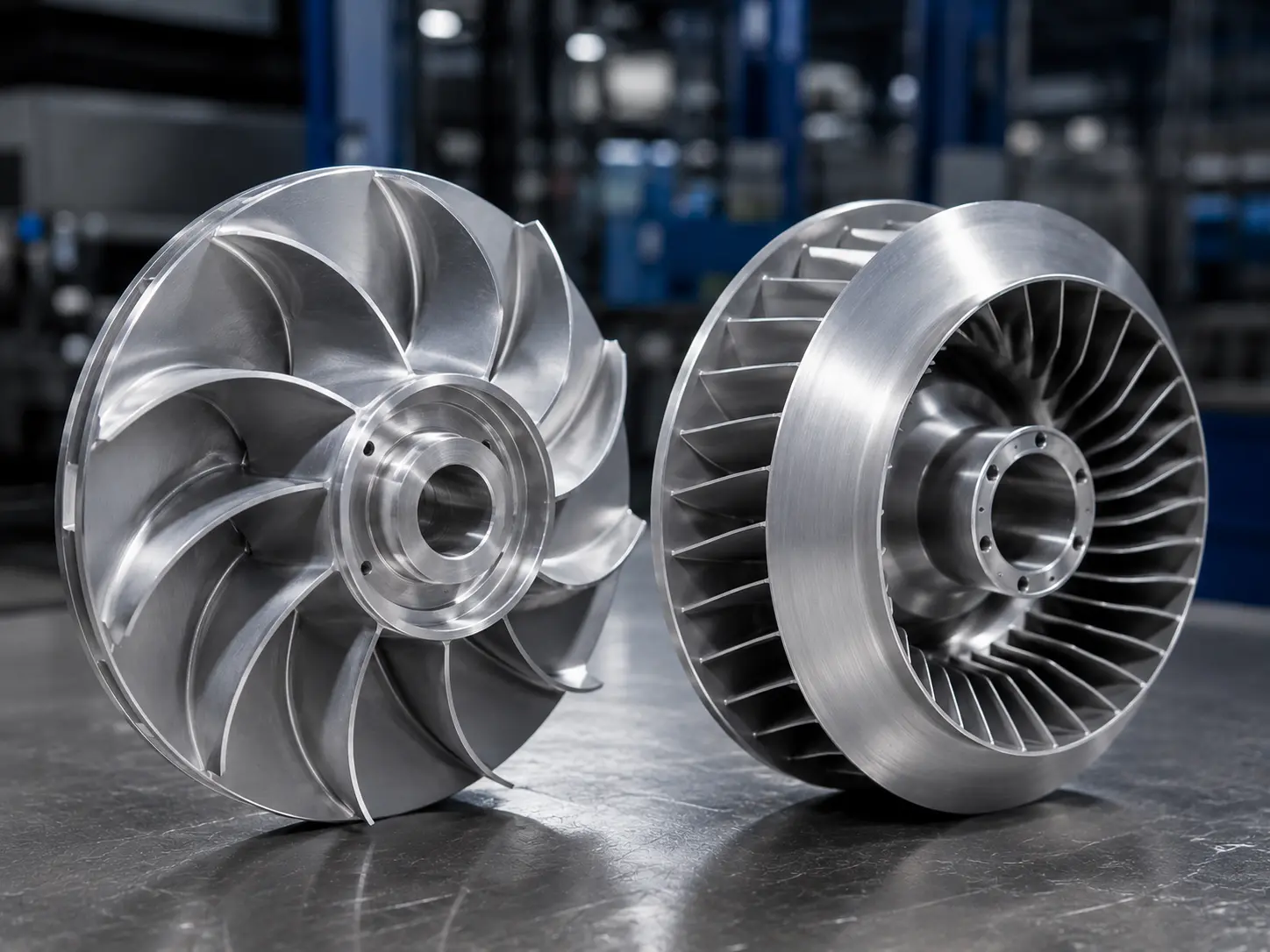
Industrial Fan Impeller RFQ Decision Table
When you compare industrial fan impeller suppliers, make sure each quote is based on the same manufacturing scope. A lower price can simply mean the quote ignored balancing, material certificates, weld inspection, surface treatment, or sample-reverse risk.
| Decision point | Why it matters | What buyers should send |
|---|---|---|
| Fan wheel type | Backward-curved, forward-curved, radial, airfoil, and high-pressure wheels use different blade, weld, machining, and balance controls. | Drawing, blade type, blade count, inlet side, outlet width, rotation direction, photos from both sides. |
| Hub and shaft fit | The fan impeller can look correct but fail assembly if bore, keyway, taper, hub height, or bolt pattern is wrong. | Bore size, shaft fit, keyway, taper/thread, hub height, mounting face, bolt circle, datum. |
| Diameter and casing clearance | OD, rim width, inlet cone, and casing clearance affect installation and can influence vibration risk. | Finished OD, inlet diameter, wheel width, casing relationship, clearance requirement, runout requirement. |
| Material and air stream | Hot air, dust, moisture, chemicals, and weight targets can change material and surface-treatment selection. | Material grade, temperature, humidity, gas chemistry, dust load, corrosion or abrasion history. |
| Manufacturing route | Fabrication, welding, casting, CNC machining, and surface treatment should match the geometry and quantity. | Drawing tolerance, weld requirement, machining surfaces, batch size, sample condition, certificate needs. |
| Balancing and inspection | Unclear balance requirements can create vibration, bearing load, noise, and acceptance disputes. | Operating speed, balance grade or acceptance basis, inspection report, balancing report, packing needs. |
Applications and Wrong-Fit Traffic
Industrial fan impellers and blower fan wheels can be used in HVAC equipment, air handling units, industrial ventilation, process air systems, drying equipment, dust collection, chemical exhaust, wastewater ventilation, combustion air, material handling, and industrial OEM equipment.
This page is intentionally not written for consumer fan parts, furnace repair wheels, appliance blower wheels, snow blower parts, leaf blower impellers, online replacement kits, or brand/model repair searches. Those searches may use similar words, but they do not match Matson’s custom industrial manufacturing business.
Good-fit inquiries
Drawing-based industrial fan wheels, sample-based OEM replacement manufacturing, batch fan impeller production, custom hub or bore requirements, material review, and balancing/report needs.
Poor-fit inquiries
Retail spare parts, DIY repair, household appliance wheels, snow blower modifications, leaf blower parts, furnace repair service, or requests for a complete fan or blower unit.
For HVAC-specific use cases, see Matson’s fan and blower impellers for HVAC page. For deeper centrifugal blower manufacturing notes, see the centrifugal blower impeller guide.
Material, Manufacturing and Quality Checks
Industrial fan impellers may be manufactured from carbon steel, stainless steel, aluminum, alloy steel, heat-resistant steel, or other buyer-specified materials. The right choice depends on drawing requirements, air or gas condition, temperature, dust load, corrosion risk, wheel size, operating speed, weight target, and expected service environment.
Manufacturing may include fabrication, welding, casting, CNC machining, surface treatment, dynamic balancing, dimensional inspection, and export packing. Matson’s impeller manufacturing page explains the broader process route for custom impeller projects.
If your fan wheel is quoted from a physical sample, mark worn, cracked, repaired, corroded, or deformed areas before treating the sample as reliable production data. If your RFQ is for repeat supply, confirm drawing revision, approved sample status, inspection records, and packing expectations with the same discipline you would use for any OEM part.
What to Send for a Custom Industrial Fan Impeller Quote
A useful RFQ should give the manufacturer enough information to review geometry, material, fit, balance, documentation, and export requirements. If a detail is unknown, say so directly. That is better than letting the factory guess and discovering the gap after machining or balancing.
Part data
- 2D drawing, 3D file, or physical sample
- Wheel OD, inlet diameter, width, bore, hub height, and mounting dimensions
- Blade type, blade count, blade thickness, rotation direction, and viewing side
- Material grade, weld requirement, surface treatment, and coating or passivation need
- Photos of worn, cracked, repaired, corroded, or unbalanced areas if sample-based
Project data
- Application: HVAC, process air, drying, dust collection, exhaust, or ventilation
- Operating speed, balance grade, and balancing report requirement
- Temperature, humidity, dust, corrosion, abrasion, or chemical exposure
- Dimensional report, material certificate, inspection record, or first-article need
- Quantity, batch schedule, repeat-order plan, and export packing requirement
Final Thoughts Before Sending Your RFQ
An industrial fan impeller quote should not be a race to the lowest number. It should clarify whether the wheel can fit, run, balance, and pass the agreed inspection. Send Matson your drawing, sample photos, material grade, speed, balance requirement, quantity, and application details for a manufacturing review.
Send Industrial Fan Impeller RFQIndustrial Fan Impeller FAQ
What is an industrial fan impeller?
An industrial fan impeller is the rotating wheel inside a fan or blower that moves air or gas through the equipment. It may also be called a fan wheel, blower wheel, blower impeller, or centrifugal fan wheel. For manufacturing, the exact geometry matters more than the label.
Can Matson manufacture industrial fan impellers from drawings?
Yes. Matson can review 2D drawings, 3D files, samples, and project specifications for custom industrial fan impeller manufacturing. The quote depends on geometry, material, size, hub and bore fit, operating speed, balancing requirement, quantity, and application environment.
Is Matson an industrial fan impeller manufacturer in China?
Yes. Matson is a China-based custom impeller manufacturer located in Shijiazhuang, Hebei. The company focuses on industrial OEM and custom projects rather than consumer replacement parts, repair kits, or complete fan equipment.
What materials are used for industrial fan impellers?
Common materials include carbon steel, stainless steel, aluminum, alloy steel, and heat-resistant steel. The correct material should be confirmed against the drawing, air or gas condition, temperature, dust, corrosion, speed, surface treatment, and service requirement.
Do industrial fan impellers need dynamic balancing?
Many industrial fan impellers require dynamic balancing, especially larger, heavier, welded, high-speed, or continuous-duty wheels. The exact balance grade should come from the drawing, fan specification, operating RPM, wheel mass, and buyer requirement.
Can Matson copy a fan impeller from a worn sample?
Matson can review sample-based projects, but worn or repaired samples need careful checking. Blade deformation, rim wear, bore damage, cracked welds, and previous balance correction can hide the original design. Send assembly dimensions and mark unreliable surfaces if possible.
Does this page replace the fan and blower impellers page?
No. This page focuses on the narrower industrial fan impeller and China manufacturing intent. Matson’s fan and blower impellers page remains the broader product-family page for fan wheels, blower impellers, and related air-moving impeller products.
What should I confirm before asking for a fan impeller quote?
Confirm blade type, wheel diameter, inlet and outlet dimensions, bore and hub interface, material, speed, rotation direction, balancing requirement, inspection documents, application environment, quantity, and whether the project is a one-time sample replacement or repeat OEM supply.