Short answer: Matson manufactures custom centrifugal pump impellers from drawings, 3D files, physical samples, or detailed specifications. If your quotation risk is not the word “impeller” but the bore fit, wear-ring surface, material match, and balancing requirement, this page shows what should be confirmed before production.
Use this page when the inquiry is specifically about the impeller of a centrifugal pump and you can provide a drawing, sample, material grade, diameter, fit dimensions, quantity, and balancing requirement.
Custom Centrifugal Pump Impellers Matson Manufactures
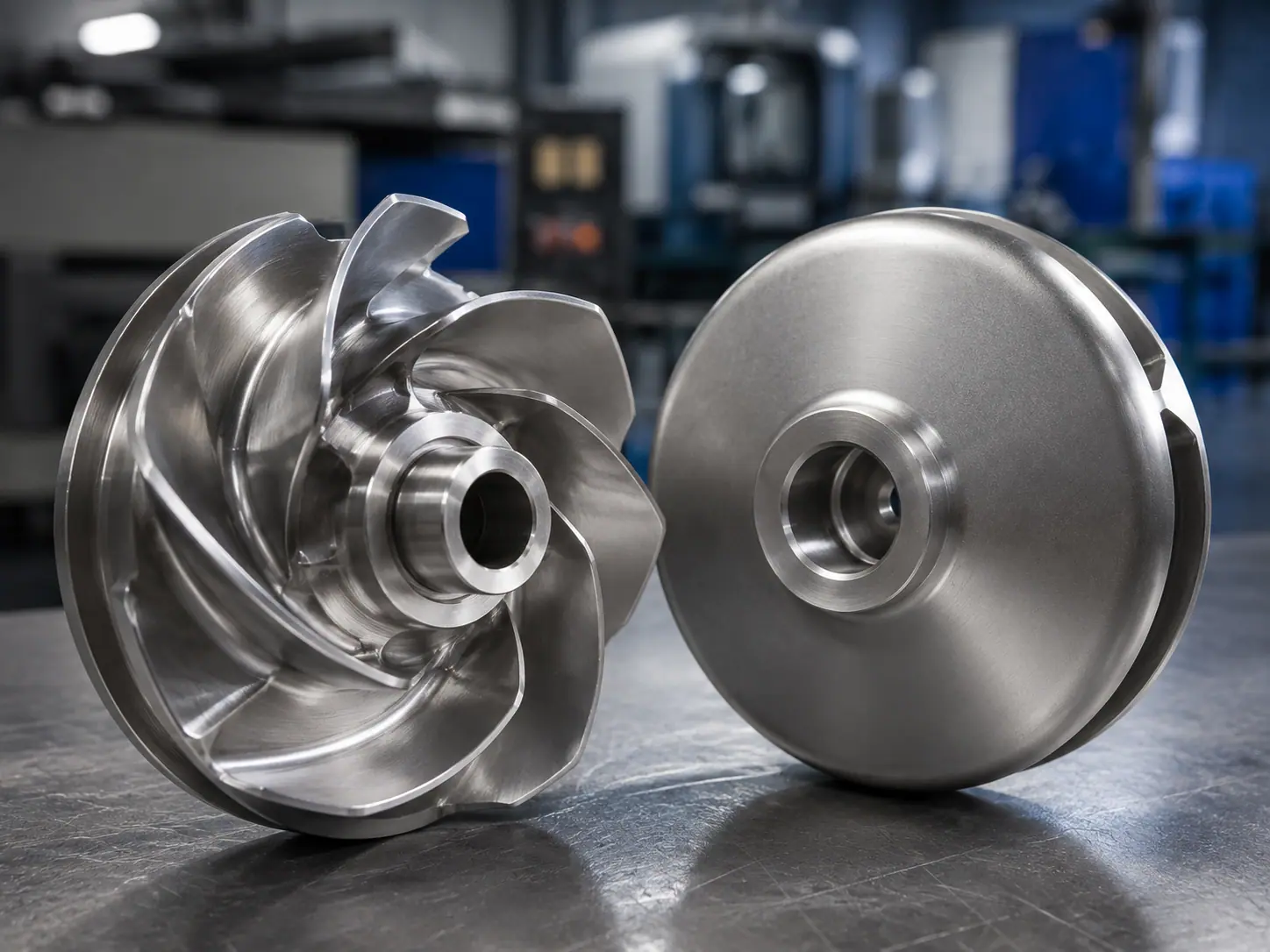
A centrifugal pump impeller is the rotating component that transfers energy from the shaft to the liquid. In custom manufacturing, you should confirm more than the outside diameter. Bore fit, hub height, mounting face, vane profile, wear-ring surface, rotation direction, material, and balancing requirement all affect whether the finished part can assemble and run correctly.
Matson works from approved drawings, 3D models, physical samples, or detailed dimensional specifications. Final hydraulic selection remains with the pump OEM or engineering owner; Matson’s role is manufacturing, machining, inspection, and documentation to the agreed specification.
Closed Centrifugal Impellers
For clean-liquid centrifugal pumps where shrouded geometry, clearance, and wear-ring surfaces need careful manufacturing review.
Open Centrifugal Impellers
For selected wastewater, process, or solids-tolerant applications where open vane access and clearance control matter.
Semi-Open Impellers
A practical design family for many industrial pump projects where vane geometry, backplate, and casing relationship must be checked together.
Vortex Pump Impellers
Solids-handling impellers for sewage and wastewater applications when the drawing and pump design call for a recessed or vortex arrangement.
Slurry Pump Impellers
Wear-focused impellers for abrasive media, mining, tailings, sludge, and other solids-heavy pump applications.
Drawing-Based Impellers
Non-standard impeller geometry, trim diameter, hub, bore, keyway, or mounting surfaces manufactured according to project data.
Centrifugal Pump Impeller RFQ Decision Table
The phrase “centrifugal pump impeller” is broad. A useful RFQ needs enough information to define the actual geometry, material, process route, and inspection scope. If one item below is missing, ask whether it can be checked from the drawing, sample, pump assembly, or previous purchase record before price comparison.
| Review item | Why it matters | What buyers should send |
|---|---|---|
| Impeller type | Closed, open, semi-open, vortex, slurry, and mixed-flow geometries have different casting and machining needs. | Drawing, pump type, photos, vane count, shroud shape, inlet eye, outlet width. |
| Bore and shaft fit | The part cannot assemble correctly if the bore, keyway, taper, or hub face is wrong. | Bore diameter, tolerance, keyway, hub height, mounting face, shaft fit, datum. |
| Diameter and clearance | OD, trim diameter, wear-ring clearance, and casing relationship affect fit and pump operation. | Finished OD, trim requirement, wear-ring dimensions, casing drawing, critical clearances. |
| Material grade | Water, chemical, seawater, slurry, and hot liquids create different corrosion and wear risks. | Material grade, previous material, liquid condition, solids, temperature, certificate need. |
| Manufacturing route | Investment casting, sand casting, and CNC machining are selected by geometry, material, size, tolerance, and quantity. | Drawing tolerance, surface finish, quantity, sample condition, inspection requirement. |
| Balancing | Unbalance can create vibration, bearing load, seal issues, and early failure. | Pump speed, impeller diameter, mass, balance grade, report requirement. |
Materials for Centrifugal Pump Impellers
Common materials include 304 stainless steel, 316 or 316L stainless steel, duplex stainless steel, super duplex stainless steel, bronze, brass, carbon steel, and alloy steel. Final material selection should follow the drawing and working environment.
If you are replacing an old impeller, do not choose material from appearance alone. A polished stainless surface, a bronze color, or a repaired sample can mislead purchasing. The safer route is to confirm the existing grade, service liquid, corrosion history, solids content, and certificate requirement before asking manufacturers to quote.
Clean water and general industrial service
Stainless steel, bronze, or carbon/alloy steel may be reviewed according to pump design, corrosion risk, certificate requirements, and cost target.
Chemical or seawater service
316L, duplex stainless, super duplex, bronze, or other project-specified alloys may be needed when chloride, acid, solvent, or galvanic corrosion is a concern.
Slurry and abrasive service
Wear-resistant alloys and thicker wear sections may be reviewed when solids, sand, grit, or mineral particles can remove material quickly.
Sample-based replacement projects
If the old impeller is worn, corroded, repaired, or trimmed, do not copy every dimension blindly. Mark reliable and unreliable surfaces before quotation.
Casting, CNC Machining and Balancing
Many centrifugal pump impellers are cast first and then CNC machined at functional surfaces. Casting creates the near-net impeller shape; machining controls the bore, hub, mounting face, keyway, OD, wear-ring area, and other fit surfaces defined by the drawing.
Dynamic balancing can be arranged when required by pump speed, diameter, mass, and buyer specification. If a balancing report, material certificate, dimensional report, or pre-shipment photos are required, include them before quoting.
From a manufacturing point of view, the best RFQ is not the longest RFQ. It is the one that separates must-hold dimensions from general surfaces. When you mark datums, critical dimensions, inspection items, and report needs clearly, the manufacturer can review the casting allowance, machining sequence, and balancing plan with fewer assumptions.
For deeper process detail, see Matson’s impeller manufacturing, pump impeller casting, and CNC machined impeller resources.
What to Send for a Centrifugal Pump Impeller Quote
Before you send the RFQ, check whether the supplier is being asked to manufacture a drawing-controlled part, reverse a sample, or help define missing manufacturing data. Those are different conversations. Clear scope protects price accuracy, delivery planning, and later inspection acceptance.
Part data
- 2D drawing, 3D file, or physical sample
- Finished OD, trim diameter, inlet eye, outlet width
- Bore, hub height, mounting face, keyway, taper, or thread
- Wear-ring dimensions and casing relationship
- Rotation direction and vane count
Project data
- Material grade and certificate requirement
- Fluid, solids, temperature, corrosion, and abrasion context
- Pump speed and balancing requirement
- Inspection report, surface finish, coating, or passivation need
- Quantity, batch schedule, export packing, and documentation needs
Final Thoughts Before Sending Your RFQ
A centrifugal pump impeller quote should help you reduce manufacturing risk, not just collect a price. Send Matson the drawing, sample photos, material grade, functional dimensions, quantity, and balancing requirement. We can review the casting, CNC machining, inspection, and documentation route before quoting.
Send Drawing or Sample DetailsCentrifugal Pump Impeller FAQ
Does Matson manufacture centrifugal pump impellers from drawings?
Yes. Matson can review 2D drawings, 3D files, physical samples, or detailed dimensional specifications for custom centrifugal pump impeller manufacturing. The clearer your drawing is on bore, hub, keyway, wear-ring surface, material, and inspection requirements, the more reliable the quotation and manufacturing review will be.
What is the impeller of a centrifugal pump?
It is the rotating component that transfers energy from the shaft to the liquid. For sourcing work, the important point is not only the hydraulic definition. You also need to control the fit surfaces, vane geometry, material grade, rotation direction, and balancing requirement so the finished part can assemble into the pump.
Can Matson copy a centrifugal pump impeller from a worn sample?
Matson can review sample-based projects, but a worn sample should not be copied blindly. Bore wear, repaired vanes, corroded surfaces, trimmed OD, and damaged wear-ring areas can all hide the original design. Mark which surfaces are reliable and provide assembly dimensions whenever possible.
What materials are available for centrifugal pump impellers?
Common options include stainless steel, duplex stainless, super duplex stainless, bronze, brass, carbon steel, and alloy steel. The right choice depends on the drawing, liquid, temperature, corrosion risk, solids content, certificate requirement, and previous field performance. Matson reviews material against the supplied specification.
Can Matson provide CNC machining after casting?
Yes. CNC machining can be used for the bore, hub, mounting face, keyway, wear-ring surfaces, OD, and other functional dimensions defined by the drawing. Casting and machining should be reviewed together because casting allowance, datum selection, and fixture planning affect the final machined result.
Does Matson provide dynamic balancing?
Dynamic balancing is available when required by the drawing, pump speed, diameter, mass, and application. If you need a balancing report, include the required grade or acceptance basis in the RFQ. This avoids quoting the impeller as a machined part only and adding balancing later.
Is this page for replacement pump parts or OEM production?
This page is written for custom industrial and OEM centrifugal pump impeller manufacturing, not retail spare-parts shopping. If you need a replacement from a sample, Matson can review the sample as manufacturing data, but the project still needs material, dimensions, quantity, and acceptance requirements.
What information makes a centrifugal pump impeller quote faster?
The fastest useful RFQ includes a drawing or sample photos, finished diameter, bore and hub details, keyway or mounting data, material grade, fluid condition, quantity, balancing need, and inspection documents. If some data is missing, explain what is unknown so the review can separate fixed requirements from assumptions.