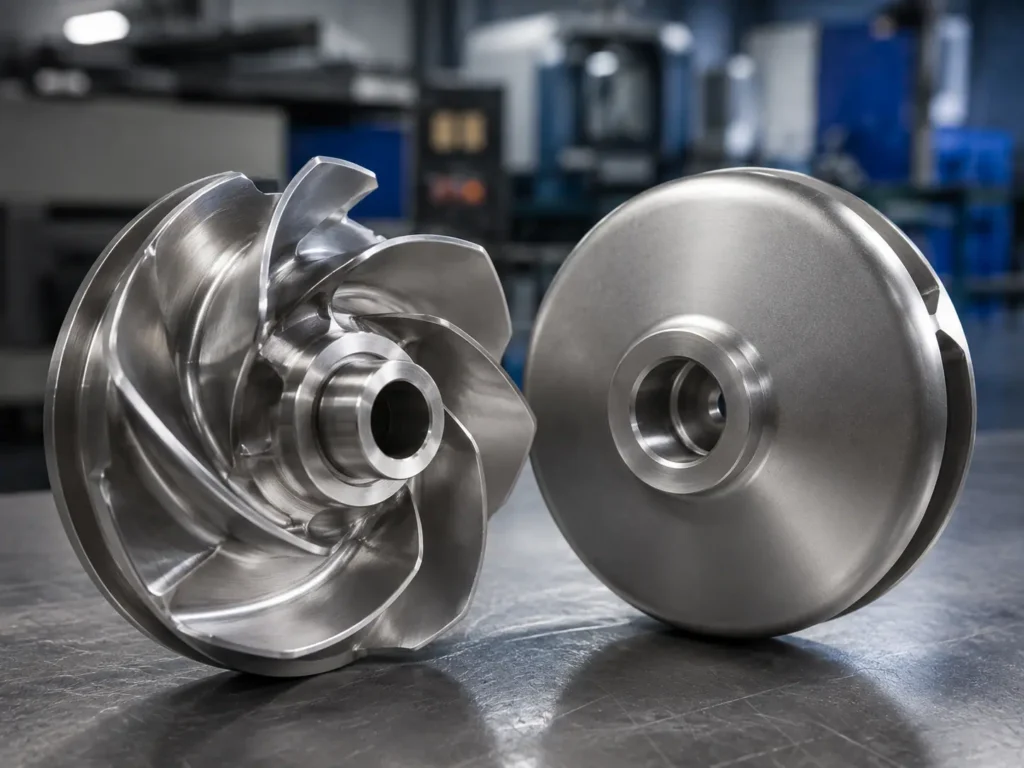
A channel impeller pump uses an impeller with relatively few, defined flow passages to handle liquids containing solids. Single-channel and multi-channel designs are alternatives within this family, but channel count alone does not determine clogging resistance or efficiency. For wastewater duty, compare the fluid condition, required free passage, approved pump curve and casing arrangement before selecting a design or releasing a custom impeller for manufacture.
Identify the Passage Before Comparing the Pump
KSB’s channel-impeller definition includes open and closed forms with a small number of vanes for solids-bearing liquids. This gives a useful starting point, rather than a complete purchasing specification. A product name still needs to be matched to a section drawing and the actual passage geometry.
The passage is the route that the liquid and entrained material must negotiate through the impeller. Its entrance, turns, height and discharge opening all matter. A photograph of the outlet does not establish the smallest opening further inside a closed component.
Check what the supplier means by single-channel, twin-channel and multi-channel. Two channels are a multi-channel arrangement, although catalogs often discuss twin-channel impellers separately. Do not assume that two visible openings in a photograph establish the entire internal construction. Use the manufacturer’s drawing and naming convention.
For custom pump impeller manufacturing, the first useful input is a released component drawing with the passage and mating features identified. The pump name, motor rating and outside diameter will not define a reproducible part.
Single-Channel vs Multi-Channel Selection
Start with the wastewater, then check the hydraulic evidence for the proposed pump. A single-channel layout deserves consideration where difficult solids or fibrous material are part of the specified duty. A multi-channel layout deserves consideration where the incoming liquid is screened or its solids are better controlled. Neither statement approves an unspecified impeller for a particular installation.
The following table is a review framework. It is not a performance ranking or a substitute for the pump manufacturer’s selection data.
| Arrangement | Useful selection question | Evidence to request | Manufacturing checkpoint |
|---|---|---|---|
| Single-channel | Does the released design address the actual solids and fiber load? | Fluid description, passage definition, duty curve and application approval | Passage continuity, approved vane contour, hub datum and balancing instructions |
| Twin-channel | What does this specific two-channel geometry offer at the required operating point? | Section drawing, passage dimensions and curve for the offered diameter and speed | Both passage profiles, wall sections, casting consistency and machining references |
| Other multi-channel | Are solids, fibers and entrained gas within the design’s documented duty limits? | Screening conditions, fluid limits, efficiency and operating-range data | Minimum passage dimensions, internal finish requirements and inspection access |
KSB’s wastewater selection guide distinguishes the fluid conditions served by its single-vane and multi-channel designs. Those application distinctions support checking the incoming wastewater carefully. The efficiency figures and solids limits of a named pump range should stay attached to that range; they are not universal values for all channel impellers.
An OEM buying to an established design has a different task from an engineer selecting a new pump. For the OEM purchase, preserve the approved geometry and acceptance criteria. If someone proposes changing the channel count, treat that as a hydraulic design change requiring engineering review, not a routine foundry substitution.
Open or Closed Is a Separate Decision
Channel count describes a passage arrangement. Open or closed construction describes the presence of the relevant shrouds. These are separate classifications. Do not write “single-channel means open” or “multi-channel means closed” on an RFQ without checking the actual design.
A closed passage can make internal geometry harder to inspect from ordinary photographs. An exposed passage offers a different view of the vane surfaces, but it also needs the correct relationship to the mating pump component. Inspection convenience does not prove superior service performance.
For a sample-based enquiry, include the suction-side view, shaft-side view and an axial section if available. Mark the rotation direction and viewing side. If the original pump uses an adjustment procedure or a defined mating gap, include those references separately from the loose impeller dimensions.
Free Passage Does Not Describe a Rag
A stated free passage needs a definition: which pump configuration, which impeller diameter and which limiting section does the dimension describe? Ask whether it refers to the complete pump flow path or only the impeller. An unobstructed opening at one location says little about a restriction elsewhere in the assembly.
A rigid solid and a long flexible strip do not interact with that route in the same way. Fiber length, shape, concentration and tendency to collect must be reviewed alongside the nominal solids size. “Passes a ball of this diameter” is not evidence that an unspecified rag or wipe will move through without collecting.
Describe the water and wastewater application as it actually reaches the pump. Include screening, grit, intermittent loading, temperature, corrosive constituents and any significant entrained gas. A fluid label such as “sludge” leaves too many of these questions unanswered.
Consider a hypothetical specification that lists only a required passage diameter and design flow. It still does not say whether the incoming material consists of rounded particles, flexible fibers or abrasive grit. Adding the material description and screening condition gives the selection engineer a meaningful problem to assess. Simply increasing the opening is not an adequate engineering response.
Compare Curves at the Same Duty
If two candidate pumps use different speeds, impeller diameters or operating points, their quoted efficiency figures do not isolate the effect of channel count. Request the head-flow, efficiency and power information for the configuration actually offered, together with the intended operating range.
Look beyond the nominated duty point. Record normal running flow, foreseeable low-flow operation and how the pump is controlled. Ask the pump engineering owner to confirm suitability across that range. A manufacturing quotation should not silently convert a single duty point into a guarantee for every operating condition.
There is also a useful limit to what a supplier can infer from a worn impeller. Wear can change the geometry that originally produced the approved curve. A visually close reproduction of the worn part is not evidence that the original performance will be restored. Identify which features must be recovered from the controlled drawing before copying the sample.
When a Vortex Arrangement Enters the Discussion
A channel arrangement and a recessed vortex arrangement should not be confused merely because both appear in solids-handling applications. Their impeller-to-casing relationships differ. Review the complete geometry and the selected pump’s documented performance before treating one as a replacement for the other.
Our recessed impeller pump guide covers that arrangement in more detail. For a channel-impeller manufacturing enquiry, confirm that the supplied sample belongs to the approved casing and pump configuration. A different impeller family that fits the shaft is not automatically a usable substitute.
Turn the Selected Design into an Inspectable Part
Once engineering has selected the pump arrangement, the manufacturing package needs to define what will be accepted. Separate hydraulic surfaces from shaft interfaces, mounting faces and other functional dimensions. Assign inspection methods to important features before production begins.
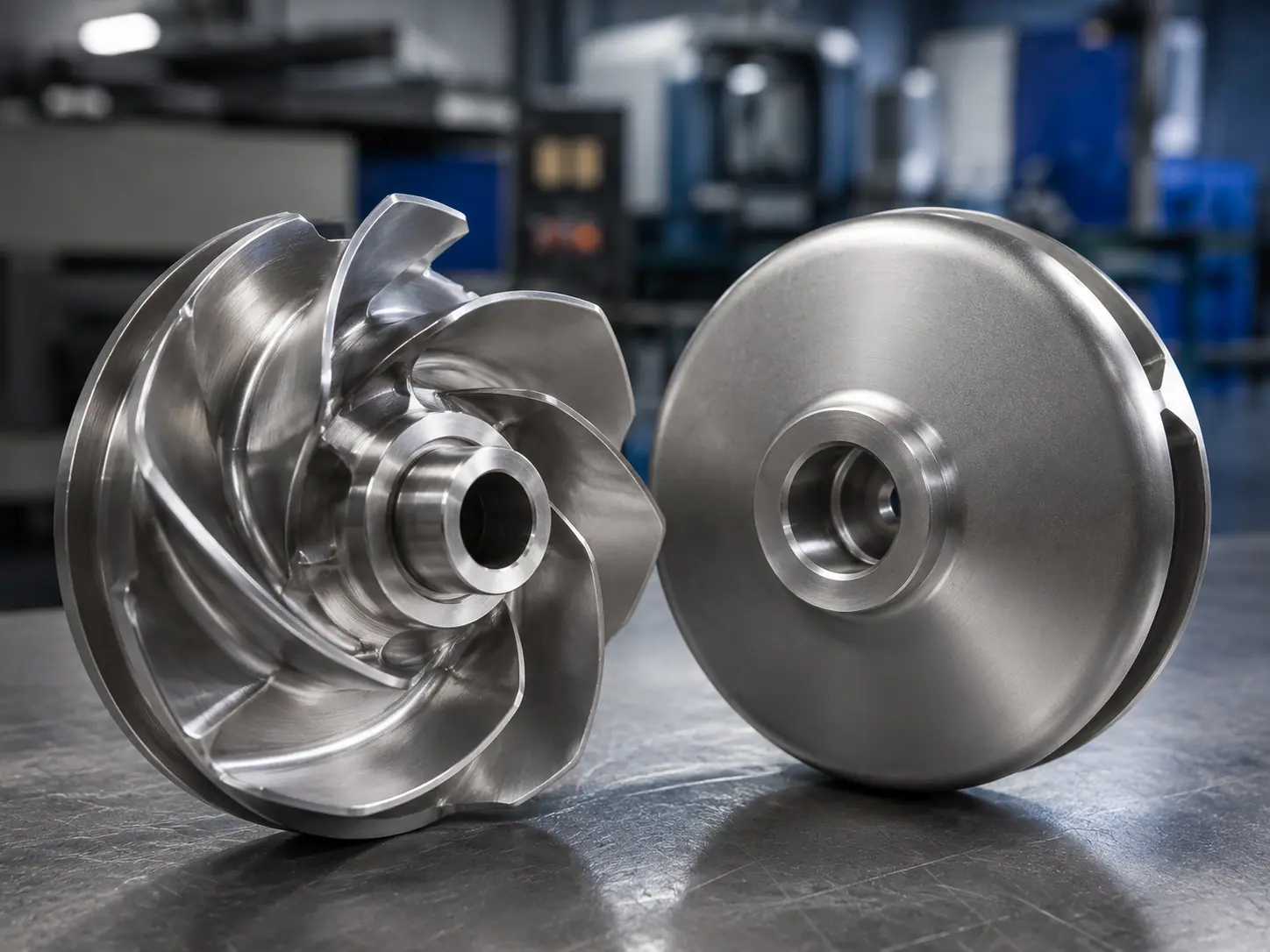
For cast components, review how internal passages are formed and accessed for cleaning and inspection. Core position, remaining material and permitted finishing need drawing-specific controls. A satisfactory outside diameter cannot compensate for an incorrectly formed internal passage.
Do not ask for “smooth channels” without defining the requirement. Identify the surfaces, the permitted finishing process and the acceptance method. Uncontrolled grinding can alter a released contour or wall section. The same caution applies to balancing corrections: specify permitted locations so that material removal does not become an undocumented passage modification.
Material selection needs its own approval. Corrosion and abrasive wear are different problems, and a change in alloy does not correct an unsuitable passage arrangement. State the material designation, documentation and any required treatment. Matson can review suitable drawing-based projects through its casting, CNC machining and inspection processes; the pump design owner retains responsibility for hydraulic selection and design changes.
What to Put in the RFQ
An enquiry that says “single-channel impeller, same as sample” is a starting conversation, not a released specification. Supply the following information or identify it explicitly as unresolved.
| RFQ input | What to specify | Why it matters |
|---|---|---|
| Design identity | Drawing revision, pump arrangement, rotation and viewing direction | Prevents quotation against the wrong configuration |
| Hydraulic passages | Controlled section geometry, minimum openings and acceptance method | Makes internal features inspectable rather than assumed |
| Interfaces | Bore, keyway, hub faces, mating features and assembly references | Connects the loose component to the actual pump assembly |
| Material and service | Released grade, fluid condition, corrosion/abrasion concerns and temperature | Defines the manufacturing and material review |
| Quality release | Dimensional checks, balancing requirements, documentation and trial quantity | Provides a repeatable basis for first-part and batch acceptance |
Mark worn, repaired or rubbed sample surfaces. Distinguish measured dimensions from dimensions still awaiting engineering approval. For repeat orders, retain the accepted drawing revision and inspection baseline instead of relying on the appearance of the last delivered sample.
Common Questions We Actually Get
What is a channel impeller pump used for?
A channel impeller pump is used for duties involving solids-bearing liquids, including suitable wastewater and sludge applications. The exact fit rests on the selected pump’s documented capability, the incoming material and the operating conditions. Check solids shape, fibers, grit, gas and screening alongside flow and head. The family name alone is not a sufficient specification for either pump selection or custom component manufacture.
Is a single-channel impeller always less likely to clog?
No universal ranking follows from channel count alone. The complete passage geometry, inlet conditions and actual material being pumped affect the review. A single-channel design approved for one wastewater stream should not be assumed suitable for every other stream. Request the manufacturer’s application limits and relevant evidence, particularly where long fibers, wipes or changing solids loads are part of the duty.
Is a twin-channel impeller different from a multi-channel impeller?
Twin-channel describes a two-channel arrangement and therefore falls within the broader multi-channel family. Catalog naming practices vary, so use the section drawing to identify the offered design. When comparing quotations, confirm channel geometry, material, speed, diameter and operating duty rather than treating the labels as interchangeable specifications. A different name does not necessarily mean a different part, or the reverse.
Does a larger free passage guarantee fiber handling?
No. A passage-size statement describes an opening or defined clearance condition, while a flexible fiber or rag presents a different handling problem. Ask how the passage was defined and which configuration the statement covers. Provide information about fiber length, concentration and screening so that the pump engineering owner can assess the actual duty rather than infer suitability from a single size figure.
Can a channel impeller be reproduced from a worn sample?
A sample can support a manufacturing review, but wear may obscure the original passage, interfaces and mating dimensions. Send the controlled drawing and identify any areas that are repaired, eroded or awaiting dimensional restoration. Agree which surfaces establish the production datums and how internal features will be inspected. Reproducing the worn geometry exactly does not establish that the original pump performance has been recovered.
What should I send for a custom channel impeller quotation?
Send the component drawing, available section or 3D model, material grade, quantity and pump arrangement. Include the approved passage requirements, bore and hub details, rotation reference, balancing criteria and inspection documents. Describe the liquid, solids and fibers to explain the service context. Flag unresolved design questions clearly so the quotation does not turn an assumption into an unapproved production requirement.
Final Thoughts
Choose a channel impeller arrangement using the actual wastewater and approved pump performance, then preserve that choice through a controlled manufacturing package. Single-channel and multi-channel labels are useful identifiers, but they do not replace passage geometry, casing references or inspection criteria. Matson can review suitable custom impeller manufacturing enquiries once the design, material and acceptance requirements are clear.
Send your impeller drawing for an RFQ with the section view, fluid description, quantity and any sample dimensions that still need approval.