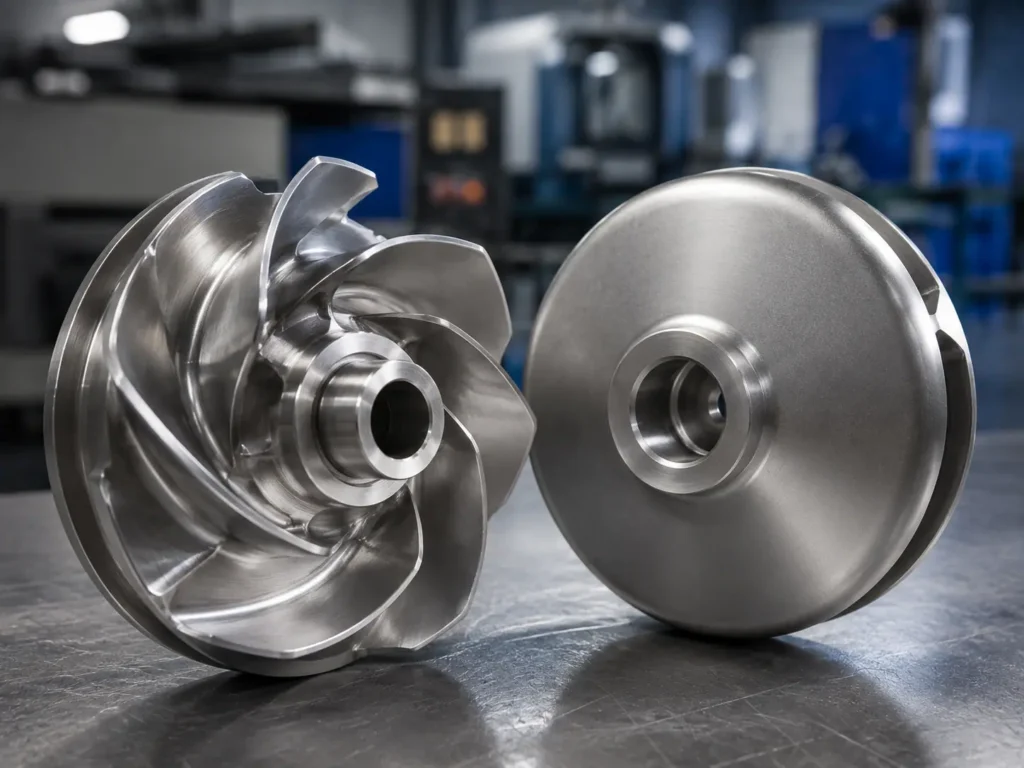
Impeller traceability requirements should connect each delivered part to the approved drawing revision, material heat or batch, manufacturing route, subcontracted processes, inspection results, balancing record, nonconformance disposition, and shipment documents. The required depth may range from lot-level identification for a stable repeat order to unique part-level identification for a critical or mixed-batch project.
Short answer: traceability is not just a certificate placed in the shipping folder. It is an unbroken identity chain. If a heat number is recorded at receiving but lost after cutting, casting, machining, coating, or balancing, the finished impeller cannot be reliably linked to the evidence. OEM buyers should therefore define the identification unit, marking method, record fields, transfer points, retention period, and response to lost identity before production starts.
Matson evaluates drawing-based custom industrial impellers according to the supplied geometry, material, quantity, application, process route, and documentation requirements. The traceability plan must still be agreed for the specific order; one identification method is not suitable for every casting, welded wheel, machined impeller, surface treatment, or service condition.
What an Impeller Traceability Chain Must Connect
A usable chain answers six questions without relying on memory:
- Which buyer part number, drawing, model, and revision governed production?
- Which raw material heat, melt, batch, plate, bar, forging, or casting lot became the part?
- Which routing, tooling, work order, operators, and approved external processors were involved when required?
- Which inspection, test, heat-treatment, surface-treatment, and balancing records apply?
- Was any deviation, repair, rework, or concession accepted, and by whom?
- Which finished part or lot entered each package and shipment?
The identification unit must be clear. A purchase order may require one identity per production lot, one per material heat, one per casting melt, or one per individual impeller. Part-level control provides finer resolution but adds marking, scanning, recording, and segregation work. The buyer should select the level from consequence, batch mixing risk, regulatory or end-customer requirements, and the cost of investigating a future issue.
Stage-by-Stage Traceability Decision Table
Use this table to plan the RFQ. It is a control framework, not a universal list of mandatory records.
| Stage | Identity that may be lost | Practical control | Record to retain when required |
|---|---|---|---|
| Contract review | Buyer part number, drawing revision, specification precedence. | Release one controlled manufacturing baseline and record approved deviations. | Order review, drawing register, revision status, deviation approvals. |
| Material receipt | Supplier lot, heat, melt, plate, bar, forging, or casting identity. | Verify documents, mark or tag stock, and segregate different identities. | Receipt record, certificate reference, test report, stock identity. |
| Cutting or pattern issue | Link between parent stock or melt and smaller blanks or castings. | Transfer the identity before separation and control grouped containers. | Cutting list, traveler, melt or heat allocation, quantity reconciliation. |
| Fabrication or casting | Component, filler, weld, melt, repair, and work-order linkage. | Use travelers, controlled bins, weld or repair maps, and route sign-off as specified. | Process record, component list, repair approval, NDT reference. |
| Heat treatment or external processing | Part identity during furnace loading, cleaning, coating, or passivation. | Use durable tags, load maps, container controls, and processor paperwork. | Load or batch record, treatment certificate, processor report. |
| Machining and inspection | Identity after scale, excess stock, temporary marks, or surfaces are removed. | Move the identifier before machining removes it; connect results to the traveler. | Operation sign-off, dimensional report, instrument or program reference when required. |
| Balancing and final release | Link between the tested rotor, balance result, final marking, and packed part. | Verify identity before testing and again before packing. | Balancing report, final inspection, release checklist, packing list. |
Start With Drawing and Order Identity
Material traceability cannot compensate for building the wrong revision. The manufacturing traveler should identify the buyer, purchase order, part number, drawing number, revision, model-file reference, quantity, material requirement, and applicable specifications. When the 2D drawing and 3D model conflict, the order review should state which document controls and record the technical resolution.
Revision changes need a cutoff rule. The buyer and supplier should determine whether work in progress follows the old revision, is reworked, is submitted for concession, or is stopped. Old drawings, programs, templates, and inspection plans must not remain available as uncontrolled alternatives on a repeat order.
For sample reproduction, the sample itself also needs a controlled identity. Record its condition, marked wear or repair areas, photographs, measured features, and any assumptions used to reconstruct original geometry. A sample label proves which object was copied; it does not prove that worn geometry represents design intent.
Preserve Material Identity Through Every Transfer
The biggest break often occurs when a certified parent material is divided. A plate certificate may match the plate on arrival, but the link disappears if cut blanks enter an unmarked common bin. Likewise, a cast impeller needs an agreed connection to the melt or heat identity, and a fabricated assembly may need separate identification for plate, hub, shaft interface, filler material, or purchased components.
The plan should define when identity is copied, who verifies the transfer, and how quantities are reconciled. Transfer methods may include paint-marker codes, metal tags, traveler labels, controlled containers, low-stress stamps, engraving, dot peen, barcodes, or electronic records. Suitability depends on material, process temperature, surface treatment, part geometry, marking zone, service risk, and buyer rules.
This article owns continuity of identity. The separate impeller material verification guide owns certificate review, PMI, laboratory chemistry, hardness, mechanical testing, sampling, and proof that the specified alloy was supplied. A verified test result still fails traceability if it cannot be linked to the delivered part.
Control Identity During Subcontracted Processes
Heat treatment, nondestructive testing, passivation, coating, specialist machining, and balancing may be completed outside the main production area. The purchase documents should state whether the buyer must approve the processor, whether the report must name the part or batch, and how identity will survive transport and processing.
A purchase order number alone may be too broad when one order includes several part numbers, revisions, materials, or treatment batches. The processor’s intake record, job number, load or batch reference, report, and return packing list should form a cross-reference. If parts cannot carry a temporary tag through the operation, use an agreed load map, fixture position, dedicated container, or controlled batch method.
Mixed loads deserve particular attention. A furnace, passivation bath, blasting batch, or coating run can contain several customer jobs. Physical segregation and documented reconciliation are needed to prevent reports or parts from being assigned to the wrong order.
Choose a Final Marking Method That Does Not Harm the Part
Final identification must remain legible for the agreed period without damaging function. The drawing or marking specification should define content, location, character size or data format where needed, and permitted method. Typical content may include the part number, revision, purchase order, heat or batch, serial number, manufacturer code, or inspection status—but only the fields the project requires.
Do not place permanent marks on sealing faces, bearing or shaft fits, thin vane edges, critical high-stress regions, finished wear surfaces, balance correction areas, or corrosion-sensitive zones without engineering approval. Deep stamping, sharp characters, uncontrolled grinding, or local heating can create geometry, stress, balance, or surface-condition risks. Adhesive labels may be suitable for packaging or short-term shop control but may not survive cleaning, blasting, heat treatment, coating, or service.
If coating will cover the original mark, the route should specify whether the mark is protected, transferred, restored, or supplemented by a durable tag. Any restored identifier should be verified against the traveler before release rather than copied from memory.
Link Inspection and Balancing Records to the Tested Part
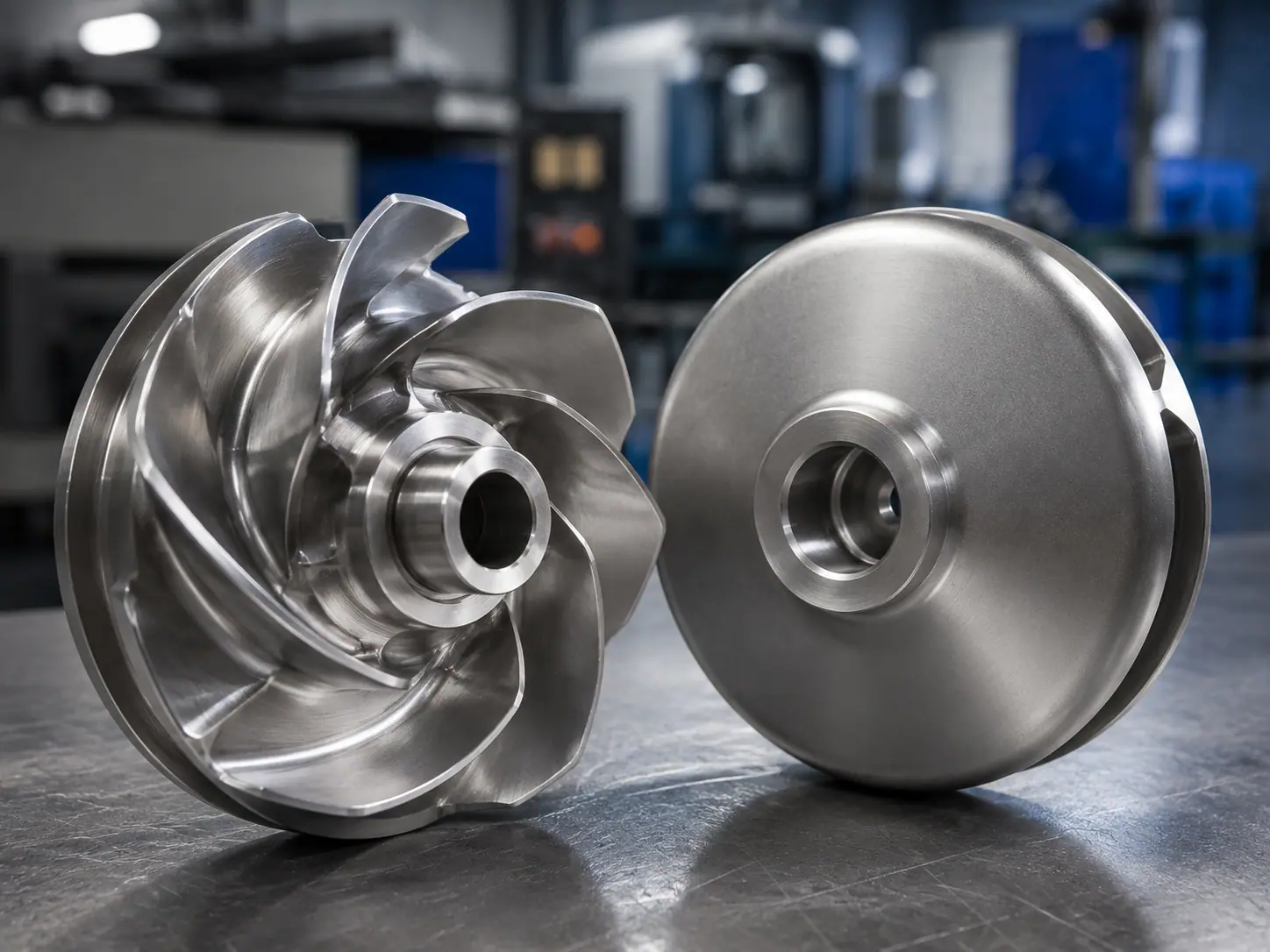
A report needs more than acceptable values. It should identify the part or lot tested, drawing revision, relevant material or process batch, report number, date, method, acceptance criteria, result, and approval status as required by the project. The same identifier should appear on the traveler and final document index.
Dimensional and runout reports should not be reused for another quantity unless the sampling rule allows it and the lot is defined. A balancing report should identify the actual impeller condition, arbor or fixture reference where required, correction configuration, acceptance requirement, and tested identity. If material is removed, attached, coated, repaired, or machined after balancing, the buyer should decide whether rebalancing and a revised record are required.
The custom impeller manufacturing documents guide explains which records belong in a quotation, first-article package, repeat batch, or export shipment. Traceability requirements determine how those documents connect to one another; they do not mean every order needs every possible certificate.
Lost Identity Is a Nonconformance, Not a Clerical Gap
When an identifier is missing, illegible, duplicated, or inconsistent, production should not simply assign the most likely number. The affected material or parts should be segregated while the team reviews objective evidence such as inventory records, traveler history, container control, process timestamps, photographs, test results, and quantity reconciliation.
Re-identification is acceptable only when the authorized procedure and evidence support it. Additional PMI or laboratory testing may help determine material grade, but it may not reconstruct the original heat, processing history, or exact batch. If identity cannot be restored, the buyer’s agreed disposition may be additional verification, restricted use, concession, rework, or rejection. The decision and approval authority should be recorded.
Nonconformance records should also define the affected scope. A single unreadable label may affect one part, one container, a complete mixed batch, or every record created after the last verified transfer point.
Repeat Orders Need Change and Retention Rules
Repeatability depends on retrieving the right baseline. Retained records may include the approved revision, material source and heat or batch, process route, tooling reference, inspection plan, first-article approval, balancing setup, concessions, packing method, and final document index. The buyer should state the retention period and any access or language requirements instead of assuming records remain available indefinitely.
Define which changes require notification or renewed approval. Examples include a drawing revision, material grade or source change, new foundry or external processor, altered welding or repair route, different heat treatment, transferred tooling, modified machining datum, revised marking method, or changed balancing condition. Not every administrative change needs a new first article, but changes affecting identity, fit, function, material condition, or validated evidence may require requalification.
ISO 9001:2015 provides general quality-management context for identification, documented information, nonconformity, and change control. It does not specify the marking content, retention period, or batch definition for a particular impeller. Those requirements belong in the drawing, specification, quality plan, and purchase order. Matson’s impeller manufacturing process overview can help buyers identify where traceability transfers should be placed along the selected route.
What Buyers Should Confirm Before the RFQ
Send or confirm:
- buyer, equipment, part, drawing, model, specification, and revision identifiers
- order quantity, lot definition, and whether traceability is by lot, heat, batch, or individual part
- material grade, material standard, certificate type, and additional test requirements
- casting, fabrication, machining, heat-treatment, surface-treatment, balancing, and subcontractor route
- temporary identification and transfer method at cutting, machining, blasting, coating, and external processing
- final marking content, location, method, permanence, and prohibited marking zones
- required traveler, load, treatment, inspection, balancing, nonconformance, release, and packing records
- sampling rules and the identity shown on each report
- process-change, deviation, repair, re-identification, and concession approval authority
- record format, language, delivery method, retention period, and buyer access requirement
- packing labels, case numbers, document index, and part-to-package reconciliation
These inputs allow the supplier to price the necessary segregation, marking, record generation, verification, and retention work. Adding part-level serialization or historical record reconstruction after production can be impractical or unreliable.
Common Questions We Actually Get
What is the difference between impeller traceability and a material certificate?
A material certificate reports information about the supplied material. Traceability is the controlled link proving which certificate, heat, batch, processes, inspections, and release records belong to the delivered impeller.
Does every custom impeller need an individual serial number?
No. Some projects can use purchase-order, lot, heat, or batch traceability. Individual serialization is appropriate when the buyer, end customer, risk assessment, mixed-batch route, service history, or specification requires part-level control.
Can PMI restore a lost heat number?
Usually not by itself. PMI may help identify alloy composition, but it does not normally reconstruct the original heat number, mill history, mechanical properties, or complete process route. Re-identification needs an approved procedure and sufficient objective evidence.
Where should an impeller be permanently marked?
Use a drawing-approved, accessible, nonfunctional area that does not interfere with fits, sealing surfaces, vane edges, balance correction, coating performance, or critical stress regions. The exact location and method depend on geometry, material, service, and engineering requirements.
Can Matson provide traceability records for repeat OEM orders?
For suitable projects, Matson can review agreed material, process, inspection, balancing, identification, and shipment-document requirements. The required traceability level, report fields, marking method, and retention scope should be confirmed before quotation.
CTA
Need a traceability plan reviewed for a drawing-based impeller order? Send the drawing revision, material and certificate requirements, quantity and lot definition, process route, final marking method, inspection and balancing records, retention period, and packing-identification rules through the contact page. Matson can review the manufacturing and documentation scope before quotation.