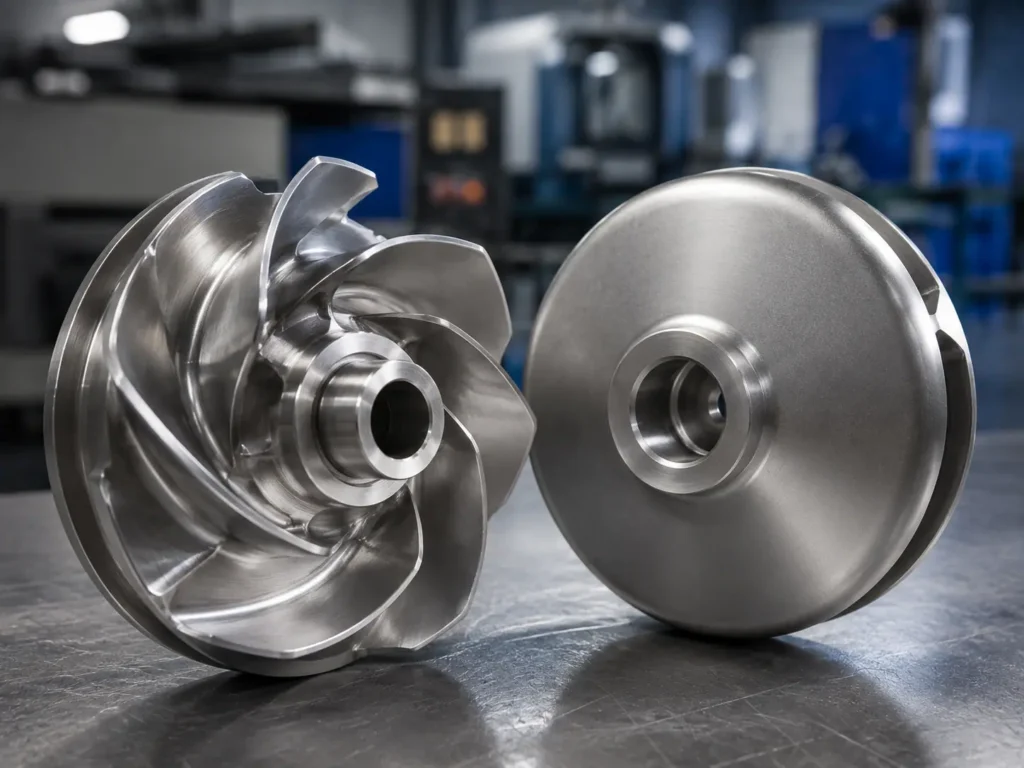
Yes, Chinese impeller manufacturers can make custom impellers from drawings or samples when the buyer provides enough information for engineering and manufacturing review. The safest projects start with a clear drawing, 3D file, physical sample, material grade, critical dimensions, application details, quantity, balancing requirement, and inspection document needs.
Short answer: a drawing is usually the best starting point, but a sample can also work if the manufacturer checks worn areas, missing material, bore condition, hub height, vane geometry, shaft fit, and functional surfaces before production. For OEM pump, fan, blower, mixer, agitator, compressor, and custom industrial equipment projects, the quote should not be based on appearance alone.
Matson supports custom industrial impeller projects from drawings, 3D files, samples, and project specifications. The goal is not to copy a part blindly. The goal is to understand which dimensions, materials, surfaces, and documents must be controlled before casting, CNC machining, finishing, balancing, inspection, and export packing.
[Image placeholder: Add a real factory image showing a custom impeller sample beside a 2D drawing, 3D model screen, calipers, and a machined impeller blank. Alt text: “Custom impeller from drawing or sample with inspection tools and machined impeller”]
Drawing or Sample: Which Is Better?
A complete drawing is usually better than a sample because it defines the intended geometry, material, tolerances, revision, and inspection requirements. A sample shows the physical part, but it may also include wear, corrosion, deformation, old welds, broken vane edges, enlarged bores, or missing surfaces.
That does not mean samples are useless. Samples are often helpful when the original drawing is missing or when the buyer needs to confirm how the impeller fits the equipment. The risk is treating a damaged sample as if it still represents the approved design.
| Starting point | Best use | What buyers should watch |
|---|---|---|
| 2D drawing | Clear dimensions, tolerances, material notes, revision control, and inspection points. | Confirm the drawing is current and includes all functional surfaces. |
| 3D file | Useful for curved vanes, complex hubs, shrouds, and machining review. | Still needs material, tolerance, surface finish, and datum information. |
| Physical sample | Useful when the drawing is missing or when fit surfaces need measurement. | Check wear, corrosion, deformation, old welds, broken areas, and changed dimensions. |
| Photos only | Helpful for first discussion and rough feasibility screening. | Not enough for final quotation or production unless dimensions and material data are added. |
| Drawing plus sample | Best case for many custom impeller projects. | Use the drawing as the design reference and the sample to confirm practical fit details. |
What a Manufacturer Should Check Before Quoting
A serious manufacturer should ask more than “What is the diameter?”
For a custom impeller from a drawing or sample, the critical review usually includes:
- Outside diameter, bore, hub height, shaft fit, keyway, mounting face, bolt pattern, and clearance surfaces
- Vane count, vane profile, inlet and outlet geometry, shroud condition, blade angle, and rotation direction
- Material grade, corrosion environment, abrasion risk, liquid or gas condition, solids content, temperature, and speed
- Casting route, CNC machining allowance, fabrication method, surface treatment, polishing, coating, or passivation
- Dynamic balancing requirement, dimensional report, material certificate, photos before shipment, and export packing
- Prototype quantity, first batch quantity, repeat order plan, and expected annual usage
If the project is still early, the buyer can send partial information and mark what is unknown. That is better than guessing. A good RFQ tells the manufacturer where to review carefully.
Why Worn Samples Need Extra Caution
Many custom impeller inquiries start because an old impeller has already failed or worn out. That old part may be the only reference, but it may not show the original geometry.
A worn sample can hide several problems:
- The bore may be enlarged and no longer match the original shaft fit.
- Vane edges may be rounded, broken, trimmed, or corroded.
- The outside diameter may have changed after wear or field modification.
- Hub height and mounting faces may be damaged.
- Balance may be poor because material has been lost unevenly.
- Old welds or surface buildup may change the apparent shape.
For sample-based projects, ask the manufacturer to separate visible sample shape from functional production requirements. Photos should show the front, back, side, bore, hub, keyway, vane passages, damaged areas, and any mating surfaces. If possible, send the equipment-side dimensions or the original drawing as a reference.
Manufacturing Route: Casting, CNC Machining, and Balancing
The drawing or sample should help the manufacturer choose the process route.
Some impellers may fit investment casting. Some larger or heavier designs may fit sand casting. Some fan, blower, or mixer structures may need fabrication and welding. Many impellers need CNC finish machining after casting or fabrication because the bore, hub, mounting face, keyway, wear-ring surface, shaft connection, or outside diameter must be controlled.
Matson’s impeller manufacturing capability covers casting, CNC machining, surface treatment, dynamic balancing, inspection, and export packing when the project requirements are defined. For a more detailed RFQ checklist, see Matson’s guide to drawing-based impeller manufacturing.
Balancing should be discussed before production if the impeller is large, fast, heavy, or used in vibration-sensitive rotating equipment. If the buyer needs a balancing report, that should be stated in the RFQ.
What OEM Buyers Should Prepare
For OEM or recurring supply, the first sample is only one step. The manufacturer also needs enough information to repeat the part consistently.
| RFQ item | Why it matters | What to send |
|---|---|---|
| Drawing and revision | Controls geometry, future changes, and repeat orders. | 2D drawing, 3D model, revision number, and missing-note list. |
| Sample condition | Shows real part shape but may include damage or wear. | Sample photos, marked damaged areas, and explanation of which surfaces are functional. |
| Material grade | Affects casting, machining, corrosion, abrasion, certificates, and cost. | Current grade, required grade, old certificate, material test, or operating environment. |
| Critical dimensions | Decides whether the impeller assembles and runs correctly. | OD, bore, hub, keyway, shaft fit, mounting face, clearance, and datum information. |
| Operating context | Helps review material, balance, surface treatment, and process route. | Pump, fan, blower, mixer, compressor, liquid/gas, solids, temperature, speed, and duty. |
| Quality documents | Needed for OEM approval, import, and repeat supply. | Material certificate, dimensional report, balancing report, inspection photos, and packing needs. |
| Order plan | Prototype and recurring batch production may use different review logic. | Prototype quantity, first batch, annual volume, and repeat order timing. |
For recurring projects, Matson’s OEM impeller manufacturer page is the better commercial path. Send expected batch size, quality documentation needs, packing requirements, and whether the same impeller will be ordered repeatedly.
When Matson May Be a Good Fit
Matson may be a good fit when the project is a custom industrial impeller rather than a catalog retail part.
Good-fit examples include:
- Pump impellers made from drawings or samples for industrial water, wastewater, chemical, marine, mining, and OEM pump projects
- Fan and blower impellers where hub fit, blade geometry, material, welding, and dynamic balancing need review
- Mixer and agitator impellers where shaft connection, blade type, material, surface finish, and tank application matter
- Non-standard impellers that need casting, CNC machining, surface treatment, dimensional inspection, balancing, and export packing
- Prototype, pilot-run, recurring batch, distributor, or OEM supply projects
Final feasibility still depends on the drawing, sample condition, material, tolerance, balance requirement, quantity, and application. A custom impeller from a drawing or sample should be reviewed as a manufacturing project, not as a simple photo-based quote.
Common Questions Buyers Ask
Can Chinese impeller manufacturers make custom impellers from drawings?
Yes. Many custom impeller manufacturers in China can review 2D drawings, 3D files, material grades, dimensions, quantities, machining requirements, balancing requirements, and inspection documents before quoting.
Can a custom impeller be made from only a sample?
Sometimes, but it needs caution. A sample may be worn, corroded, distorted, or incomplete. Buyers should identify damaged areas, provide measurements, and confirm critical fit surfaces before production.
What is the biggest risk in sample-based impeller manufacturing?
The biggest risk is copying a damaged or worn condition as if it were the original design. Bore wear, vane loss, broken edges, changed outside diameter, and old welds can all affect the new part.
Should I send a drawing, a 3D file, or a physical sample?
Send all available information. A drawing controls dimensions and tolerances, a 3D file helps with geometry review, and a physical sample can help confirm real fit details. The strongest RFQ often includes both drawing and sample photos.
What should I send to Matson for a custom impeller quote?
Send drawings, 3D files, sample photos, material grade, key dimensions, application conditions, quantity, balancing requirements, inspection document needs, and shipping destination through the custom impeller quote page.