Mixer & Agitator Impeller Manufacturer for OEM Tanks
Mixer and agitator impellers should be quoted from the drawing, shaft connection, blade geometry, material, surface finish and process environment. Matson manufactures drawing-based impellers for tank mixers and industrial agitation equipment, while process performance selection remains with the buyer, mixer OEM or process engineer.
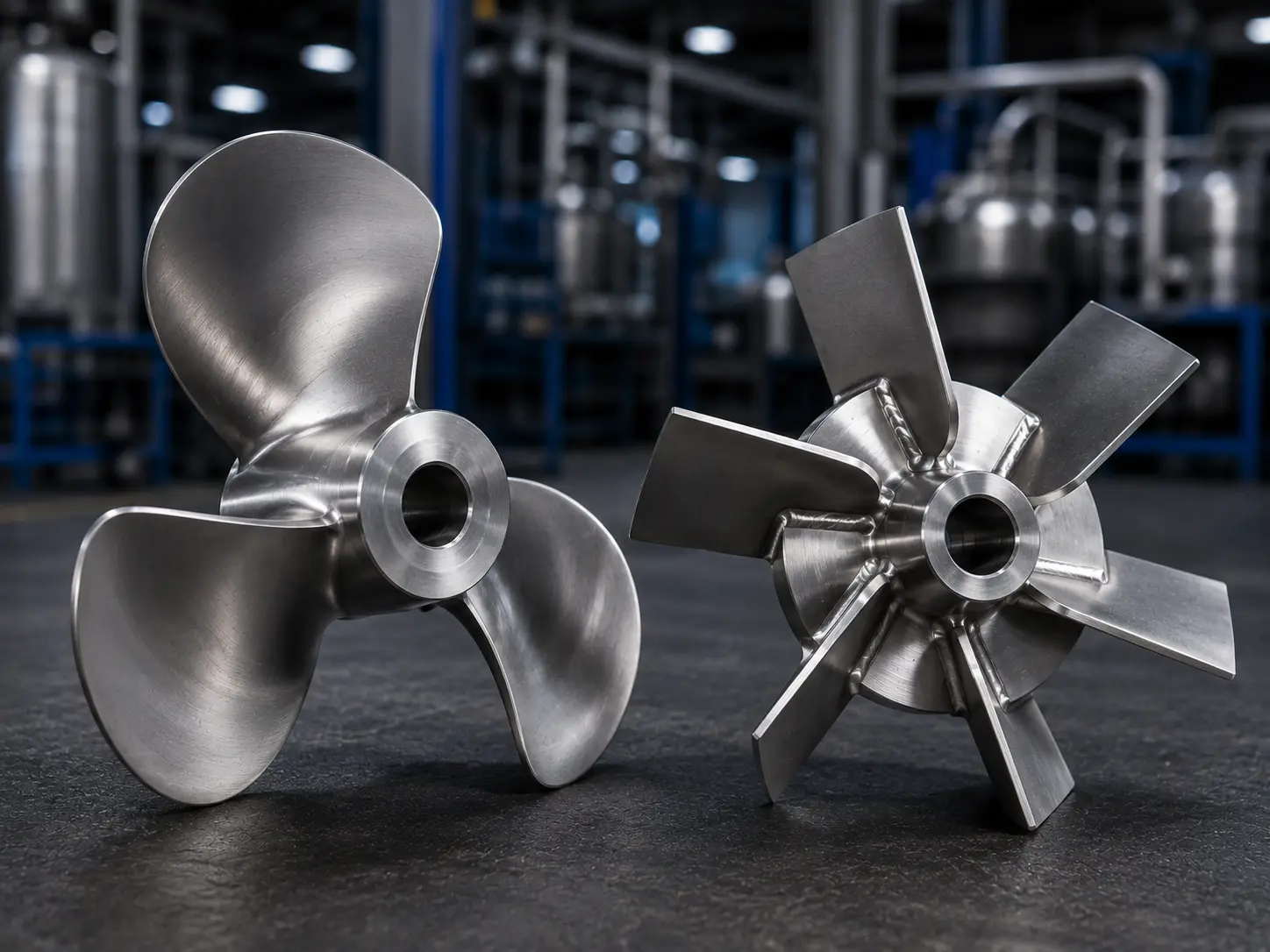
Mixer & Agitator Impeller Types for Industrial RFQs
Use your drawing, approved sample or mixer OEM specification as the starting point. Matson focuses on manufacturing the impeller correctly; final process performance, mixing duty and scale-up assumptions should be confirmed by your engineering team.
Propeller Mixer Impellers
Three-blade propeller mixer impellers for liquid circulation and general tank agitation. RFQs should confirm OD, pitch, hub bore, shaft connection and surface finish.
Pitched-Blade Turbine Impellers
Pitched-blade turbine impellers are often used where axial flow is required, but the buyer should confirm blade angle, pumping direction, shaft fit and process duty.
Rushton Turbine Impellers
Radial turbine impellers require careful control of disc, blade, weld, hub and runout features. Gas dispersion or shear performance should be specified by the process design.
Hydrofoil Mixer Impellers
Hydrofoil impellers need accurate blade profile and hub connection. Use the approved drawing or sample baseline instead of relying on generic shape descriptions.
Anchor & Paddle Impellers
Anchor and paddle impellers need tank-clearance, shaft support, weld distortion and surface finish review, especially for large or high-viscosity mixing hardware.
Custom Tank Agitator Impellers
Custom tank agitator impellers are best quoted with tank diameter, shaft details, blade layout, material, finish and any cleaning or corrosion requirements.
Materials and Surface Finish for Mixer Impellers
Material selection should be tied to fluid chemistry, temperature, cleaning method, abrasion, corrosion risk, weldability, coating need and buyer documentation. A drawing that says only "stainless steel" is usually not enough for a reliable quote.
From Mixer Impeller RFQ to Finished Part
A mixer impeller quote becomes more useful when the supplier knows which features must be controlled. For many agitator impellers, the shaft connection, blade angle, weld sequence, runout and surface finish matter as much as the outside diameter. See Matson's impeller manufacturing capabilities for the broader casting, machining, finishing and inspection route.
Industrial Applications and Page Boundaries
Mixer and agitator impellers manufactured by Matson are used in industrial tanks and process equipment. This page is for B2B manufacturing RFQs, not household mixer blades, appliance repair parts or brand-model replacement orders.
Chemical Process Mixers
Stainless, duplex or coated agitator impellers for reactors, blending tanks and process mixers where chemical compatibility must be confirmed. View industry →
Wastewater Treatment
Mixer impellers for aeration tanks, sludge mixing and wastewater treatment plants where wear, corrosion and shaft loading should be reviewed. View industry →
Process and Cleaning-Sensitive Tanks
Polished or passivated stainless steel impellers can be reviewed when the buyer provides finish, cleaning and acceptance requirements.
Industrial Equipment OEM
Custom mixer impellers for tank manufacturers and process equipment OEMs that need controlled drawings, repeat batches and inspection records. View industry →
Mixer Impeller RFQ Decision Table
Use this table to decide what to send first. A small missing detail at the shaft or blade can change the manufacturing route and the quotation.
| Your project situation | What to send first | What Matson should review |
|---|---|---|
| Drawing-based OEM part | 2D drawing, 3D model, material grade, quantity, tank/shaft interface and surface requirement. | Manufacturing route, hub machining, blade geometry, weld areas, runout-sensitive features and inspection records. |
| Only an old sample exists | Photos, physical sample, OD, hub bore, shaft fit, blade angle and visible wear or repair notes. | Worn blade edges, bent blades, weld repair, corrosion loss and which dimensions need buyer confirmation. |
| High-viscosity or large tank use | Impeller type, tank clearance, shaft support, blade or anchor dimensions and material requirement. | Fabrication stiffness, weld distortion, blade clearance, hub strength and packing protection. |
| Corrosive or cleaning-sensitive service | Fluid chemistry, cleaning method, temperature, required finish, passivation/coating need and documents. | Material choice, surface treatment, weld finish, crevice risk and inspection evidence. |
| Repeat OEM batch | Approved drawing revision, sample approval status, inspection plan, packaging notes and expected repeat volume. | Batch consistency, drawing control, material traceability, dimensional records and reorder communication. |
Quality Control for Mixer Impeller Orders
Quality control for mixer and agitator impellers should protect fit, material, surface condition and repeatability. It should not pretend to prove the entire mixing process unless the buyer provides a test method and acceptance criteria.
Material Verification
Material certificates, grade confirmation and coating or passivation records should be agreed when chemistry, cleaning or buyer approval requires them.
Dimensional Inspection
Hub bore, keyway, shaft fit, blade angle, OD, tank-clearance features and mounting faces can be checked against the drawing or approved sample.
Surface & Weld Review
For fabricated impellers, weld condition, deburring, polished areas, passivation, coating preparation and surface acceptance should be defined before production.
Mixer & Agitator Impeller FAQ
Common questions from purchasing and engineering teams preparing mixer impeller drawings, samples or supplier comparisons.
Can Matson manufacture mixer impellers from drawings or samples?
Yes. Matson can quote from 2D drawings, 3D files, samples or clear dimensional specifications. If the sample is worn, corroded or repaired, you should confirm which geometry represents the intended design.
Can Matson choose the best agitator impeller type for my process?
Matson can review manufacturing feasibility, material, hub/shaft fit, surface finish and inspection requirements. Final mixing performance, flow pattern, shear level and scale-up assumptions should be confirmed by your mixer OEM or process engineer.
Which mixer impeller types can be reviewed?
Propeller, pitched-blade turbine, radial turbine, hydrofoil, anchor, paddle and custom tank agitator impellers can be reviewed. Dedicated support articles can explain individual types, while this page handles commercial RFQ routing.
What materials are commonly used?
Stainless steel, duplex stainless, carbon steel, alloy steel and coated steel are common choices. Confirm fluid chemistry, temperature, cleaning method, abrasion, corrosion risk, finish and document needs before quotation.
Is this page for household mixer replacement blades?
No. This page is for industrial mixer and agitator impeller manufacturing. It does not target household appliance blades, brand-model repair parts, kitchen mixer components or DIY replacement orders.
What should I send for a mixer impeller quote?
Send the drawing or sample photos, OD, blade type, blade angle, hub bore, keyway or shaft connection, material, quantity, surface finish, runout or balancing need, tank/application notes and required documents.
Final Thoughts Before Sending a Mixer Impeller RFQ
A mixer impeller manufacturer can only quote accurately when the drawing, shaft interface, blade geometry, material, finish and inspection needs are clear. If your team already knows the mixing duty, Matson can help review the manufacturing route and prepare an RFQ response for the physical impeller.
For a faster quote, include:
- 2D drawing, 3D file, sample photos or physical sample notes
- OD, blade type, blade angle, hub bore and shaft connection
- Material grade, quantity and expected repeat-order need
- Surface finish, fluid environment, inspection and document requirements